Electric and Opening Rooflight Installation
- Fixed quote before we start
- Roof never left open overnight
- 10-year workmanship guarantee

- Fixed quote before we start
- 10 years workmanship guarantee
- 25 years fitting rooflights
- Skylights only, not a general roofer
Electric and opening rooflight installation in Worthing
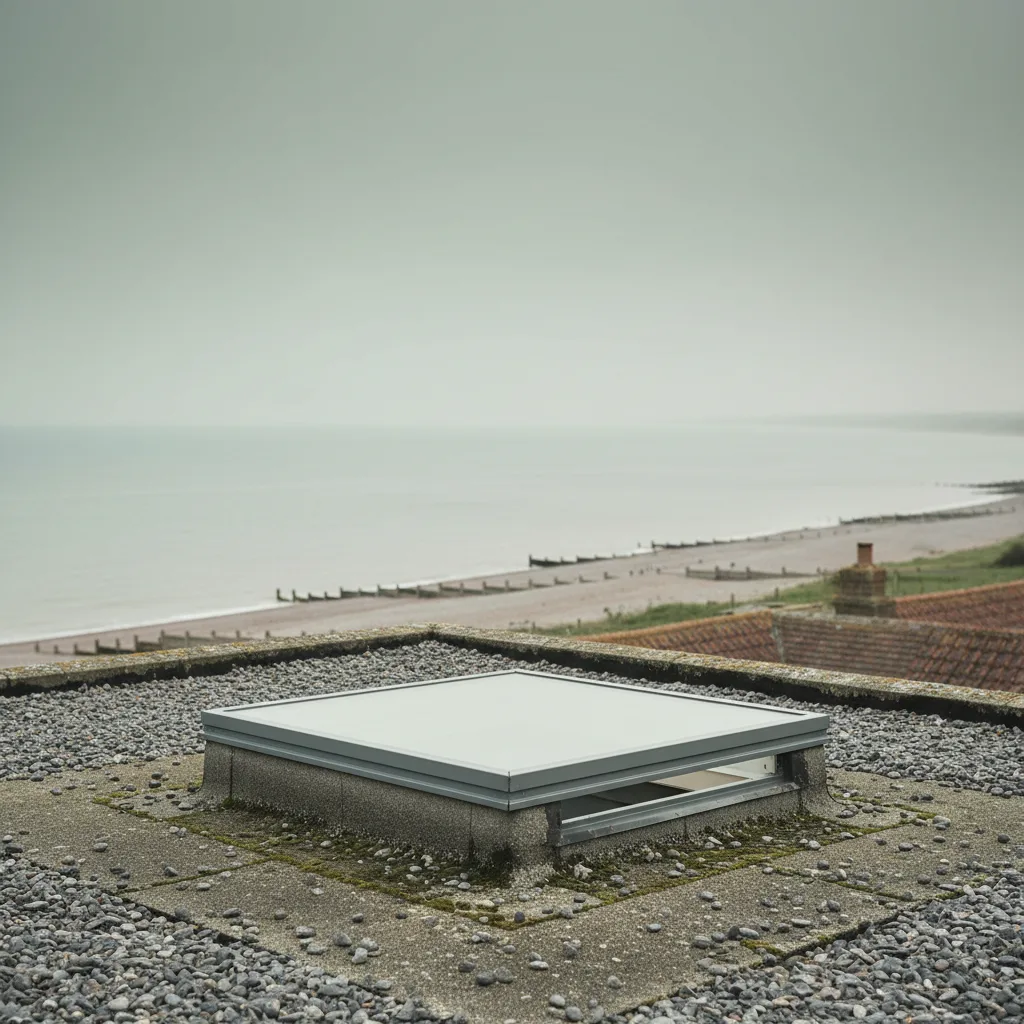
On a flat roof you cannot reach the rooflight. That is not a design flaw, it is the definition of a flat roof: the unit sits on a kerb above head height with no slope to stand on and nothing to reach it with. So if it is going to open, it opens by motor, and that is decided at order rather than afterwards.
The same is true of a roof window high on a pitched slope, over a stairwell, or above a double height space. Anything a pole cannot reach either stays shut for its whole life or gets an actuator.
| Option | How it is operated | Where it suits | Decide it at |
|---|---|---|---|
| Fixed | Not applicable | Daylight only, where ventilation comes from elsewhere | Order |
| Manual, pole operated | A pole from floor level | Pitched roofs within reach of a pole | Order |
| Electric chain actuator | Wall switch or remote | Flat roof units, and anything out of reach | Order. The cable route has to exist before the ceiling closes |
| Electric with rain sensor | Closes itself when it starts raining | Any opening unit nobody is watching | Order |
| Smoke or heat vent | Automatic on detection, plus manual override | Where a stairwell or protected route needs venting | Design, with the Building Control body |
| Escape rooflight | Manual, opening to a clear escape dimension | Habitable loft rooms, where it is required | Design. It cannot be added later without a new unit |
On a flat roof you cannot reach the unit, so how it opens is decided at order and is expensive to change afterwards. Where a rooflight is also the escape route from a habitable loft room, the clear opening it gives is a Building Regulations question rather than a preference.
What an opening rooflight is actually for
Three jobs, and they are not the same job.
Purge ventilation. Getting cooking smells, steam or stale air out of a room quickly. An opening at the highest point of a room removes them faster than any wall-mounted extractor, because that is where they have already collected.
Summer cooling. Letting hot air out at the top rather than trying to cool it at the bottom. In a kitchen extension with a large area of overhead glass, an opening vent does more for comfort than any amount of fan.
Escape. Where a loft conversion creates a habitable room, the rooflight may be the means of escape from that storey, and that is a Building Regulations requirement rather than a preference.
If none of those apply, a fixed unit is the better product. It has fewer seals, fewer moving parts, a better U-value and nothing to go wrong. We will say so.
Chain actuators
The standard mechanism is a chain actuator: a small motor in the frame drives a rigid chain that pushes the sash open and pulls it closed. It is quiet, it holds position anywhere in its travel, and it seals properly on closing because the chain pulls the sash down onto the gasket rather than letting a spring do it.
Travel is typically between 200mm and 400mm depending on the unit. That is plenty for ventilation and is usually not enough for escape, which is why an escape rooflight is a different product rather than a bigger actuator.
The actuator wants power and a control line. On a new extension that is trivial if it is planned. On a finished ceiling it means either lifting boards or running surface trunking, which is why this decision belongs at survey.
The cable route is the whole problem
Nothing about an electric rooflight is difficult except getting the cable to it before the ceiling closes.
On a flat roof extension the route runs in the ceiling void to the kerb and up the inside face. Once the plasterboard is on, that route is gone, and the alternatives are all visible. On a pitched roof the cable runs in the roof space, which is easier, but it still has to arrive at the frame rather than near it.
We establish the route at survey and set out what it needs. Where the work is part of a wider build we talk to whoever is doing the ceiling, because the ten minutes of coordination is worth more than any part of the specification.
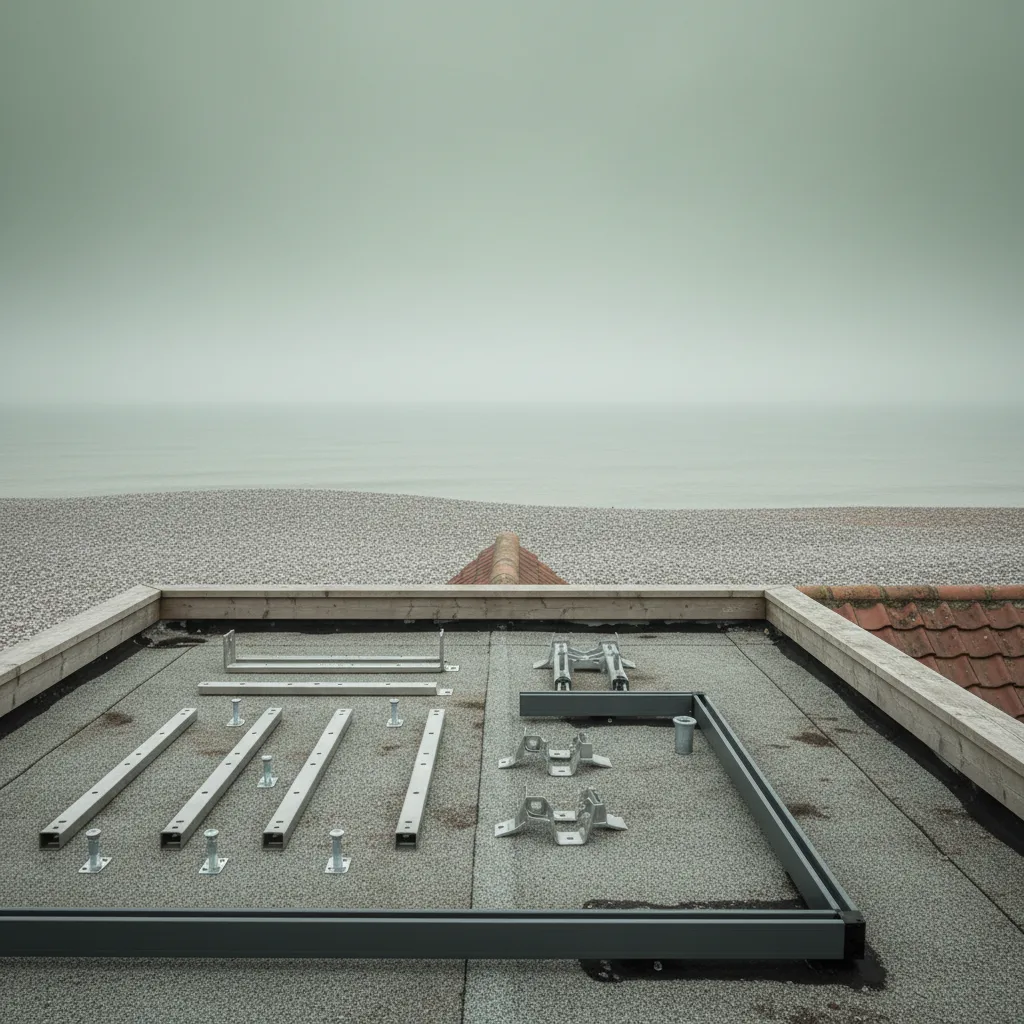
Rain sensors, and how they behave on this coast
A rain sensor is a small conductive pad on the frame. When it gets wet the circuit closes and the actuator drives the window shut. It is the single most useful accessory on an opening rooflight, because the failure mode of an opening rooflight is being open when it rains.
On the Sussex coast it has a quirk worth knowing. A sea fret, the damp haze that rolls in off the Channel on a still day, can be wet enough to close the sensor without a drop of rain falling. The window shuts on a warm afternoon and somebody has to open it again. It is a mild irritation rather than a fault, and it is the reason we mount the sensor where it gets rain rather than where it gets spray.
The sensor closes the window. It does not open it again when the weather clears, and no sensor does.
Escape rooflights
Where a loft conversion creates a habitable room, Building Regulations normally require a means of escape from that storey. On a great many conversions in this area the rooflight is it.
That imposes a clear opening dimension the unit has to achieve once open, and a height above floor level the bottom of the opening has to fall within. Not every window meets it, and the requirement is about the aperture rather than the ironmongery, so an escape opening cannot be added to an existing unit later. It is a new window.
An escape rooflight is normally manual, opening to a wide angle and staying there, because in an emergency a motor and a power supply are two more things to fail. Where a room has both an escape window and an electric vent, they are usually two different units doing two different jobs.
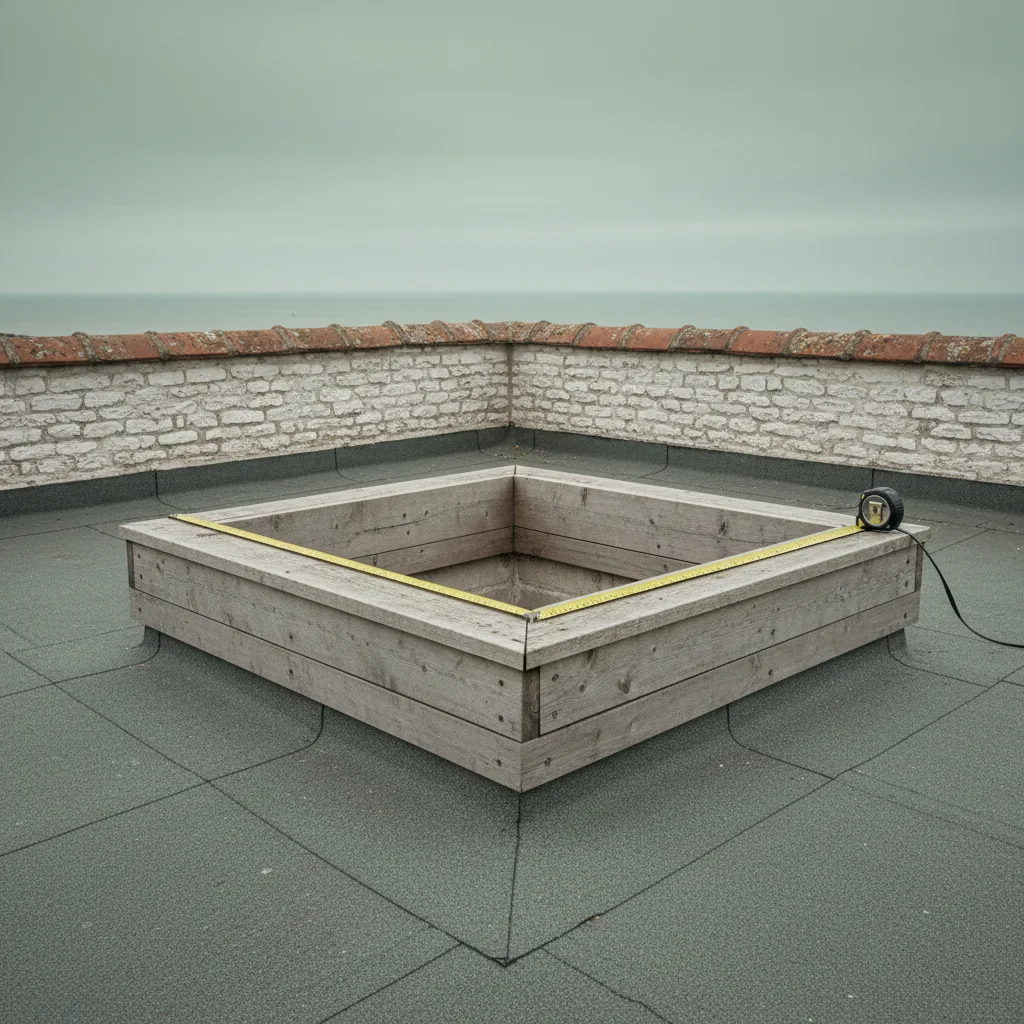
Smoke and heat vents
A smoke vent is a different product again. It opens automatically on detection to let smoke and heat out of a protected route, typically a stairwell, and it is specified by the Building Control body or a fire engineer rather than chosen from a brochure.
It has its own control panel, its own power supply with battery backup, and a manual override at ground level. It is not an ordinary opening rooflight wired to a smoke alarm, and anyone offering one as though it were should be asked for the certification.
We fit them where they are specified, to the specification, and we do not design the fire strategy.
Retrofitting an actuator to an existing unit
Sometimes possible, often not.
Where the manufacturer offers a retrofit kit for that exact model and generation, it is straightforward. Where they do not, an actuator can occasionally be adapted, but the fixing points, the sash weight and the seal compression were all designed around manual operation, and an adapted opener that does not pull the sash properly onto its gasket is a leak waiting for the right wind direction.
We check the model against the manufacturer’s current retrofit list and tell you plainly which case you are in. Where the answer is no, replacing the unit is usually cheaper than the workaround.
Wind, and the Downs edge
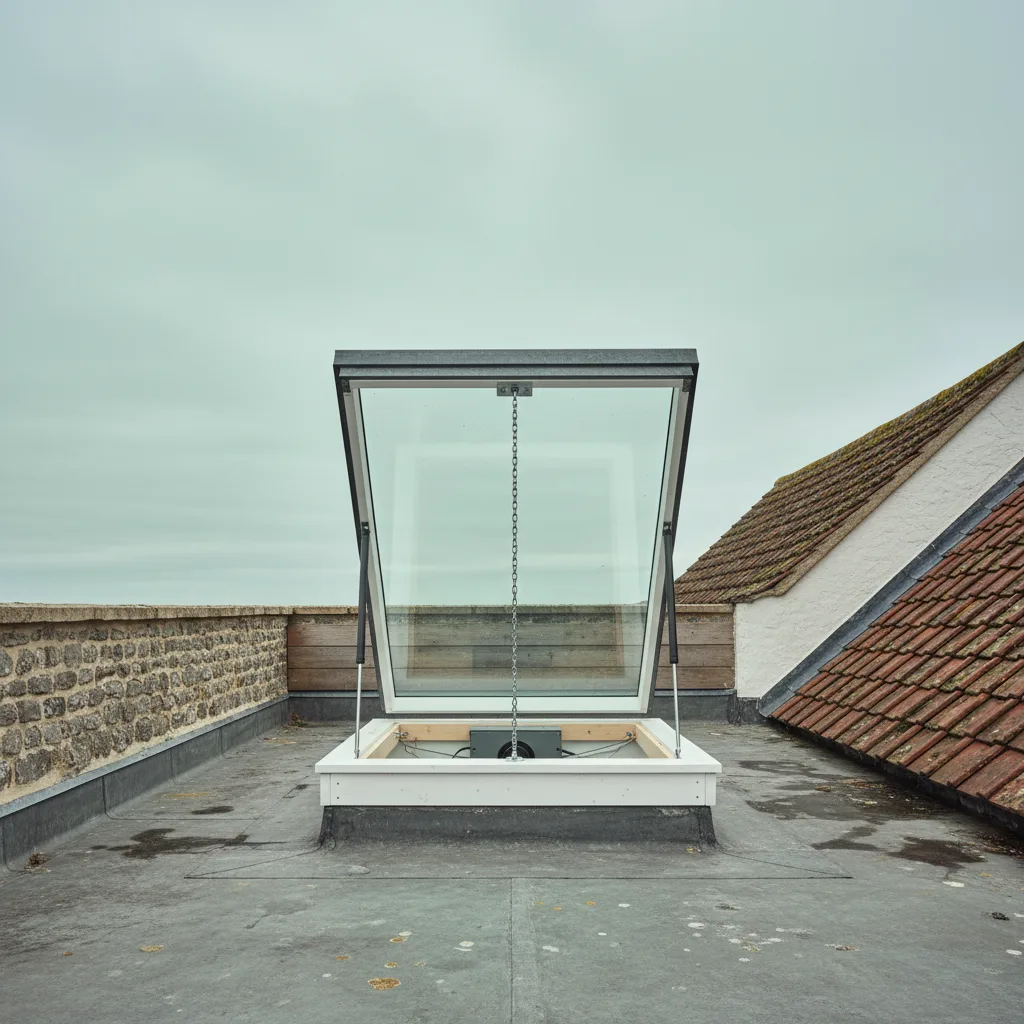
An open rooflight is a sail. On an exposed site, and the whole northern edge of this radius from Findon to Ditchling is exposed, wind loading on an open sash is a real consideration.
Manufacturers state a maximum opening in high wind, and a good actuator has a soft stop rather than driving the sash against its stops. On the most exposed sites a wind sensor alongside the rain sensor is worth the small extra cost, because the thing that damages an opening unit is not the weather it was closed in, it is the gust that caught it half open.
Controls, and keeping it simple
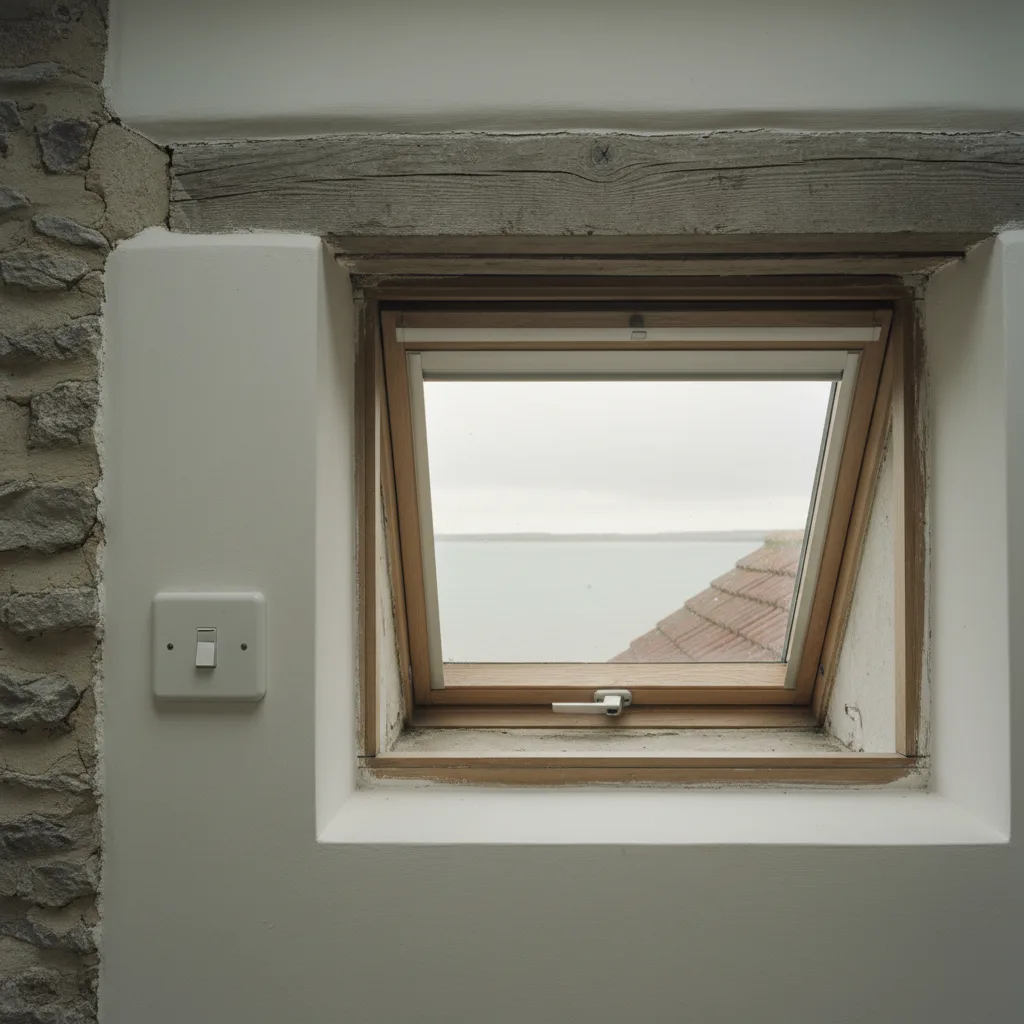
A wall switch beside the light switch is the control most people actually use. A handset is convenient and gets lost. Integration with a home system is possible on most current ranges and is worth doing only if the rest of the house is already on that system.
Where two or more rooflights are on one roof, grouping them to one switch is usually right, and giving each its own is usually over-engineering. We ask how the room is used rather than assuming.
Maintenance
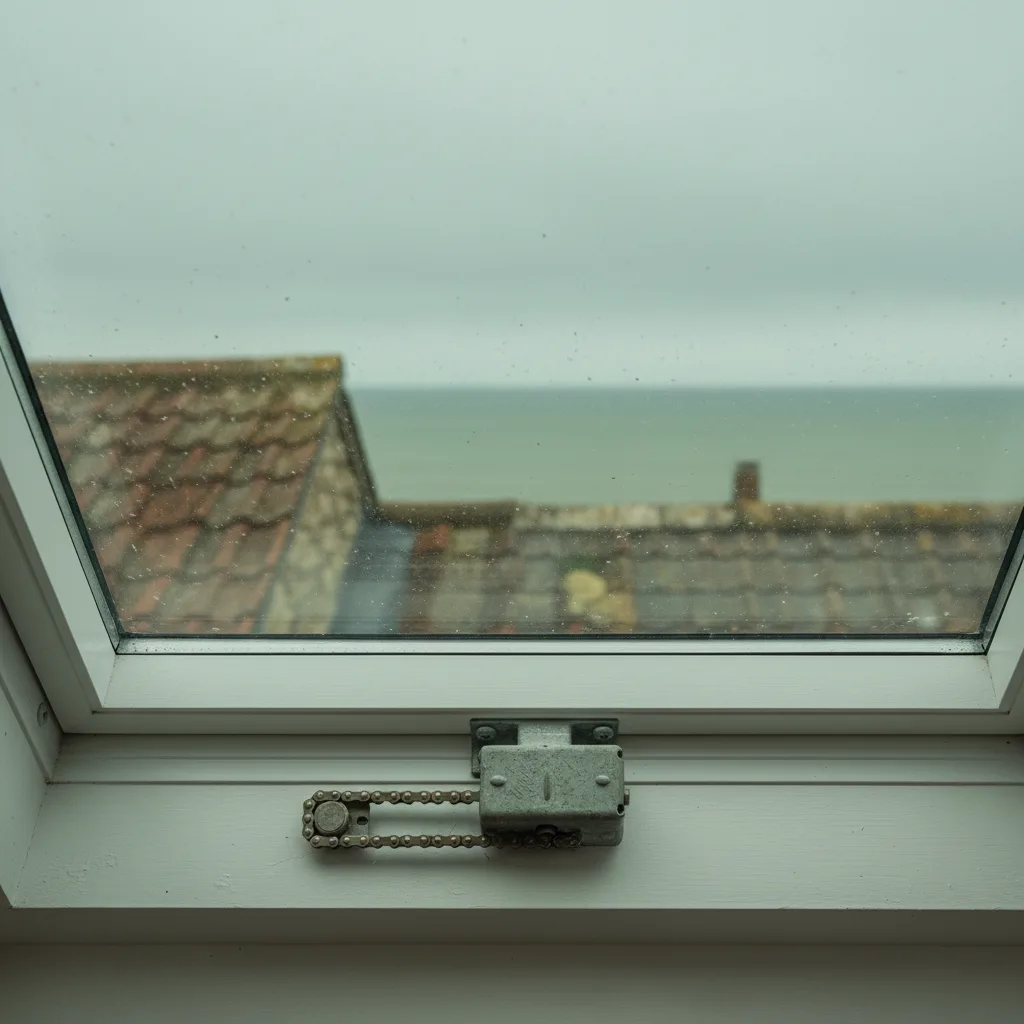
An opening rooflight wants two things. The gaskets rinsed with clean water two or three times a year, which on the coast roughly doubles the life of the seal, and the actuator run through its full travel occasionally rather than left shut all winter, because a mechanism that never moves seizes faster than one that does.
Neither needs a contract or a visit. Both take five minutes and almost nobody is told to do them.
Noise, and what a good actuator sounds like
A chain actuator is audible. It is a small motor driving a geared chain, and on a quiet evening in a kitchen you will hear it run for the eight or ten seconds it takes to open. That is normal.
What is not normal is a grinding or straining note, which means the sash is binding on its seal or the actuator is undersized for the weight of glass it is moving. On a large unit that is worth raising early, because an actuator working at the top of its rating has a much shorter life than one working comfortably inside it. We size for the actual sash rather than the nominal maximum.
Two units, one switch
Where a room has more than one opening rooflight, the usual instinct is one control each. In practice most people want them to work together, because the reason to open them is ventilation and ventilation works better with two openings than one.
Grouping them to a single switch is straightforward if it is planned, and awkward afterwards. Where a room has units on two different elevations there is an argument for separate control, since opening the sheltered side in a wind is sometimes the only usable option on an exposed Downs-edge site.
Power cuts
An electric rooflight stays where it is in a power cut. It does not fall shut and it does not spring open.
Most ranges offer a battery backup for exactly this, and on an ordinary ventilation unit it is unnecessary. Where it matters is a smoke vent, where backup is part of the specification and not optional, and an escape rooflight, which is why escape units are manual in the first place.
Building Control
Forming a new opening is notifiable, and we notify. The electrical work is notifiable in its own right where it involves a new circuit, and that is certified separately by the electrician doing it.
Where the rooflight is the means of escape, the clear opening is inspected and signed off as part of the conversion rather than as part of the rooflight, and it has to be right first time because the alternative is a new window.
How we price it
An indicative range by email from a description and a photograph, free and usually the same day. Then a survey covering the roof, the kerb or the slope, the cable route, the access and how the room is used, because that is what decides whether it should open at all.
Then a fixed written price, itemised so the unit, the actuator, the electrical work and any scaffold are separately visible. It does not move afterwards.
In this section
Are electric rooflights and skylights noisy?
Read moreCan a rooflight or skylight be a smoke vent?
Read moreCan a rooflight or skylight open automatically on temperature?
Read moreCan an electric rooflight or skylight be opened in a power cut?
Read moreCan an opening rooflight or skylight be fitted to a pitched roof?
Read moreCan any rooflight or skylight be made to open?
Read moreCan two rooflights open together?
Read moreCan you retrofit an electric opener?
Read moreChain actuators, rain sensors and the cable route planned before the ceiling closes
Read moreControls, remotes and integrating with a home system
Read moreDo electric rooflights and skylights need an electrician?
Read moreDo electric rooflights and skylights need servicing?
Read moreDo I need an opening rooflight or skylight in a kitchen?
Read moreDo opening rooflights and skylights come with insect screens?
Read moreDo opening rooflights and skylights leak more than fixed ones?
Read moreEscape rooflights, and the clear opening a habitable loft room needs
Read moreHow is an electric rooflight or skylight controlled?
Read moreHow much does an electric rooflight cost?
Read moreHow much ventilation does an opening rooflight or skylight give?
Read moreHow wide does an escape rooflight or skylight need to be?
Read moreIs an opening rooflight or skylight worth it on a flat roof?
Read moreMaintenance an opening rooflight or skylight actually needs
Read moreManual pole operation, and the reach it actually gives
Read moreOpening rooflights and skylights on an exposed coastal roof
Read morePurge ventilation, and what Part F expects
Read moreRain sensors, and how they behave in a sea fret
Read moreRetrofitting an actuator to an existing unit, and when it is not possible
Read moreSmoke and heat vents, and where a protected route needs one
Read moreWhat is a chain actuator?
Read moreWhat is a rain sensor rooflight or skylight?
Read moreWind and opening rooflights on the Downs edge
Read moreWiring an opening rooflight or skylight into a lighting circuit
Read moreThinking about this job? We survey across Worthing, West Sussex and the South Downs and give you a fixed price before any work starts, with a 10-year workmanship guarantee.