To a rooflight that already opens by hand, frequently yes, where the manufacturer offers a conversion. To a fixed unit, no, because the hinges, the seals and the drainage that an opening unit needs are part of the frame. The other question is the supply, and on an existing roof a solar opener is usually the reason a retro fit is affordable at all.
The dividing line
Whether the unit was made to open.
A manual opening rooflight has everything an electric one has except the motor. A fixed unit has none of it.
Why is on can any rooflight be made to open.
What a conversion kit contains
An actuator, brackets and a control. A kit made for a range comes with the mounting points already matched to the frame, so it bolts to positions the frame already has.
That is what makes it a conversion rather than an adaptation.
Why a matched kit matters
Because the closing force has to be right.
An actuator that is undersized will not compress the gasket properly, and one that is oversized will strain the frame, so the pairing is specified rather than guessed.
Roof windows
Where retro fitting is most straightforward. Pitched roof windows in current ranges frequently have conversion kits, and a manual centre pivot or top hung unit can become powered without the roof being touched.
The solar version is on can you get a solar powered VELUX.
Flat roof units
Less consistently, and it is worth asking.
Some flat rooflight manufacturers offer a retro fit actuator for their manual opening units and some do not, and it is entirely product specific.
Lanterns
Generally not.
An opening face in a lantern is a different frame section within the structure rather than a fitting added to a fixed pane, so it is decided at order.
That is on can a roof lantern be opened.
Identifying what you have
The first step, and it is usually easy.
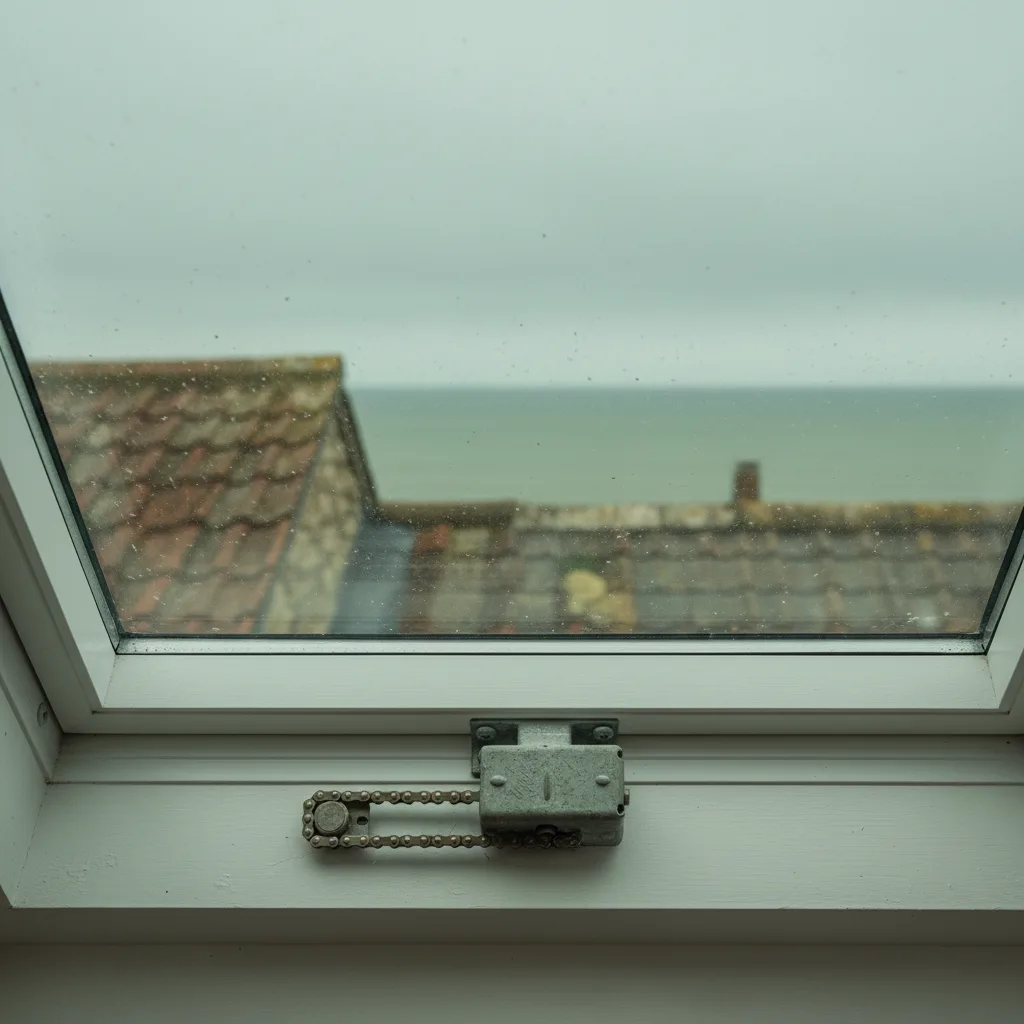
A data plate or a label on the frame gives the manufacturer and the range, and from that a supplier can say immediately whether a kit exists.
Where there is no plate
Photographs of the frame section. The profile of a frame is fairly distinctive, and a clear photograph of the corner and the hinge is often enough for a supplier to identify a range.
The supply question
Usually the larger half of the job.
Getting a cable to a rooflight in a finished ceiling is a chase, a repair and a redecoration, and that is what makes a retro fit expensive rather than the kit.
What is involved is on do electric rooflights need an electrician.
Why solar changes the arithmetic
Because it removes the cable entirely.
A solar conversion carries its own panel and battery, so nothing has to be run to it and no notifiable electrical work is involved.
On an existing roof it is usually the only proposition that makes sense.
Where a cable already exists
The happy case, and it happens more than people expect.
Where a previous owner ran a supply, or where a rooflight sits near an existing light point, a mains conversion becomes straightforward.
It is worth looking in the ceiling void before assuming.
Surface trunking
An honest option on some ceilings.
Where a chase is unwelcome, a neat surface run in matching trunking is quicker and cheaper, and on a utility or a garage nobody minds.
What it costs against replacing the unit
Usually far less, and it is worth comparing.
A conversion kit and a solar module against a new opening rooflight, its installation and its making good is not a close comparison where a kit exists.
The lines are on how much does an electric rooflight cost.
Where replacing is the better call
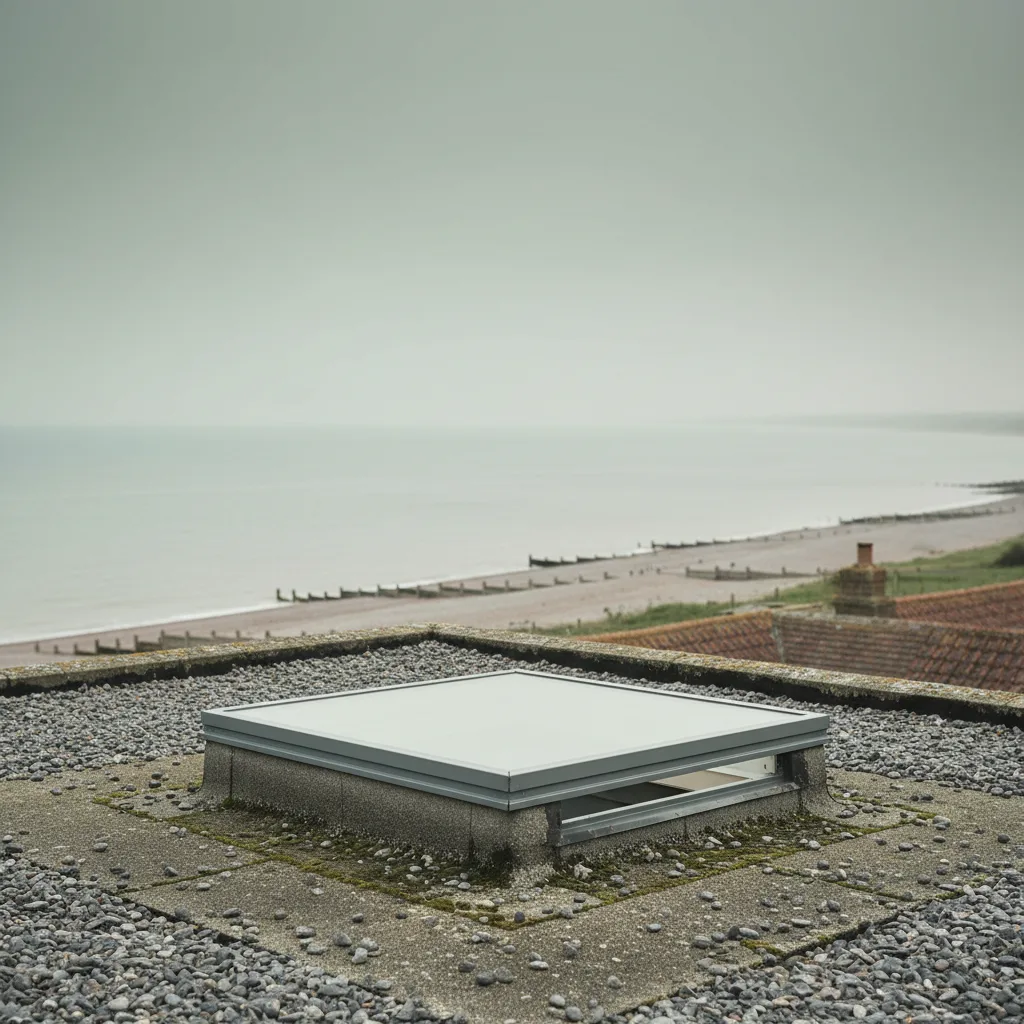
An old unit with a tired seal.
Motorising a rooflight whose gasket is already failing simply automates a leak, and where the unit is near the end of its life the money belongs in a new one.
Adding a rain sensor at the same time
Almost always worth it.
A conversion without a sensor gives you a rooflight you still have to be present to use, and the sensor is a small part of the total.
What it does is on what is a rain sensor rooflight.
Adding a blind at the same time
Sensible while somebody is up there.
Powered blinds on the same control system share the handset, and doing both at once avoids two visits and two remotes.
What it does to a guarantee
Nothing, where the kit is the manufacturer’s own.
A conversion using components made for the unit is within what the manufacturer intended. A generic motor bolted to a frame is not.
Commissioning afterwards
Short and it matters.
The stroke is set, the closing checked all round for even compression, and the sensor tested, because a conversion that closes almost fully is worse than a manual unit.
Where the ceiling is being redecorated anyway
The moment worth acting on.
If a room is coming up for replastering or redecoration, that is when a cable to a rooflight costs almost nothing, and it is worth deciding then rather than a year later.
Even a capped cable left in place preserves the option indefinitely.
Doing it alongside other roof work
The other opportunity.
Where a flat roof is being recovered, the kerb is accessible and the covering is off, so a conversion or an upgrade is far simpler than on a finished roof.
What to keep afterwards
The paperwork and the pairing.
The kit reference, the controller model and the pairing method are what a future handset or a future addition will need, and they are trivial to save now.
What we identify on an opening unit
We identify the range from a photograph before quoting a conversion, because whether a kit exists for that unit is the entire question and it takes one message to answer.
The whole picture is on the electric rooflight installation page.
Thinking about this job? We survey across Worthing, West Sussex and the South Downs and give you a fixed price before any work starts, with a 10-year workmanship guarantee.