Yes. Two or more actuators can be grouped on one control system so a single command moves all of them, and on most systems that is how it is done as standard. It is worth doing deliberately, because two openings at opposite ends of a room give cross ventilation that one opening cannot, and a single switch is what makes it get used.
Why two is better than one
Because air has to arrive as well as leave.
One opening lets warm air out and relies on a door or a window somewhere for replacement air. Two set up a movement across the room between themselves.
The difference in a long kitchen is obvious.
How the grouping works
At the controller.
Several actuators are wired or paired to one controller and assigned to a group, and a command sent to that group goes to all of them.
The options are on how is an electric rooflight controlled.
One switch, one handset
What it looks like to live with.
A single wall control opens both, which is what stops a household with two rooflights ending up with two remotes and using neither.
Groups and individual control together
Supported on most systems.
Channels can be arranged so one button moves both and separate buttons move each, which is worth setting up even if only the group gets used.
What to group
Units in the same room, serving the same purpose.
Two rooflights over one kitchen belong together. A kitchen rooflight and a bathroom one do not, however convenient one switch would be.
What to keep separate
Rooms with different needs.
A bedroom and a landing will want opening at different times, and grouping them means one of them is always wrong.
Two on a pitched roof
Where it works particularly well.
Roof windows on opposite slopes of a loft room opening together give a genuine through draught, which is the best ventilation a loft conversion can have.
That is on can an opening rooflight be fitted to a pitched roof.
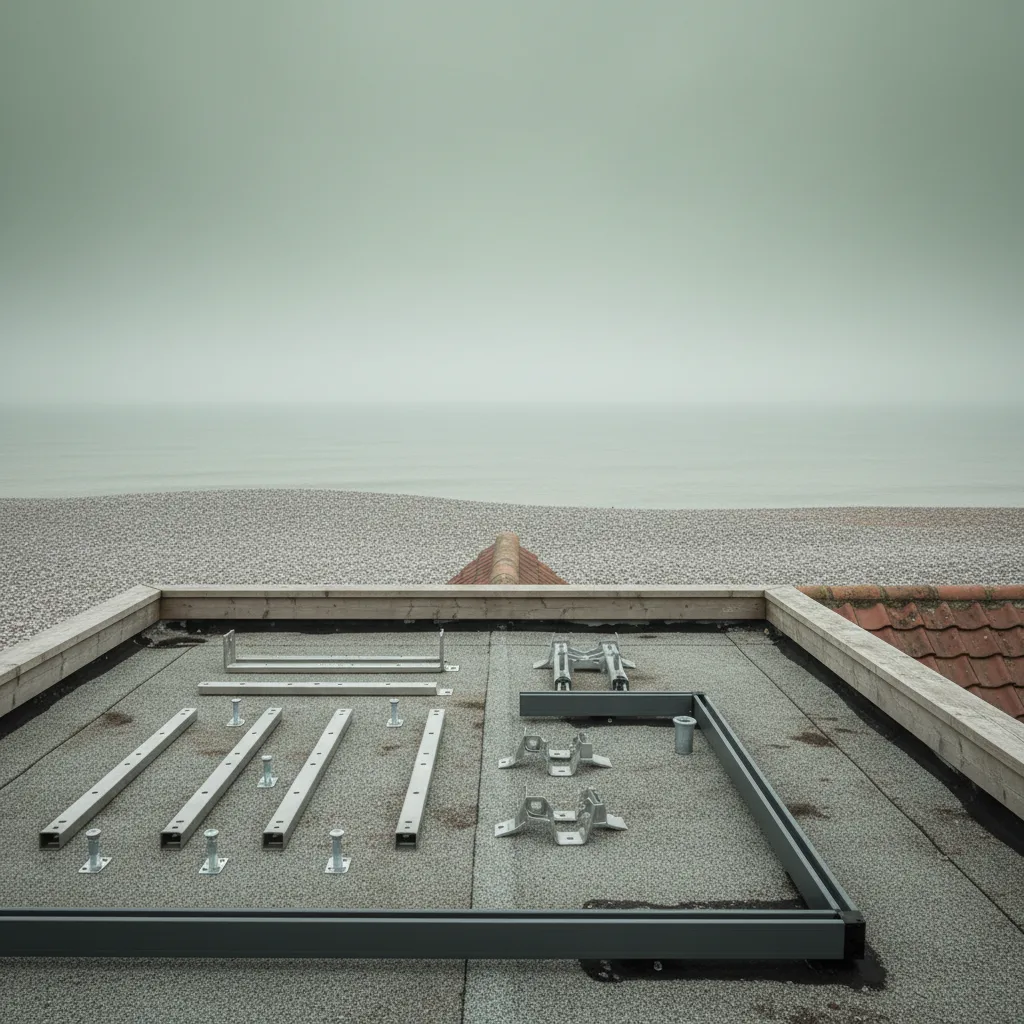
Two on one flat roof
Spaced rather than side by side.
Two units at opposite ends of an extension roof ventilate and light the room more evenly than a pair together, and the spacing is set out with the structure.
Wiring for a group
Planned at first fix.
Cables from each actuator run back to the controller position, so the route is decided while the ceiling is open rather than afterwards.
What is involved is on do electric rooflights need an electrician.
Where the controller goes
Somewhere accessible and dry. A controller in a cupboard or a service void near the units is easy to reach for a fault or an addition, and one buried in a sealed ceiling is not.
One rain sensor for a group
Usually sufficient and cheaper.
A single sensor closing the whole group is the normal arrangement, and where the units are on different elevations a second is occasionally worth it.
What it does is on what is a rain sensor rooflight.
One temperature control for a group
The same logic. A thermostat opening both when a room warms is one setting rather than two, and it is what makes automation practical.
That is on can a rooflight open automatically on temperature.
One backup for a group
Sized to close them all. A single backup unit on the controller will close the group in an outage, which is more economical than one per actuator.
Why it matters is on can an electric rooflight be opened in a power cut.
Mixing solar and mains
Possible on some systems, awkward on others.
Solar and mains units from the same manufacturer will often share a control system, and mixing manufacturers generally will not.
Adding a second unit later
Easy if the controller allows for it.
A system controller with spare capacity takes another actuator without changing anything else, where a single unit controller means starting again.
It is worth specifying with the future in mind.
Two lanterns
The same principle across a bigger room.
Opening faces in two lanterns on one control give ventilation at two points in a long kitchen, which is more than twice as effective as one.
That is on can two lanterns go over one extension.
Blinds in the group
Kept as a separate group on the same system.
Blinds and rooflights on one handset with separate channels is tidy, and grouping them together so blinds close when the rooflight opens is rarely what anybody wants.
Commissioning
Where a group is set up properly or badly.
Channels are assigned, the group is tested, the sensor is checked against the whole group, and the controls are labelled so the next person knows what does what.
Staggering the movement
A small refinement on a larger group.
Some controllers start actuators a moment apart rather than together, which reduces the momentary current draw and, on a quiet house, the noise.
Where one unit stops working
Diagnosed by the group. If one of a pair stops moving and the other does not, the fault is at that actuator or its cable rather than at the controller, which narrows it immediately.
It is one of the practical advantages of a grouped system.
How many can go on one system
More than a house is likely to need.
Domestic controllers commonly take several actuators and several channels, and the limit is generally the current the controller can supply rather than the count.
What we put in
We put two units on one group and one wall switch as a matter of course, because two rooflights operated separately get used half as often as two operated together.
The whole picture is on the electric rooflight installation page.
Thinking about this job? We survey across Worthing, West Sussex and the South Downs and give you a fixed price before any work starts, with a 10-year workmanship guarantee.