Do electric rooflights and skylights need servicing?
They benefit from a small amount of attention once a year, and most of it is cleaning rather than servicing. A wiped gasket, a cleared set of weeps, a sensor kept clean and an actuator run through its full stroke deals with the great majority of the faults we are called to. None of it is complicated and almost nobody does it.
Why it matters more than on a fixed unit
Because there is a moving joint.
A fixed rooflight is sealed once and forgotten. An opening unit makes its seal every time it closes, and anything on the gasket line interferes with that.
The gasket
The first thing, and the most valuable.
Leaves, grit and moss on the seal stop it compressing evenly, which is how a properly made unit starts letting water past in driving rain.
A damp cloth round the seal line, once a year, is the whole job.
How to reach it
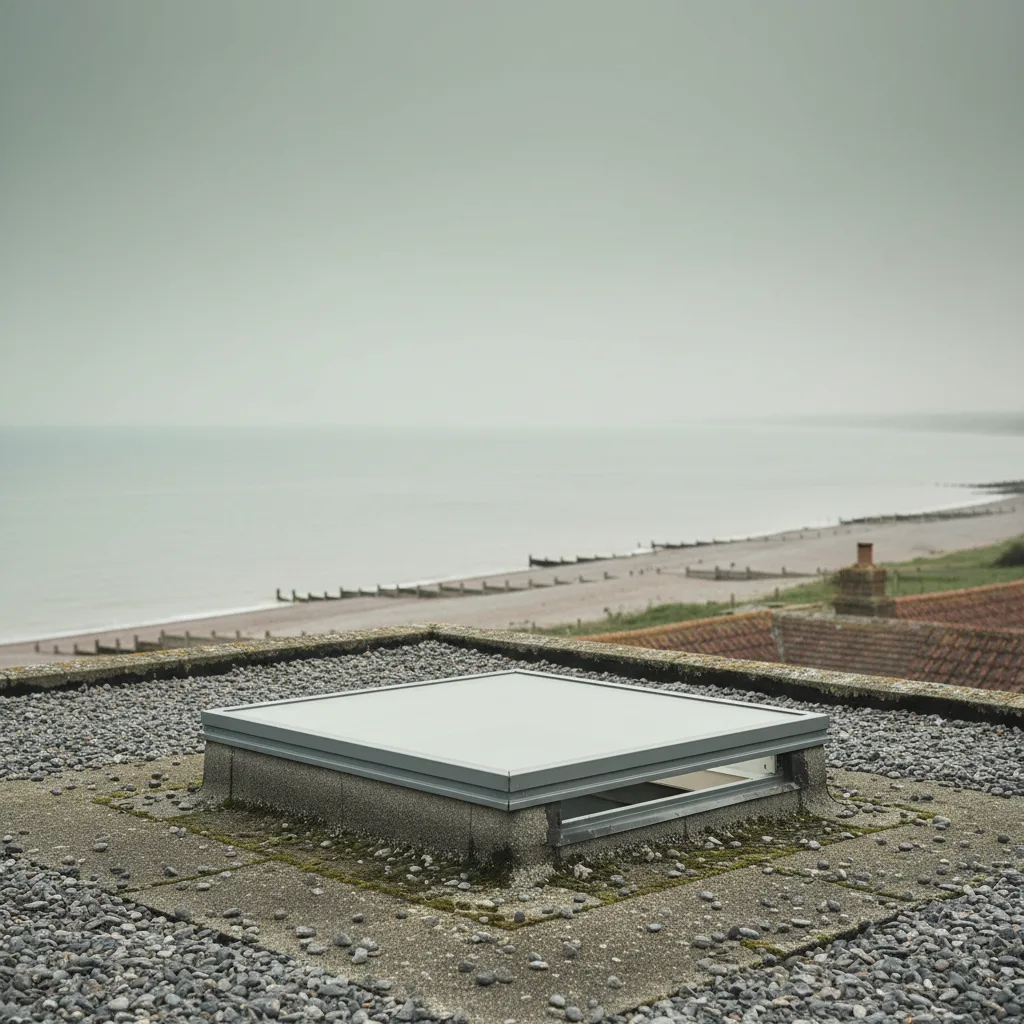
With the unit open. Running the rooflight fully open brings the seal line into view and, on a flat roof unit reachable from the roof, within reach of a cloth.
The weep holes
The second thing and the one nobody knows about.
Drainage channels in the frame discharge through small holes, and once those silt up the channels hold water instead of releasing it.
A soft brush clears them in a minute.
The roof around the kerb
Cleaned at the same time. Leaf litter and moss against an upstand dam water where it should be draining away, and that is a roof issue that shows up as a rooflight one.
The rain sensor
Wiped rather than adjusted. Dust and salt on the sensing surface can slow it or occasionally trigger it, and near the coast it wants doing more than once a year.
What it does is on what is a rain sensor rooflight.
Running the actuator through its stroke
Worth doing deliberately. A mechanism that is used regularly stays free. One that has not moved for a year can be stiff, and a chain that has sat extended collects dirt.
Opening and closing it fully a few times a year is enough.
Checking it closes fully
The one check that catches the important fault.
Look along the seal line with the unit closed. Even compression all round is what you want, and a visible variation means the stroke wants adjusting.
Why it matters is on do opening rooflights leak more than fixed ones.
The fixings
Checked rather than tightened routinely. Actuator brackets and frame fixings are looked at for movement, particularly on an exposed site where wind works at everything over the years.
Lubrication
Less than people assume, and use what is specified.
Most actuators are sealed and want nothing. Where a manufacturer specifies a lubricant for a hinge or a chain, it is that one rather than a general purpose spray.
What not to use
Oil on a gasket, or a general purpose penetrating spray anywhere near one.
Petroleum based products degrade rubber, so a seal that was merely dirty becomes a seal that needs replacing.
The glass
Cleaned as any rooflight is. A flat unit holds what lands on it, so it wants doing more often than a pitched one, and self cleaning glass reduces it rather than removing it.
How it works is on what is self cleaning glass.
The battery in a backup
The item that fails silently. A backup battery ages whether or not it is used, and a system that has never been tested will not tell you its battery has gone.
Isolating the supply once a year to check it closes is the test.
A solar unit’s panel
Kept clear, and that is all. Leaf litter or moss over the panel reduces what it gathers, and clearing it is part of the same annual look.
When a service visit is worth paying for
Where the unit is out of reach.
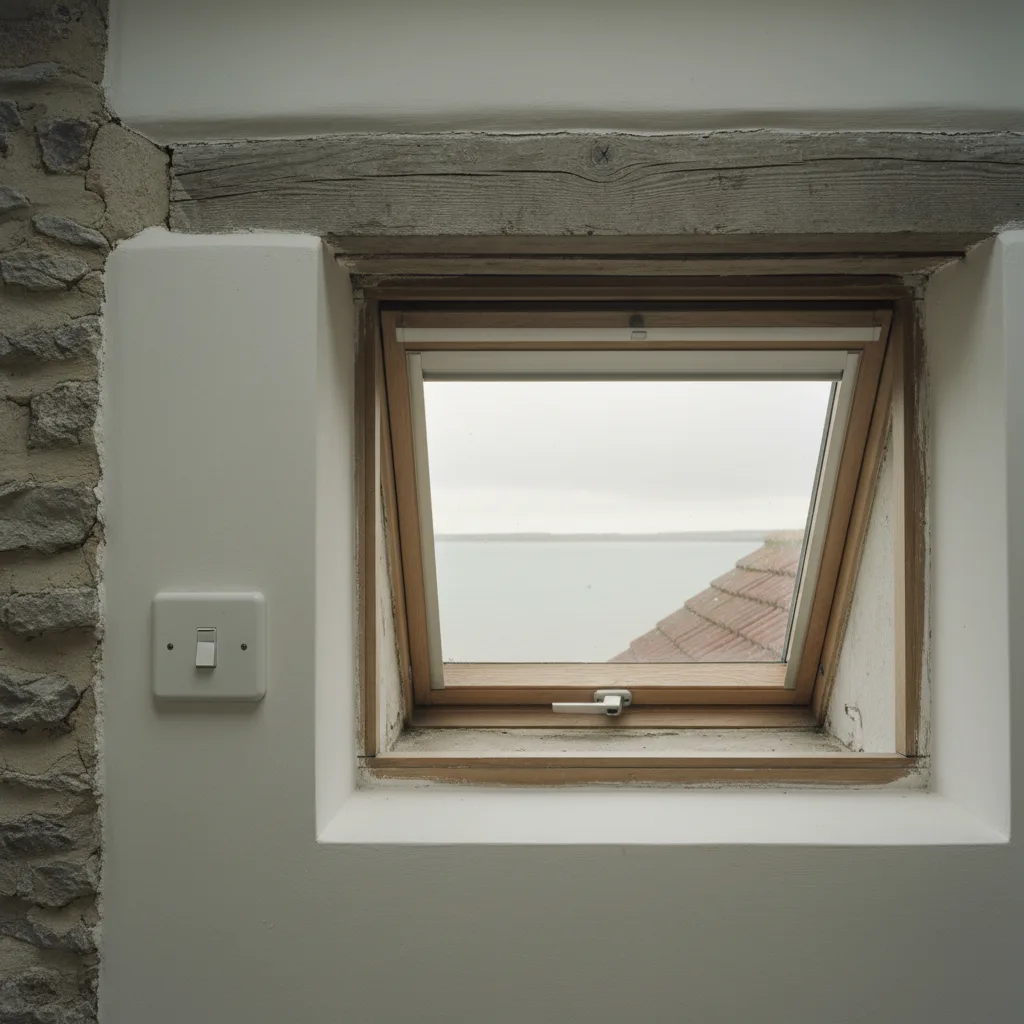
A rooflight in a vaulted ceiling or on a roof that cannot be walked on is not a homeowner job, and an occasional visit is cheaper than a failure.
What a visit covers
The list above, in half an hour.
Seals cleaned and inspected, weeps cleared, stroke checked and adjusted, sensor tested, fixings and controls checked, glass cleaned.
What it prevents
The two calls we get most. Water past a dirty gasket in a winter storm, and an actuator that will not close properly after a year of not moving.
What it does for the life of the unit
Extends it considerably, for very little. Gaskets and actuators are wearing parts, and both last far longer clean and exercised than neglected.
When to do it in the year
Autumn, before the weather turns. Doing it after the leaves have come down and before the first storms means the seals and the weeps are clear exactly when they are about to be tested.
It is the same visit as clearing the gutters.
What to look at while you are up there
The covering around the kerb.
Lifting seams, blistering, or a patch of standing water against the upstand are all worth noticing early, and they are far more consequential than anything on the rooflight.
Why is on do flat roof rooflights leak.
Whether to walk on the roof at all
The question to settle first.
A well built warm deck will take foot traffic and an older thin deck may not, and a rooflight itself is never a stepping point.
Where there is any doubt, it is a job for somebody with proper access equipment.
What we show you on an opening unit
We show people the gasket and the weeps at handover and we say plainly that a cloth once a year prevents most of what goes wrong, because it does and nobody has ever been told.
The whole picture is on the electric rooflight installation page.
Thinking about this job? We survey across Worthing, West Sussex and the South Downs and give you a fixed price before any work starts, with a 10-year workmanship guarantee.