Do opening rooflights and skylights leak more than fixed ones?
No, not when the unit is properly made and properly installed. An opening rooflight has a gasket compressed by the closing mechanism and its own drainage to take away anything that gets past it, and that system works reliably. What causes trouble is a mechanism out of adjustment, a dirty seal, or the same kerb faults that affect a fixed unit.
Why a flat roof rooflight leaks generally
The mechanism, and the kerb reasoning, is on do flat roof rooflights leak.
What follows is only what is added by a joint that moves.
How a fixed unit seals
Once, permanently.
The glass is bonded into the frame at manufacture and the joint never moves again, which is why a fixed unit has so little to go wrong.
How an opening unit seals
By compression, every time it closes. A gasket between the sash and the outer frame is squeezed by the actuator pulling the sash down, and the seal is made by that pressure rather than by adhesion.
It is a different principle rather than a weaker one.
Why compression is reliable
Because it is uniform and it is renewed each time.
A gasket compressed properly along its whole length makes a continuous seal, and it does so again on the next closing rather than depending on a bond made years ago.
Where the drainage comes in
Behind the gasket, as a second line.
Channels in the frame collect anything that passes the seal in driving rain and take it out through weeps, so the joint is drained as well as sealed.
What actually goes wrong, first
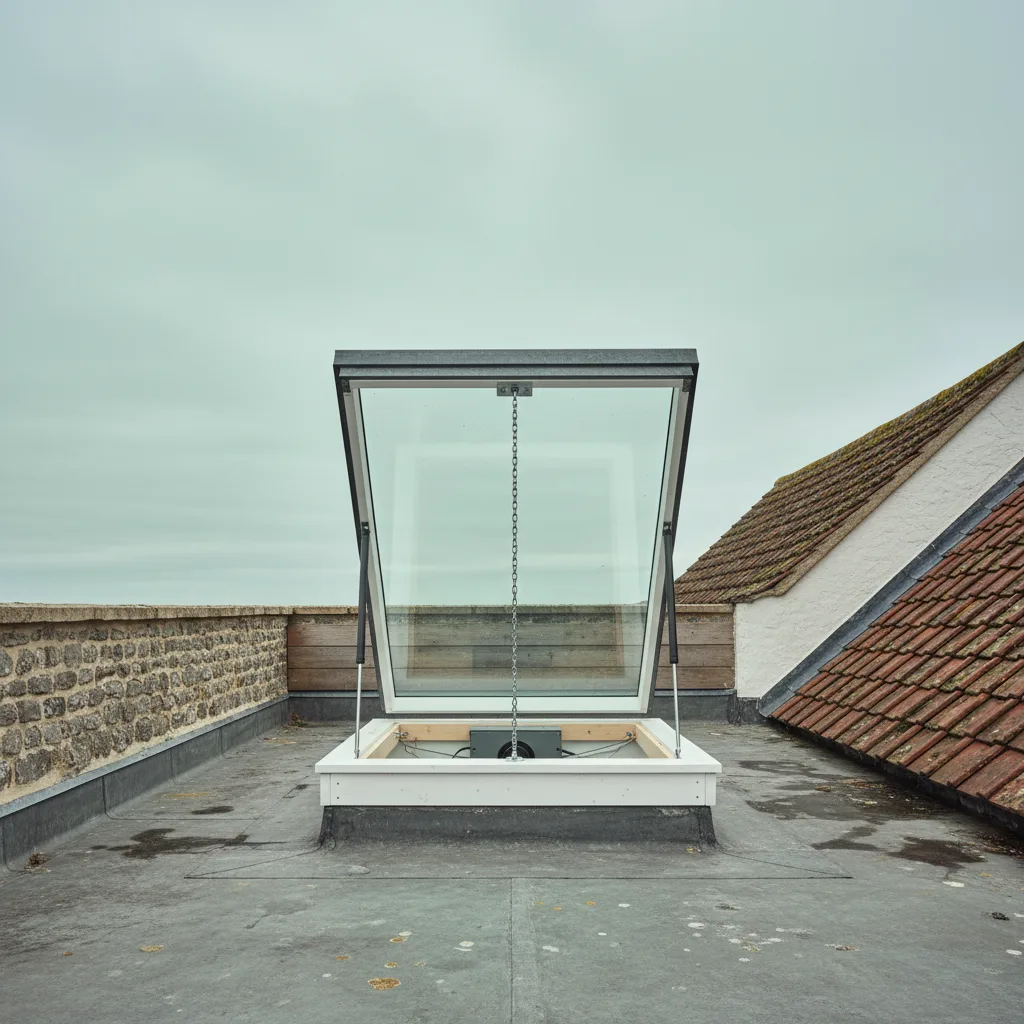
A dirty gasket. Leaves, grit and moss on the seal line stop the gasket compressing evenly, and a unit that has never been wiped since installation will eventually leave a gap somewhere along its length.
Wiping it is the whole of the prevention.
What goes wrong, second
An actuator out of adjustment. If the mechanism does not pull the sash fully home, the gasket is not properly compressed, and the unit will pass water in wind driven rain while looking closed.
It is a setting rather than a fault.
How to tell
Look along the seal line when it is shut.
A gasket compressed evenly all round reads as a consistent line. One with a visible variation is telling you where to look.
Blocked weeps
The third and it applies to fixed units too.
Drainage holes silted with dust and moss back up the channels, and water that should have drained away sits in the frame instead.
Clearing them is a few minutes once a year.
A twisted frame
Where a wide unit goes wrong. A wide opening pane driven from one point twists as it closes, which is why wide units use two synchronised actuators rather than one.
What one does is on what is a chain actuator.
A kerb out of square
The problem that shows on an opening unit first.
A fixed unit bedded onto a slightly unsquare kerb can be packed. An opening unit has to close onto a true frame, so a twisted kerb shows immediately.
Why it matters is on what is a builders kerb.
Ponding around the unit
A roof fault rather than a rooflight one.
Water standing against a kerb because the fall is insufficient will find any weakness given time, and an opening joint is the nearest one.
The falls are on what is the minimum fall for a flat roof with a rooflight.
Leaving it open in the rain
Not a leak, and it gets reported as one.
Rain entering an open rooflight is exactly what an open rooflight does, and the answer is a rain sensor rather than an investigation.
What that does is on what is a rain sensor rooflight.
Condensation mistaken for a leak
Very common, particularly in a kitchen.
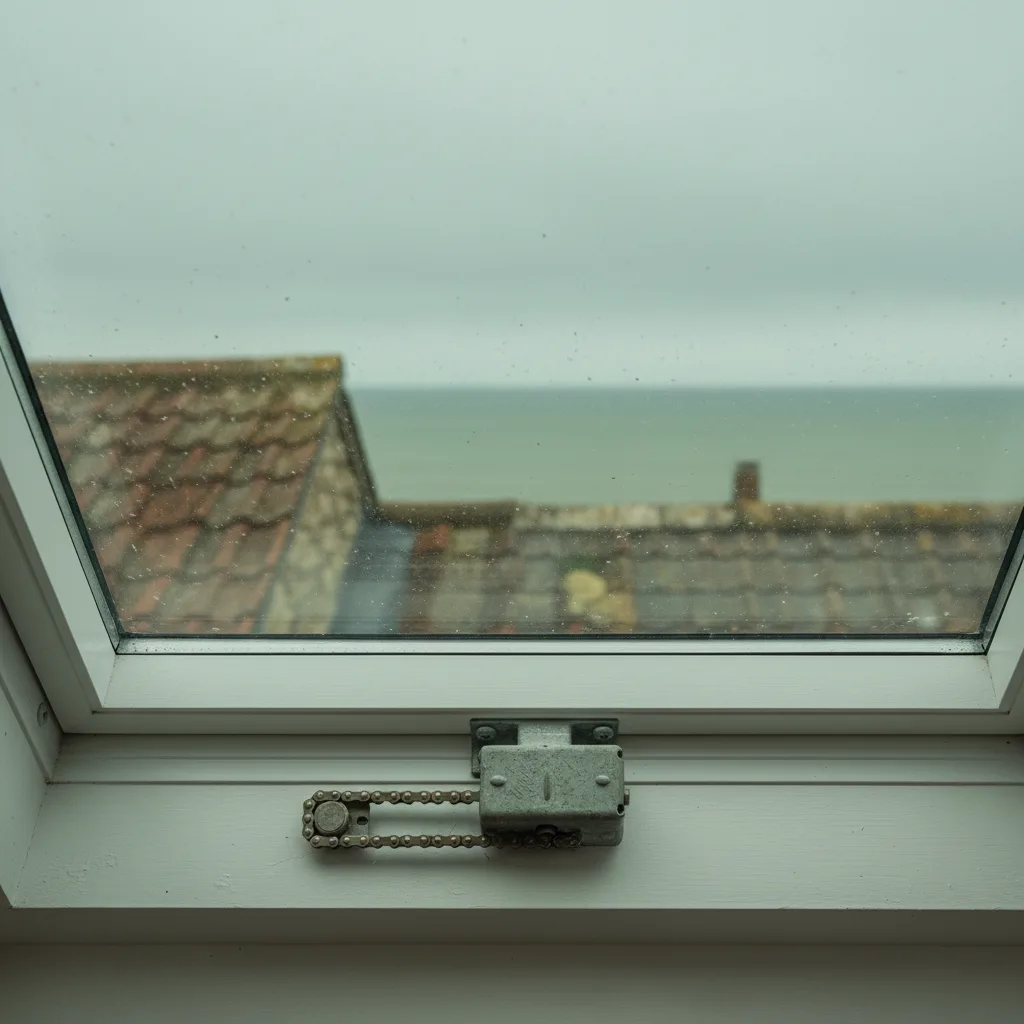
Water on the inside of the glass in January is almost always condensation, and it appears in the same places a leak would.
How to tell is on is it condensation or a leak.
Why an opening unit condenses less
Because it can be used.
Opening a rooflight for a few minutes clears the moist air that produces the condensation, which is one of the genuine arguments for having one in a kitchen.
The thermal question
Where an opening unit is genuinely behind.
An opening frame is more frame and more junction than a fixed one, so the whole unit figure is generally a little worse at the same size.
What the figure means is on what U value should a rooflight have.
Longevity of the gasket
Years, and it is replaceable.
A seal eventually takes a set and stops compressing evenly, and on a good system it is a stocked part rather than a reason to replace the unit.
What a service visit covers
The three things above.
Gasket cleaned and checked, actuator run through its full stroke and adjusted, weeps cleared, which is most of what keeps an opening unit dry.
That is on do electric rooflights need servicing.
Wind driven rain against a coastal roof
The condition that finds a marginal seal.
Rain arriving nearly horizontally off the sea is pushed at the joint rather than falling onto it, and a gasket that copes perfectly with vertical rain can be found out by a February south westerly.
It is why the annual wipe matters more here than inland.
What a good specification looks like
Two seals rather than one, and drainage between them.
Better opening units carry an outer weather gasket and an inner air seal with a drained cavity between, so anything passing the first is collected and released rather than reaching the room.
It is worth asking a supplier which arrangement a unit uses.
What we check on an opening unit
We check the kerb is true before an opening unit goes on it, because an opening rooflight is the one product that cannot be made to fit an inaccurate upstand.
The whole picture is on the electric rooflight installation page.
Thinking about this job? We survey across Worthing, West Sussex and the South Downs and give you a fixed price before any work starts, with a 10-year workmanship guarantee.