Weather is what separates them. Water appearing in cold weather whether or not it has rained is condensation. Water appearing during or shortly after rain, particularly wind driven rain, is a leak. Between those two, a handful of simple observations will nearly always settle it before anybody goes onto a roof.
Why the two look identical
Because they show in the same places.
Both produce damp patches at the corners of a reveal, drips from the frame and staining in the plaster, so appearance alone tells you very little.
Check one: does it follow rain
The strongest single indicator.
Keep a note of when water appears and what the weather was doing. A correlation with rain, especially driving rain, points firmly at a leak.
Check two: does it follow cold
The counterpart.
Water on a clear frosty morning with no rain for days is condensation, and it is generally worst first thing and gone by mid afternoon.
Check three: does it follow the room
Very telling in a kitchen or a bathroom.
Water that appears after cooking, after a shower, or after a night with the door shut is the room producing moisture rather than the roof failing.
Check four: where exactly is it
Condensation is even, a leak is a point.
Condensation forms across the glass and along the coldest edges more or less evenly. A leak arrives at one place and runs from it.
Check five: is it clean
The one people find persuasive.
Condensation is distilled water and leaves no mark. A leak has travelled over timber, dust and felt, so it stains and often leaves a tide line.
Check six: how much
Volume separates them at the extremes.
Condensation produces drips and damp patches. A genuine leak in heavy rain produces a run of water, and no amount of humidity does that.
The mixed case
Common, and worth knowing about.
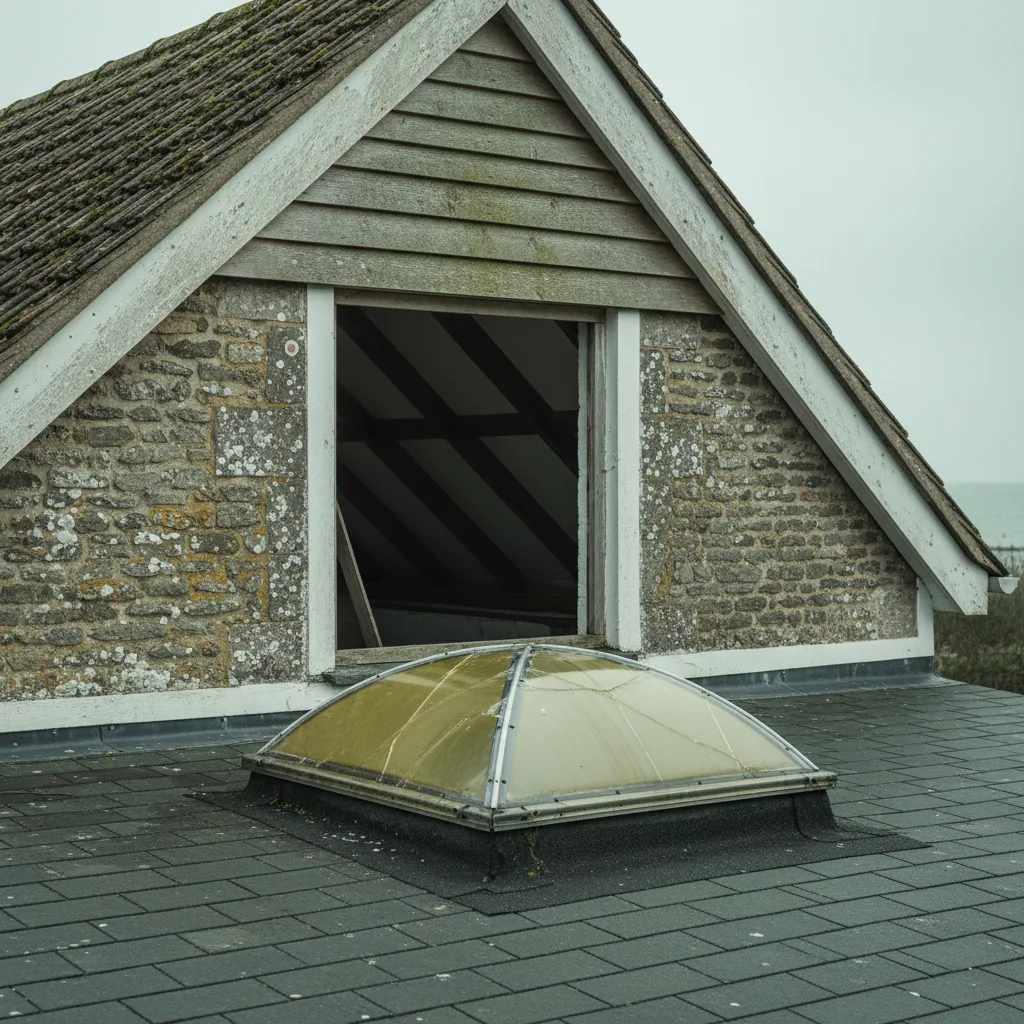
A cold uninsulated kerb produces condensation, and the same poor detail often admits water as well, so a roof can have both faults at one rooflight.
Interstitial condensation
The third possibility, and the least obvious.
Moist air reaching a cold surface inside the roof build up condenses there and drips, which looks exactly like a leak and is caused by the room.
It is why the vapour control layer matters.
Why a rooflight condenses first
Because it is the coldest surface and it is at the top.
Warm moist air rises and the glass overhead is generally the coldest thing it meets, so a rooflight collects a room’s moisture before anything else does.
The mechanism is on why is there condensation on my flat rooflight.
The cold kerb
The single most common cause of what gets reported as a leak.
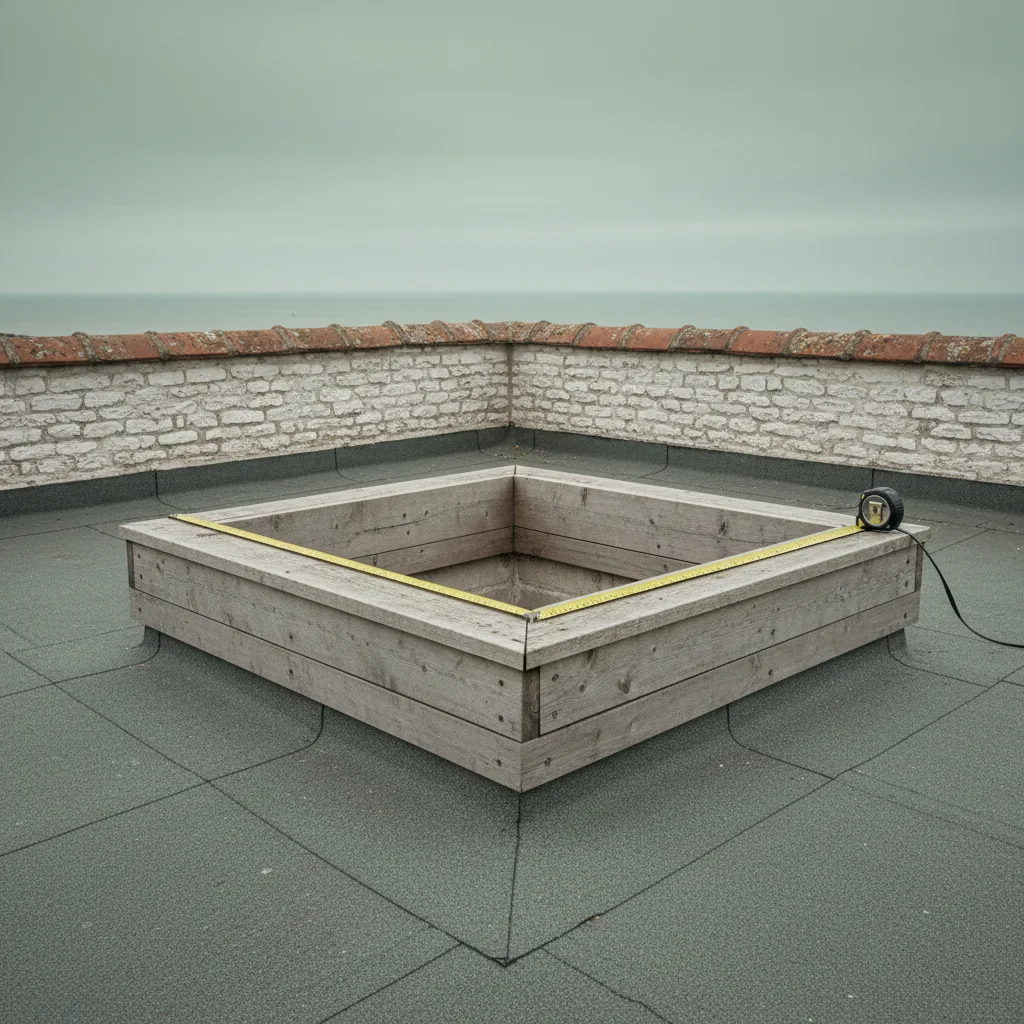
An uninsulated upstand runs wet round its whole perimeter in winter, and the water appears exactly where a perimeter leak would.
Insulation rather than sealant is the fix.
Dew on the outside
Not a fault at all.
An efficient unit lets so little heat through that the outer pane cools below the dew point and mists on clear mornings, and it clears when the sun reaches it.
Mist between the panes
A third thing again. Moisture inside the sealed unit that will not wipe off either face is a failed unit, and it is unrelated to both leaks and room condensation.
That is on why is my rooflight misted up.
Testing for a leak properly
A hose, from the bottom up. Water is applied to the lowest part of the detail first and worked upward with time between stages, so the entry point can actually be identified.
The method is on why is water coming in around my rooflight.
Testing for condensation
A cheap hygrometer and a week. Recording the humidity in the room morning and evening tells you a great deal, and a room sitting persistently high is producing the water.
What to do about condensation
Ventilate, warm and insulate. Extract at source, background ventilation, warmth in the room and insulation at the reveal are the four things that address it.
The detail is on how do I stop condensation on a rooflight.
What to do about a leak
Find it before fixing anything. Sealing the place where water is showing rather than where it is entering is why leaks come back, and the diagnosis is the whole job.
What a new rooflight will not fix
Worth saying plainly. Replacing a rooflight because of condensation, without addressing the reveal and the ventilation, buys a warmer pane and the same wet corners.
What it will fix
The glass being the coldest surface. A much better unit is warmer on its inner face, so the room has to be more humid before water forms, which genuinely helps.
The comparison is on will a new rooflight be warmer.
Where a survey adds most
Looking above the ceiling. Where a loft or a ceiling void can be inspected, the underside of the deck tells you a great deal: staining that follows a run points to a leak, and even dampness across an area points to condensation.
Thermal imaging
Occasionally useful, frequently oversold. A thermal camera shows cold spots and wet areas readily, which helps locate a cold bridge, and it does not by itself distinguish condensation from a leak.
It is one input rather than an answer.
Moisture meters
Useful for extent rather than for cause.
A meter tells you how wet the plaster is and how far the damp reaches, which is worth knowing before deciding how much making good is involved.
What we ask first on a replacement
We ask for a week of observations before we come out where the description could be either, because a diagnosis made from the ceiling is a guess and a diagnosis made from the weather is usually right.
The whole picture is on the replacing a failed or misted rooflight page.
Thinking about this job? We survey across Worthing, West Sussex and the South Downs and give you a fixed price before any work starts, with a 10-year workmanship guarantee.