Frequently yes, and where it is possible it is much the cheapest way to deal with a misted rooflight. Everything turns on how the glass is held: a unit set into a rebate behind removable beads can be changed on site, and a unit structurally bonded to the frame cannot. That single detail decides between a morning’s work and a whole new rooflight.
Why it is worth doing
Because the rest is fine.
A failed sealed unit leaves the frame, the fixings, the kerb, the flashing and the plaster all doing their jobs, and replacing the rooflight replaces all of that unnecessarily.
What has failed
The edge seal, and only that.
How a unit fails, and why it cannot be repaired, is on why is my rooflight misted up.
Beaded glazing
The arrangement that allows a swap.
The unit sits in a rebate on setting blocks, held by beads or a capping that unscrews or clips off, and it comes out the way it went in.
Bonded glazing
The arrangement that does not.
On many slim framed flat rooflights the glass is structurally bonded to the frame with an adhesive, which is what allows the frame to be so narrow, and it cannot be separated on site.
How to tell from a photograph
Look at the edge from outside.
A visible capping or bead around the pane suggests beaded. Glass running out to the frame edge with no capping suggests bonded.
A close photograph of one corner usually settles it.
Roof windows
Almost always replaceable.
Pitched roof window sashes are designed to be reglazed, and manufacturers supply units against a size code as a service part.
That route is on can a VELUX window be repaired.
Lantern panes
Individually replaceable.
Lantern glazing sits under cappings that unscrew, so a single failed pane in one face is changed without touching the rest of the structure.
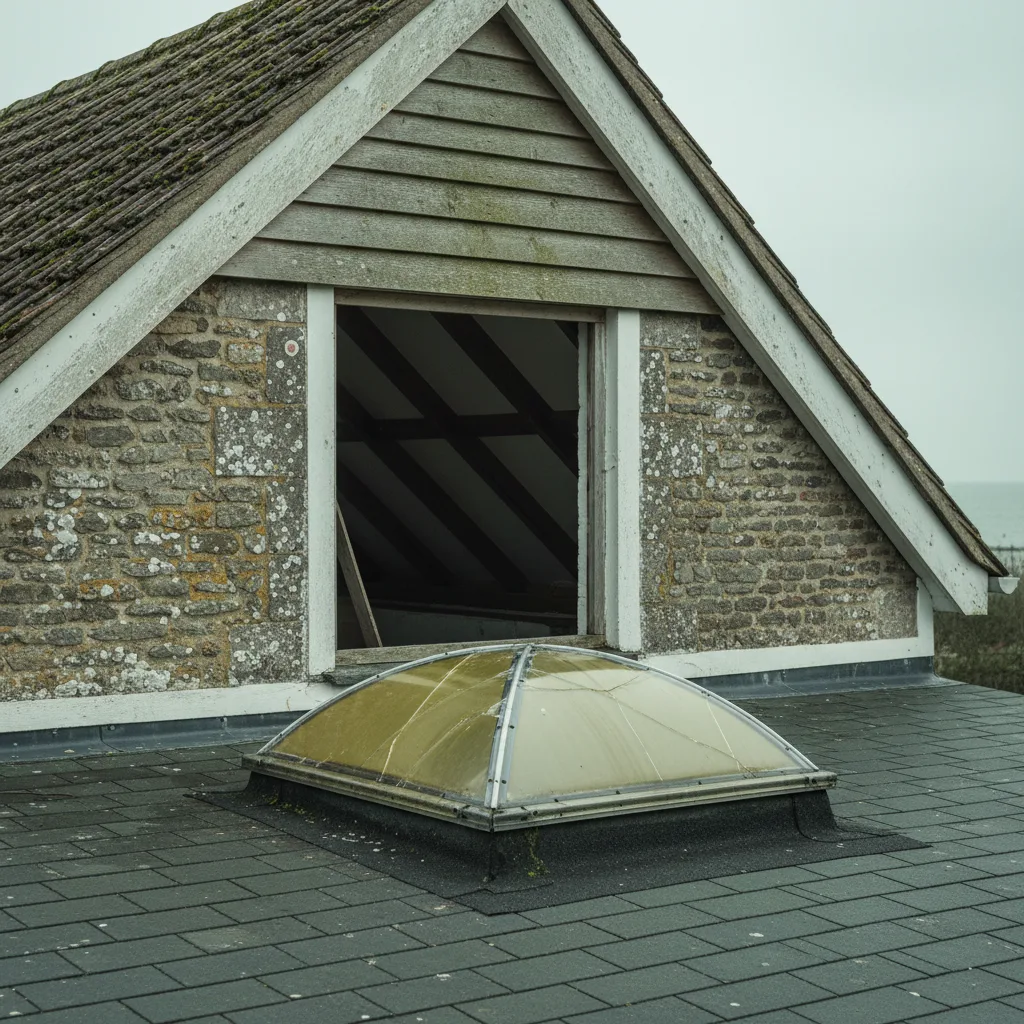
Fixed flat rooflights
The mixed case.
Some are beaded and some are bonded, and it varies by manufacturer and by generation within the same manufacturer.
Opening flat rooflights
Frequently more repairable than fixed ones.
An opening sash is often a glazed frame rather than a bonded assembly, which means the pane can be changed with the sash off.
Measuring the replacement
On site, not from a drawing.
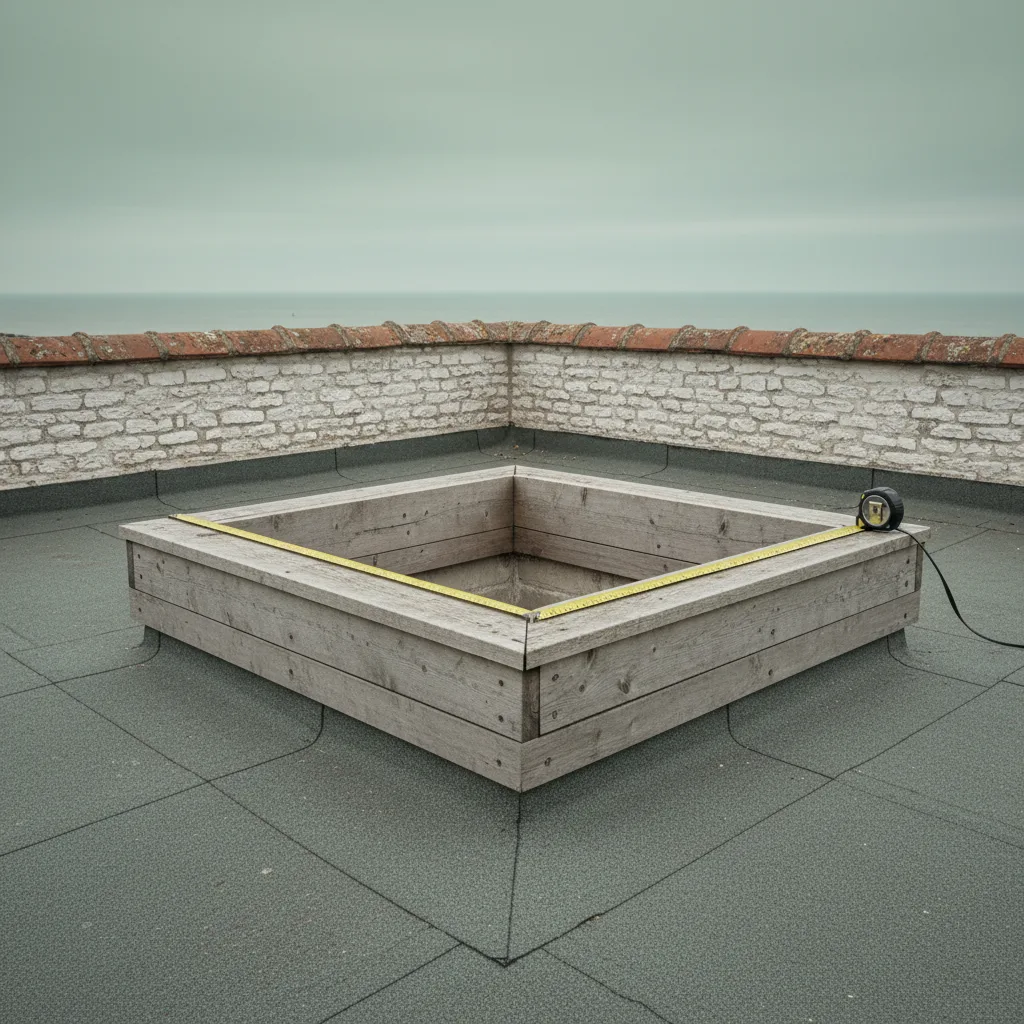
The sight size, the rebate depth and the unit thickness are measured from the actual frame, because tolerances vary and a unit that does not fit is scrap.
Matching the thickness
Important, and easily got wrong.
The new unit has to match the overall thickness the rebate and beads were made for, so a thicker modern specification may not simply drop in.
Upgrading the specification
The opportunity worth taking.
A replacement can carry a better coating, a solar control layer or a warm edge spacer within the same thickness, which improves the rooflight for very little extra.
What each does is on what is solar control glass.
Safety glass overhead
Not negotiable.
Glass above a room is specified so that it cannot fall in pieces, which normally means a laminated inner pane on any replacement.
Setting blocks and seals
Renewed with the glass.
The blocks that carry the weight and the gaskets that seal the rebate are replaced rather than reused, and getting the blocks in the right positions is what stops the unit stressing.
What the job involves
Access, two people and an hour or two.
The beads come off, the old unit is lifted out, the rebate is cleaned, new blocks and seals go in, the new pane is set and the beads go back.
Handling at height
The part that decides the price.
A sealed unit is heavy and awkward, and getting one onto a roof and into a frame is what needs the people and the access rather than the skill.
How long it takes
Half a day on a straightforward unit.
Plus the lead time on the glass, which is made to the measured size rather than taken off a shelf.
Whether it is worth it on an old rooflight
The honest comparison.
New glass in an old frame gives clear glass at the old thermal performance, where a new rooflight is a genuine step, and on a cold room that matters.
The figures are on will a new rooflight be warmer.
Whether the guarantee helps
Check before paying.
Sealed units carry a guarantee against exactly this failure for a stated period, and an early failure should be a warranty claim rather than a purchase.
Cleaning the rebate properly
A small step that decides the life of the new unit.
Old sealant, dirt and debris left in the rebate stop the new unit bedding evenly and can hold water against its edge, which is what killed the last one.
It is cleaned back to a sound surface before anything goes in.
Drainage in the rebate
Checked while it is open. A glazed rebate is drained so any water reaching it gets out, and those channels are cleared at the same time rather than being sealed over.
Breakage rather than misting
A different reason for the same job.
A cracked or shattered overhead pane is replaced the same way, and where the inner leaf is laminated the broken glass stays held in place rather than falling into the room.
It is one of the reasons laminated is specified overhead.
Making the roof safe in the meantime
Covered and protected until the new pane arrives.
A temporary sheet over the opening keeps the weather out for the lead time on the glass, and the room below is protected in case anything is still loose.
What we want to know on a replacement
We ask for a corner photograph before anything else, because whether the glass is beaded or bonded is the whole question and it takes one picture to answer.
The whole picture is on the replacing a failed or misted rooflight page.
Thinking about this job? We survey across Worthing, West Sussex and the South Downs and give you a fixed price before any work starts, with a 10-year workmanship guarantee.