Can you replace a rooflight or skylight without scaffolding?
Often, on a single storey flat roof that can be reached safely from a tower and walked on. Much less often on a pitched roof at height, or where a unit is large and heavy. Access is the largest single variable between two otherwise identical jobs, and it is settled at survey by looking rather than by assuming.
What the question is really about
Getting people and glass up safely.
The work needs a stable working platform and a way of raising a heavy unit, and every access decision follows from those two requirements.
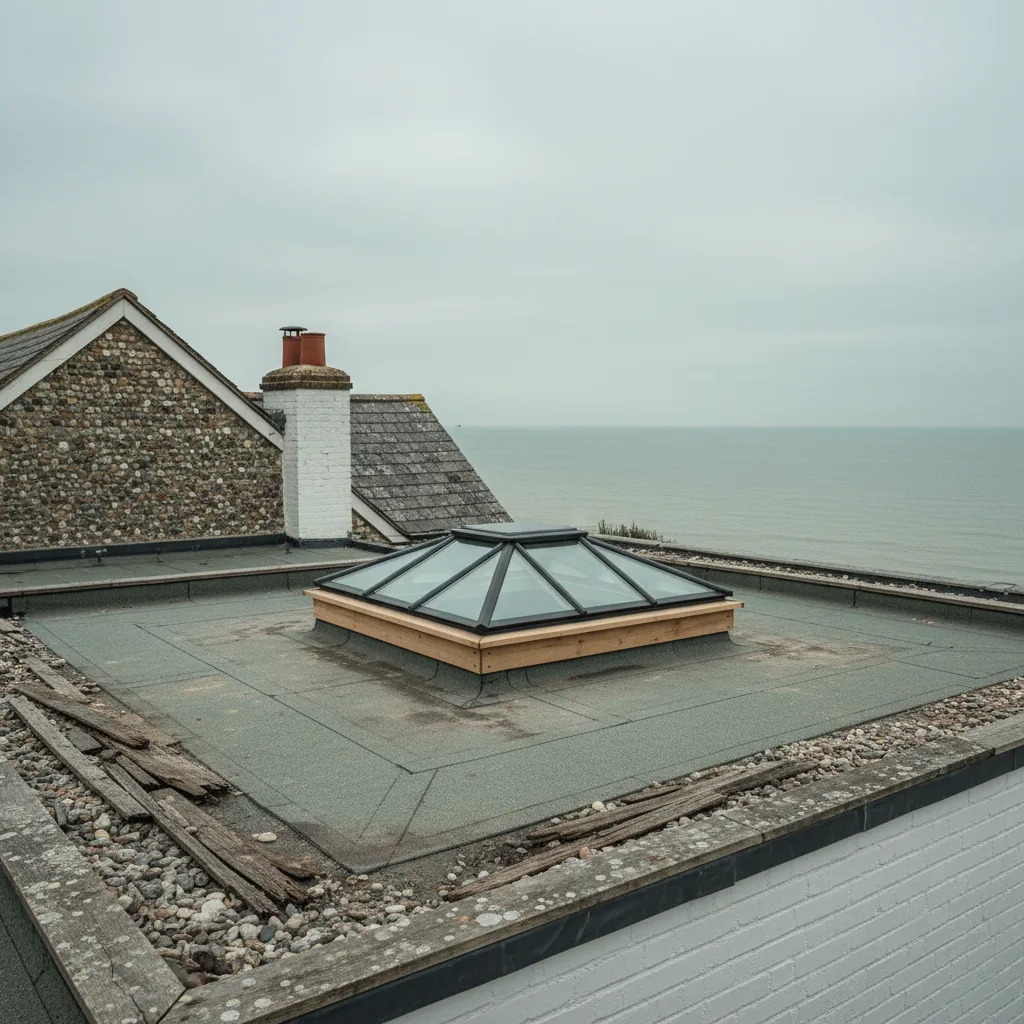
A single storey flat roof
The best case, and the common one.
A rear extension roof at ordinary height, reachable from a tower and sound enough to be walked on, needs no scaffold at all.
Whether the roof can be walked on
Established before anybody stands on it. A well built warm deck takes foot traffic. An older thin deck or one with unknown structure does not, and that is checked rather than assumed.
What a tower gives you
Safe access to a modest height. A mobile tower is quick to erect, needs level ground to stand on, and reaches a single storey roof comfortably.
What a tower does not give you
Edge protection across a roof. Working across a flat roof away from the edge is different from working at the edge, and where people will be near a drop, protection is required regardless.
Where the ground defeats it
The commonest obstacle in practice. A tower needs somewhere flat and firm. A sloping garden, a light well, a narrow side passage or a conservatory roof beneath all rule it out.
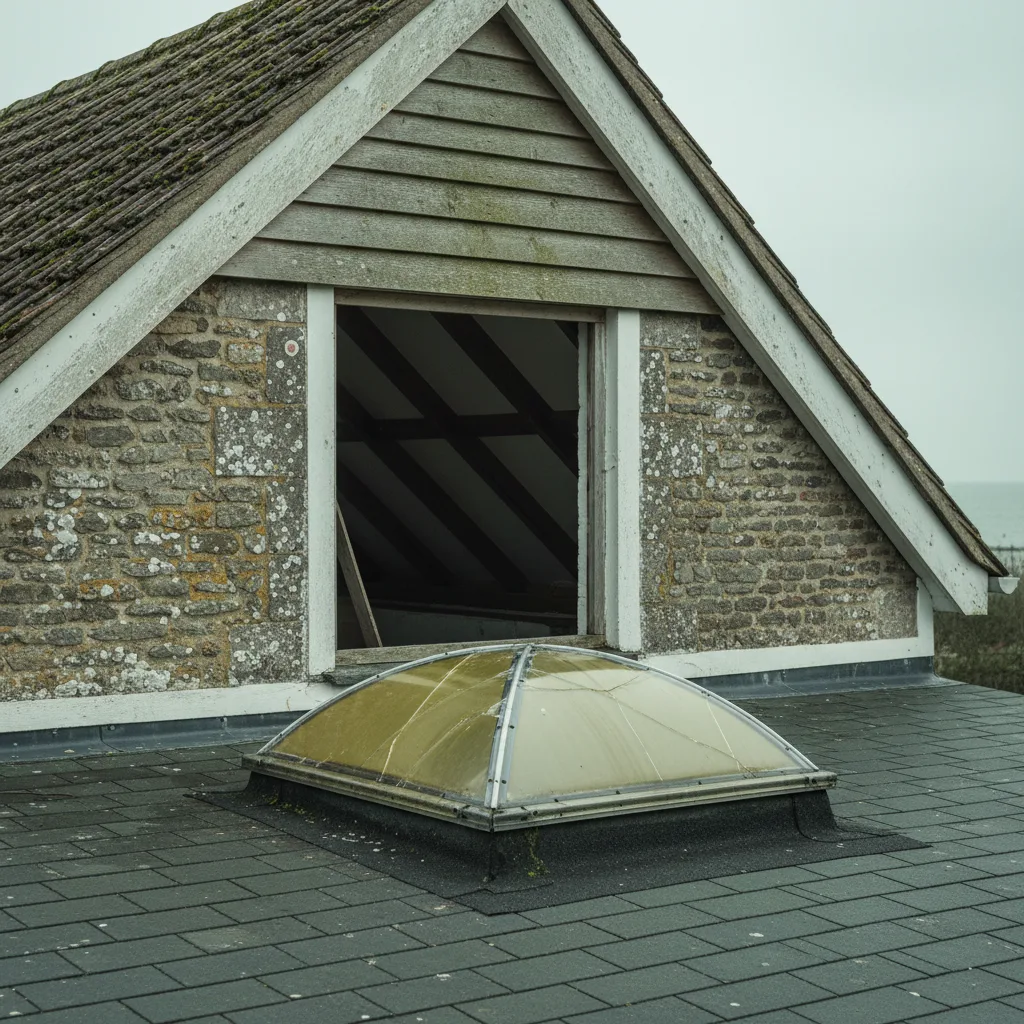
A pitched roof at first floor
Generally wants a scaffold.
Working on a slope at height, handling a frame and reinstating covering is not ladder work, and a proper platform with edge protection is what it needs.
Where a roof ladder is used
On a sound covering at a moderate pitch.
A roof ladder hooked over the ridge lets a fitter reach a position on a sound tiled or slated roof, and a brittle or fragile covering will not take one.
Working from inside
Reduces the external work rather than removing it.
On a pitched roof window much of the job is internal, and the flashing and the courses are still external, so access is reduced rather than avoided.
What that means is on can a roof window be fitted from inside.
Why a replacement helps here
Less external work than a new opening.
The opening exists and the courses are already cut to line, so the external part of a like for like swap is shorter than forming one from scratch.
The weight of the unit
What often decides it. A small sealed unit is a two person lift up a tower. A large one is a mechanical lift or a hoist, and that changes the access plan entirely.
Where a lift is needed
Booked with the delivery. Where a unit cannot be carried through a house or across a garden, a lift is arranged, and that has to be scheduled rather than decided on the day.
Over a conservatory
The situation that most often complicates it.
Nothing can be stood on a glass roof and a scaffold has to be designed around or over it, which is a specialist arrangement rather than a standard one.
On a boundary
Where agreement is part of the job.
A scaffold standing on a neighbouring property or oversailing it needs their agreement, and that is arranged in advance rather than on the morning.
On a terrace
The other difficult case. Narrow side passages, no rear access and shared alleys all limit what can be brought in, and the method follows the route rather than the roof.
What that looks like is on East Worthing.
A flat above a shop
Frequently a scaffold and a licence. Where access is from a pavement or a highway, a licence from the authority is needed for the scaffold, which adds time and cost.
What scaffold adds to a job
Days at each end and a real cost.
Erecting and striking are separate visits, and on a small replacement the access can be a substantial share of the total figure.
Where it sits is on how much does it cost to replace a rooflight.
Doing several at once
The best way to use it. Where a scaffold is going up anyway, every rooflight on that elevation is worth dealing with in the same visit.
Doing it with other roof work
Better still. Guttering, a chimney, a covering repair or a recovering all share the same access, and coordinating them is the largest saving available on any roof job.
What we will not do
Work off a ladder to save a hire.
Handling glass at height from a ladder is how people get hurt, and where the access needs a platform we price a platform.
Protecting what is below
Part of the access plan rather than separate from it.
Planting, paving, a garden room or a parked car under the working area all need protecting or moving, and it is easier agreed at survey than negotiated on the morning.
Insurance and competence
Worth asking about plainly. Anybody working at height on a domestic roof should carry public liability cover and be able to say what access they are proposing and why.
A contractor who cannot describe the access has not thought about the job.
What we settle first on a replacement
We settle the access at survey by standing in the garden rather than by assuming, because it is the largest variable in the quotation and the one most often got wrong from a photograph.
The whole picture is on the replacing a failed or misted rooflight page.
Thinking about this job? We survey across Worthing, West Sussex and the South Downs and give you a fixed price before any work starts, with a 10-year workmanship guarantee.