Asbestos in older rooflight or skylight surrounds, and what to do about it
Buildings constructed or refurbished before 2000 may contain asbestos, and a rooflight surround is one of the places it turns up. It is uncommon on domestic work and it is not rare enough to assume it away, and the rule that matters is a simple one: nothing suspected is disturbed until it has been identified.
The dates that matter
Asbestos use in the United Kingdom was phased out rather than stopped at once.
Blue and brown asbestos were banned in 1985. White asbestos followed in 1999, with the ban fully in force from 2000. Which means the working assumption is that any building constructed or refurbished before 2000 may contain asbestos containing materials, and a building from after that date almost certainly does not.
A great deal of the housing stock in this area predates 2000 comfortably, so the question arises regularly even though the answer is usually no.
Where it may be, around a rooflight
| Material | Where | Risk if disturbed |
|---|---|---|
| Asbestos cement sheet | Surrounds and roofing on garages, outbuildings, older extensions | Lower, and still significant if broken or cut |
| Bitumen products and older felts | Some flat roof coverings and damp proof layers | Lower. Firmly bound |
| Asbestos insulating board | Linings, reveals, soffits, ceiling panels | Higher. Softer and more friable |
| Textured coatings | Ceilings and reveals below an opening | Lower, and it must not be sanded |
| Rope and gasket materials | Around old flues and some older units | Higher if handled |
| Flue and pipe insulation | Where a flue passes near an opening | Higher |
The pattern is that the harder and more firmly bound a material is, the less it releases when left alone, and every one of them releases fibres when cut, drilled, sanded or broken.
The one rule
Undisturbed material in good condition is not releasing fibres. Disturbing it is what creates the risk.
Which means the correct response to a suspicion is to stop, not to investigate more energetically. Scraping at something to see what it is, or cutting a piece off to look at it, is precisely the action that turns a managed situation into an exposure.
Everything else on this page follows from that.
Where it turns up on our kind of work
Three situations account for almost all of it, and none is a typical house roof.
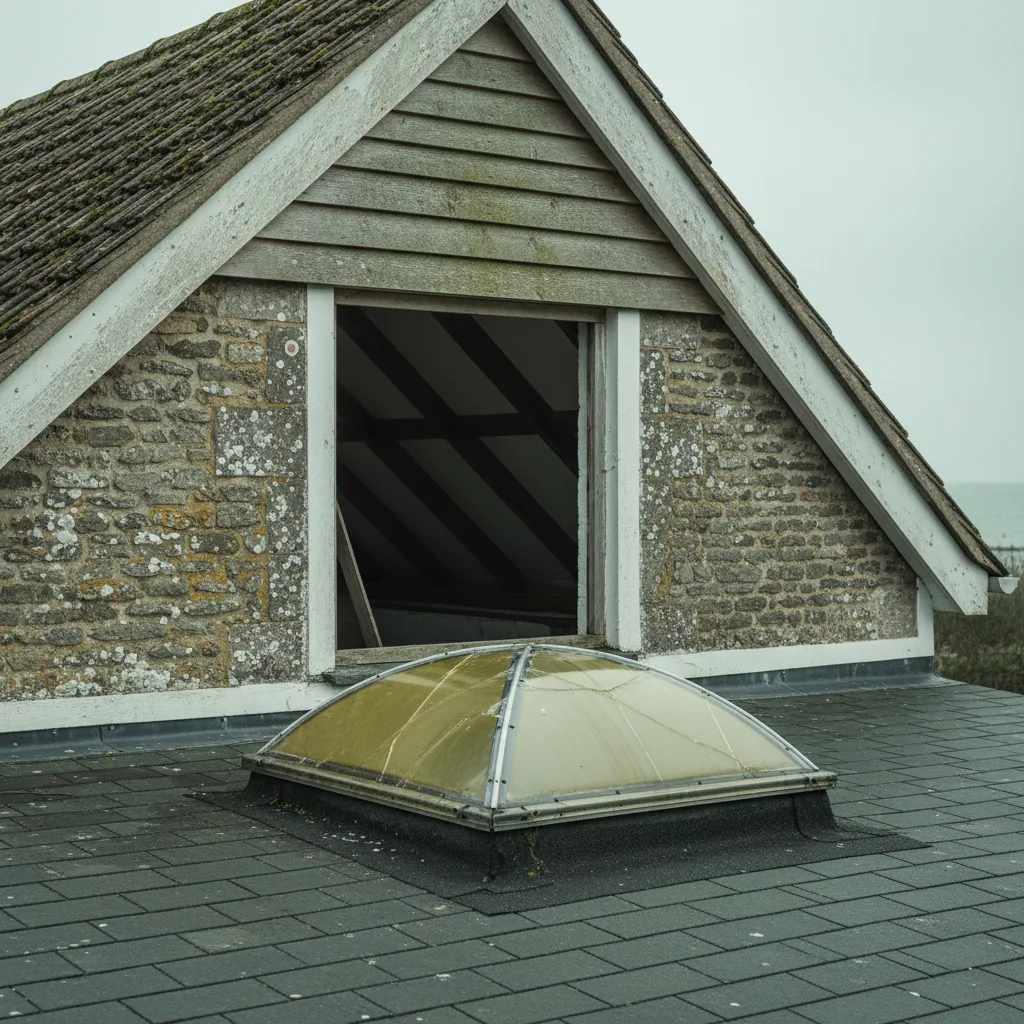
Garages and outbuildings. Asbestos cement roofing, sometimes with a rooflight sheet let into it, is common on garages of a certain age. The rooflight sheet itself is usually plastic and the sheets around it may not be.
Older extensions and outbuildings. Where a flat roof or a surround was formed in cement sheet rather than timber.
Interior linings. Where a reveal or a ceiling around an opening was lined in insulating board, or where a textured coating was applied.
On an ordinary domestic pitched or flat roof with a timber kerb, it is not usually a consideration.
What we do when we suspect it
- Stop work in that area immediately.
- Do not cut, drill, break, sand or sweep anything.
- Leave the material in place and undisturbed.
- Photograph it without touching it, for identification.
- Tell the customer plainly what we have found and why we have stopped.
- Recommend it is identified by sampling and analysis before anything else happens.
That is a delay of days rather than weeks, and it is a delay worth accepting.
Identification is a laboratory question
Nobody can identify asbestos reliably by eye, and anybody who says they can is guessing.
The material types that contain it look very like the material types that do not, particularly cement sheets and textured coatings, both of which were made in asbestos and non-asbestos versions in overlapping periods.
The answer comes from a sample taken safely and analysed by an accredited laboratory. It is inexpensive relative to the work it governs, and it converts an assumption into a fact.
What a survey involves
For a domestic project the relevant thing is usually a refurbishment survey covering the area to be worked on, rather than a whole building assessment.
It is intrusive by design, because it is looking for material that will be disturbed by the planned work, and it is carried out by somebody competent to do it. The output identifies what is present, where, and in what condition.
With that in hand the work can be planned properly, which is the whole point.
The regulations, in outline
The Control of Asbestos Regulations 2012 govern work with asbestos, and how they apply depends on the building.
Non-domestic premises, and the common parts of blocks of flats, carry a duty to manage: whoever is responsible has to know whether asbestos is present, keep a record, assess the risk and manage it. On a block of flats in Brighton or Hove that duty sits with the freeholder or the managing agent, and asking whether a register exists is a reasonable question.
An individual dwelling does not carry that duty in the same way. What does apply, on any building, is that anybody carrying out work has duties about how that work is done.
Licensed, notifiable and non-licensed work
Work with asbestos is categorised by the risk of the material and the work being done.
The higher risk materials and the more disruptive work require a contractor holding a licence from the Health and Safety Executive. Some lower risk work is non-licensed but notifiable, with records kept. Some is non-licensed.
Which category a particular job falls into is determined by what the material is and what has to be done to it, which is why identification comes first. Removal work of the licensed kind is carried out by a licensed asbestos removal contractor, and that is the right people for it.
Removal is not always the answer
A point worth making because the instinct is to want it gone.
Material in good condition that will not be disturbed by the planned work can frequently be left, recorded and managed. Removing it means disturbing it, which is the activity that carries the risk, and it is expensive.
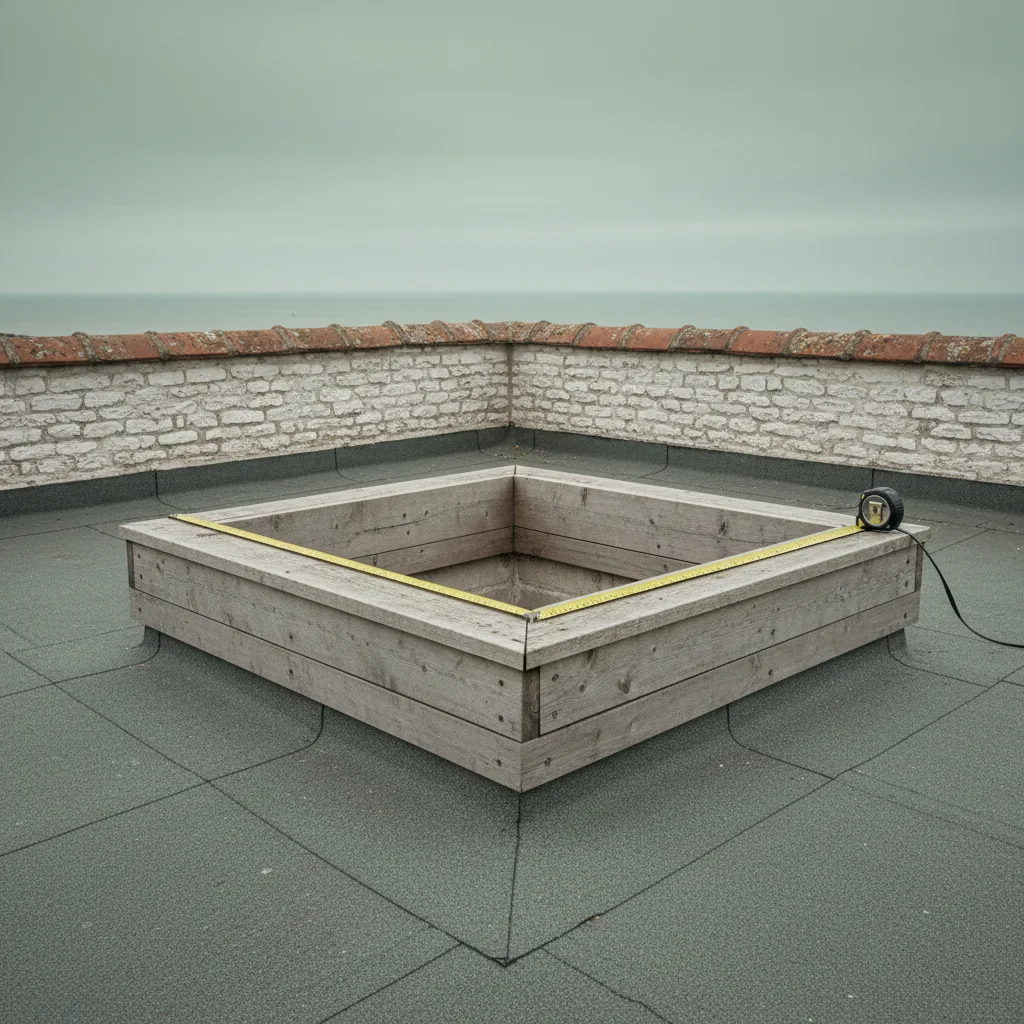
Where a rooflight opening can be formed clear of the material, leaving it alone is often both safer and cheaper than removing it. Where the work would disturb it, it has to be dealt with.
Encapsulation
A middle option that is sometimes the right one.
Sealing or coating material so that fibres cannot be released, and recording that it is there, is a recognised approach for material in reasonable condition that is not going to be worked on.
It leaves the material in the building, which means the record has to survive so that whoever works there in twenty years knows about it. That is the weakness of the approach rather than a reason against it.
What it does to a programme
Honestly: it adds time, and less than people fear.
Sampling and analysis is days. A refurbishment survey is a visit and a report. Where licensed removal is needed, that is a specialist contractor with their own lead time and their own arrangements, and it is a phase of the project rather than a delay to it.
What extends things badly is discovering it late, because then a job is stopped mid-way with a roof open. Which is the argument for raising it at survey on any pre-2000 building rather than hoping.
What a homeowner should not do
Three things, and they are the common ones.
Do not break up a sheet to see what is underneath. Do not sand a textured coating, which is the single most common domestic exposure. And do not sweep up debris dry, because sweeping puts fibres into the air far more effectively than leaving them.
Where something has already been disturbed, the sensible response is to stop, keep people out of the area, and get advice.
Garage and outbuilding roofs
Worth a specific note because it is where we meet this most.
A great many garages across this area have cement sheet roofs of a certain age, frequently with a translucent rooflight sheet let in among them. Replacing that rooflight sheet means handling the sheets around it.
Where the sheeting is asbestos cement, that changes what the job is and who does it. Where it is a modern fibre cement, it does not. They look extremely similar and the difference is a laboratory question rather than a judgement.

Buying and selling
It comes up at the point of a sale and it is worth knowing the position.
The presence of asbestos containing material in good condition is not in itself a defect requiring removal, and it is something a buyer is entitled to know about. A record of what was identified, where, and in what condition is genuinely valuable at that point.
Which is another reason that where a survey has been done, the report belongs with the property paperwork rather than in a drawer.
Who pays for the delay
A fair question and worth answering in advance rather than in the middle of it.
Where we have raised the possibility at survey and priced the work with that caveat stated, a stop for identification is a known risk rather than a variation, and the sampling cost is the customer’s as part of establishing what the building contains.
Where the material was genuinely unforeseeable, the same applies, because nobody can be liable for the presence of something a building has contained since before they were involved. What we take responsibility for is stopping rather than carrying on, which is the part that is within our control.
What we would not do is price a job low on the assumption that nothing will be found and then treat the discovery as an opportunity.
What we tell you
Plainly, and in writing. What we found, where, why we stopped, and what we recommend. We will not offer an opinion on whether it is asbestos, because that is a laboratory question and a guess either way is unhelpful.
Where identification comes back negative, we carry on as planned. Where it comes back positive, we work with whoever is dealing with it and sequence our work around theirs.
Why we raise it before starting
On any pre-2000 building where the work involves cutting into a surround, a lining or a sheet material we cannot identify, we say so at survey.
It is a conversation nobody enjoys and it is far better than the alternative, which is a job stopped with a roof open and a family in the house wondering what has been in the air.
The cost of asking is a few days. The cost of not asking can be considerable, and it lands on the occupants rather than on anybody’s programme.
The question we start with on a replacement
We ask the age of the building and look at what the surround is made of before quoting on any pre-2000 property. Where we suspect a material we stop, disturb nothing, photograph it, and recommend identification by an accredited laboratory. We never guess, never cut into something to find out, and never carry on and mention it afterwards.
Undisturbed material in good condition is not the problem. Somebody putting a saw through it without asking is.
Thinking about this job? We survey across Worthing, West Sussex and the South Downs and give you a fixed price before any work starts, with a 10-year workmanship guarantee.