Rain sensors, and how they behave in a sea fret
A rain sensor closes a powered rooflight when it detects water. On this coast it earns its place, because weather arrives off the Channel faster than anybody gets home. It also meets one condition here that it handles less well than rain, and that is worth understanding before you live with one.
How a sensor actually works
The common type is a small board with two interleaved conductive tracks on its face, exposed to the sky, with a gap between them.
Dry, the gap is an insulator and no current passes. When water bridges the tracks, the resistance across the gap collapses and the controller reads that change and drives the window shut.
Most sensors are heated, so that after the rain stops the board dries quickly and the system returns to its normal state rather than staying triggered for an hour.
What that means about its limits
Three consequences follow directly from the mechanism, and they explain almost every complaint about sensors.
- It responds to water arriving on the sensor, so it closes once rain has started rather than before. It is not a forecast.
- It responds to conductivity rather than to rainfall, so anything conductive bridging the gap reads as rain.
- It cannot tell heavy rain from light. A sensor triggers or it does not.
A sea fret is the awkward case
A sea fret is fog formed when warm moist air moves over the cooler Channel and condenses, and it rolls in over this coast regularly through spring and early summer.
It is not rain. There is nothing falling, and a person standing in it gets damp slowly rather than wet. But it is air at close to saturation, and it deposits fine moisture on every cold surface it touches, including a sensor board.
Whether that deposit is enough to bridge the tracks depends on the density of the fret, how long it sits, the temperature of the board and whether the heater is keeping it above dew point. Which is why behaviour in a fret varies between products and between days on the same product.
What you actually see
Two outcomes, and both are the sensor working as designed rather than failing.
Either the window closes in a fret and stays closed while it sits, which is conservative and mildly annoying on a mild May morning when you wanted the room aired. Or it does not close, the fret sits for two hours, and everything under the opening is faintly damp.
Products differ in which way they lean, and the heated ones lean toward not triggering because the board is being kept dry deliberately.
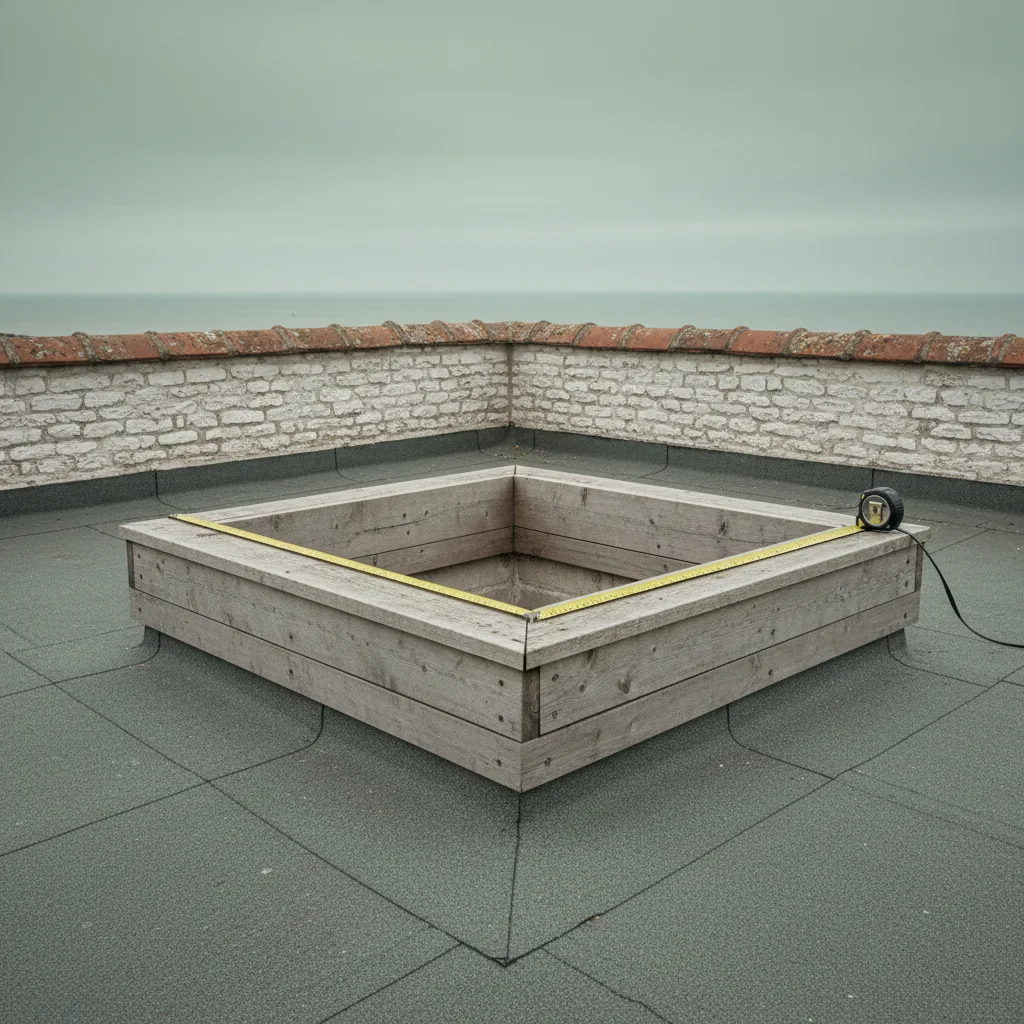
Salt makes it likelier to trigger
The sensor detects conductivity, and salt in solution conducts considerably better than pure water.
On a coastal roof the board carries a salt deposit between rinses, and when a fret wets that deposit the resulting film is far more conductive than the same amount of clean condensation would be. So the same fret that leaves an inland sensor untriggered can close a window in Goring.
That is not a fault and it is a reason the sensor belongs in the annual rinse. A clean board reads what it is supposed to read; a salty one reads sooner.
The other false triggers
| Cause | Why it triggers | Remedy |
|---|---|---|
| Heavy dew on a clear night | Water bridging the tracks | Normal. The heater usually clears it |
| Salt film wetted by a fret | Highly conductive solution | Rinse the board with fresh water |
| Gull droppings | Conductive and persistent | Clean the board |
| Leaf or debris lying across it | Holds moisture on the tracks | Clear it, and check the position |
| A hose or a window cleaner | It is water | Nothing. Expected |
| Melting snow or frost | Water, arriving slowly | Normal |
Where the sensor sits
Position affects behaviour more than people expect, and it is decided at installation.
A sensor needs to see the sky, be reachable for cleaning, and sit where debris does not collect on it. Under an overhanging branch it collects leaf litter and stays damp. Tucked against a kerb upstand it sits in the sheltered zone where debris and salt accumulate and rain does not rinse.
Clear of obstruction, on the exposed face, is what makes it read the weather rather than its own surroundings.
The heater, and what it is for
Most sensors carry a small heating element that keeps the board slightly above ambient.
Its main job is to dry the board quickly once rain has stopped, so the window can be reopened rather than staying shut for an hour after a shower. Its side effect is that it makes the board less likely to collect condensation and dew in the first place, which is exactly the sea fret case.
A sensor that has become notably more prone to closing on damp mornings may have a heater that has stopped working, which is a fault rather than a characteristic.
Override, and why you want one
Every sensor arrangement should have a way of overriding it, and it matters more here than inland.
On a mild damp coastal morning you may want the window open despite the fret, and a system that closes it every time and cannot be told otherwise becomes something people disconnect. Being able to hold it open for a period, or disable the sensor deliberately, is what stops that.
The complement is that the override should not be permanent by accident. A sensor switched off in June and forgotten is a wet floor in October.
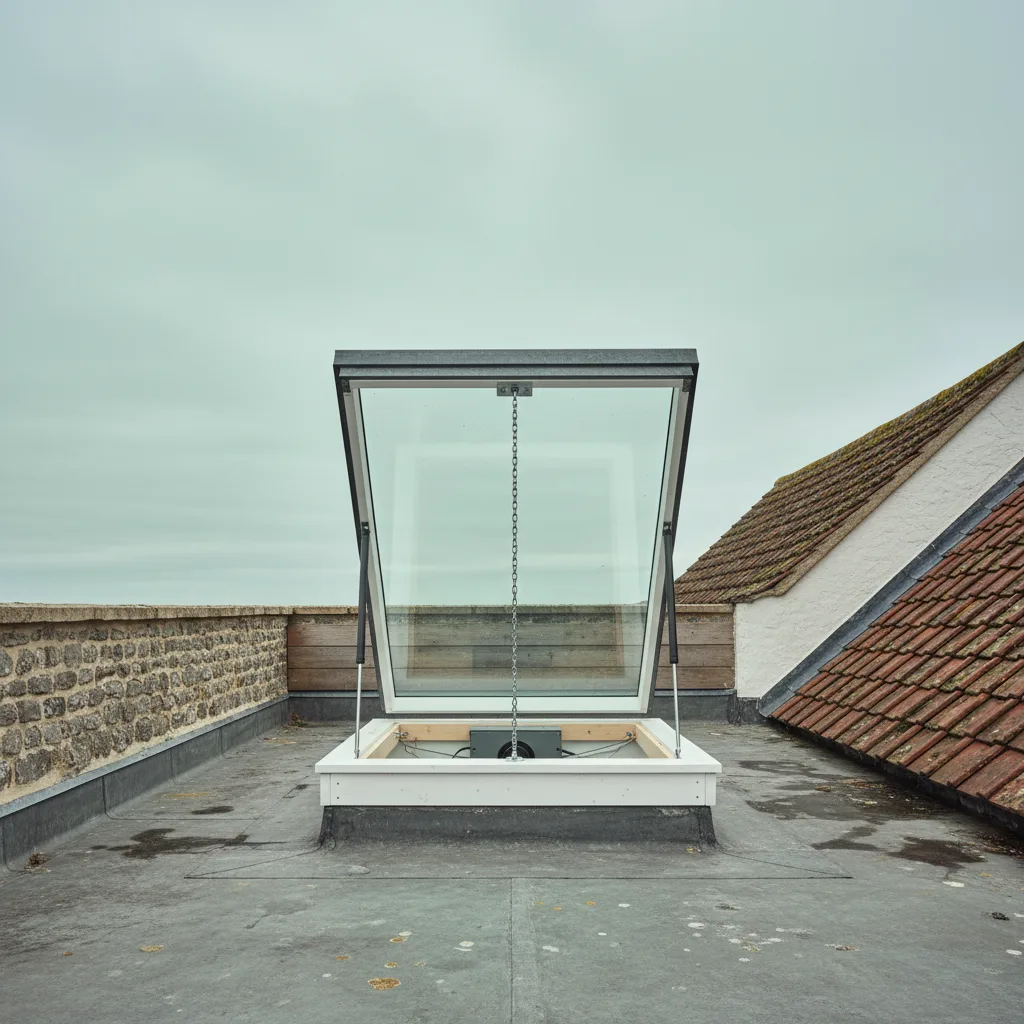
Sensitivity, where it is adjustable
Some controllers allow the trigger threshold to be adjusted, and where the option exists it is worth using.
Turned down, the board needs more water before it closes the window, which reduces fret and dew triggers and slightly delays closing in genuine rain. Turned up, it closes at the first hint, which suits a room where nothing may get wet.
The right setting depends on what is under the opening. A kitchen with a tiled floor tolerates a few drops; a room with a piano does not.
How fast it closes
From trigger to sealed is a matter of seconds, and those seconds are the sensor’s real limitation.
Rain has to reach the board, the controller has to act, and the sash has to travel its full stroke and seal. In a squall arriving off the Channel, some water gets in before the window is shut, and that is inherent rather than a defect.
Which is worth knowing when deciding what sits directly beneath a large opening rooflight in a room nobody is in during the day.
What it does not protect against
A rain sensor closes a window that is open. It does nothing about a window that is shut and leaking, nothing about condensation, and nothing about wind.
Wind is the omission people assume is covered. A sash standing open in a rising south westerly on a dry day will not be closed by a rain sensor, because there is no rain. Wind protection is a separate sensor and a separate decision, covered on the wind and opening rooflights page.
Testing it
A sensor that has never been tested is a sensor nobody knows works, and testing it takes a minute.
Open the window, put a small amount of water on the sensor face, and watch it close. Then dry it and confirm the system releases so the window can be opened again. Doing that once a year alongside the other annual checks catches a failed heater, a dirty board and a controller fault.
It is also the only way to find out that the sensor was never actually commissioned, which we do occasionally meet.
Multiple windows on one sensor
Where several powered rooflights share a controller, they frequently share a sensor, and that is sensible.
What matters is that the sensor is positioned to represent all of them. A board sheltered beside one unit while another sits fully exposed on the far side of the roof will act late for the exposed one.
On a large or complicated roof, more than one sensor is occasionally the right answer, and it is a decision made at design rather than added later.
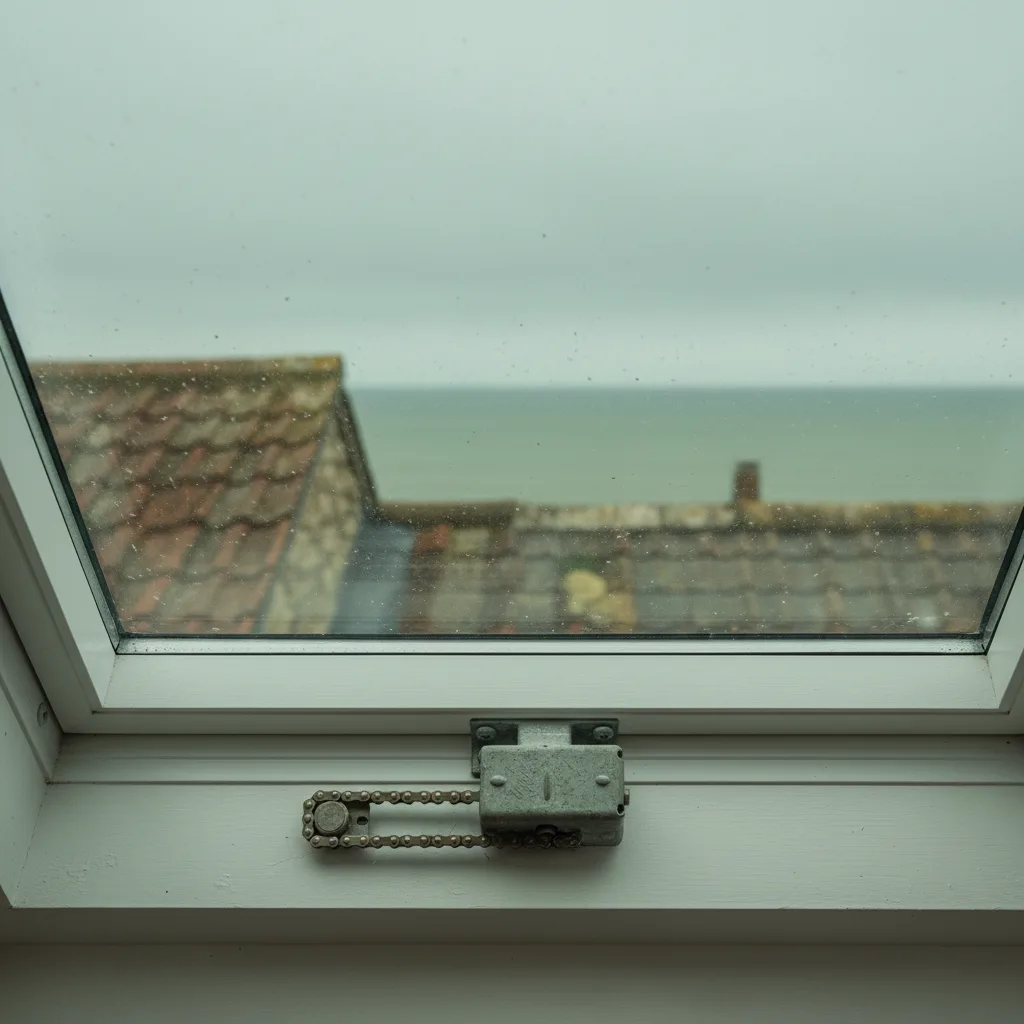
The fret season here
Worth knowing when to expect it, because a sensor that seems erratic in May and faultless in November is behaving consistently.
Sea frets form when relatively warm moist air moves over a cool sea surface, so they are most common in spring and early summer, when the land has warmed and the Channel has not. They arrive with an onshore breeze, frequently overnight or first thing, and they can sit for hours or burn off within one.
Along the seafront at Worthing, Goring, Ferring and Littlehampton they are a regular feature of April, May and June. A mile or two inland they are thinner and shorter lived, and by the time you reach the foot of the Downs they are largely a coastal phenomenon happening to somebody else.
What a wind sensor adds
A rain sensor is the common fitting and it is not the only one available, and on an exposed coastal roof the second is worth knowing about.
A wind sensor closes the unit when wind speed passes a threshold, which addresses the case a rain sensor cannot: a dry, rising south westerly with a sash standing open acting as a sail. That is a load on the mechanism and on the hinges rather than a wetting risk.
It is a separate component with its own mounting and its own commissioning, and it is specified with the controller rather than added to one. On most domestic roofs it is unnecessary; on a seafront or scarp installation with a large opening sash it is worth the conversation.
When it becomes a nuisance
A sensor people fight with is one that will be switched off, so it is worth naming the pattern.
The usual sequence is: repeated triggering on damp mornings, frustration, override used permanently, then a genuine downpour into an open room. Almost every time, the cause was a dirty or salted board rather than the product, and a rinse would have resolved it.
If yours is triggering more than it used to, clean it before concluding anything.
Whether to fit one at all
On this coast, on any powered rooflight, we would. The weather genuinely arrives that fast and the consequence of an open unit in a squall is disproportionate.
The exception is a unit that is only ever opened while somebody is in the room and closed deliberately afterwards, in a household that will actually do that. There the sensor is solving a problem that does not arise.
What we fit on an opening unit
We fit a rain sensor as standard on powered units within reach of the Channel, position it clear of shelter and debris where it can be reached for cleaning, and commission and test it rather than assuming it works. We explain the sea fret behaviour up front, because it is a characteristic of this coast rather than a fault, and we include the board in the annual rinse.
A sensor reads conductivity. On a salty roof, keeping it clean is most of keeping it accurate.
Thinking about this job? We survey across Worthing, West Sussex and the South Downs and give you a fixed price before any work starts, with a 10-year workmanship guarantee.