No. A replacement is the cheapest moment you will ever have to change a rooflight, because the access is up, the covering is open and the room is already being disturbed. Some changes cost nothing at all, some cost a little, and one, making the opening wider, turns a swap into a structural job.
Why it is the moment to decide
Because everything is already open.
Access, protection, the covering lifted and the reveal disturbed are the expensive parts of any change, and on a replacement they are happening anyway.
What costs nothing
The glass specification.
Solar control, a better low emissivity coating, a warm edge spacer or an acoustic build up are chosen at order, and the difference against the job is small.
What each does is on what is the best glass for a south facing rooflight.
Why that matters most
Because it cannot be changed later.
Coatings and gas fills are inside the sealed unit, so a decision made at order lasts the life of the pane.
The position is on can you add solar control to an existing rooflight.
Changing the product
Often possible on the same kerb.
A dome can become flat glass, a fixed unit can become an opening one, and an old single glazed lantern can become a modern one.
The dome case is on can a dome rooflight be replaced with glass.
Adding an opening
The change people most often regret not making.
A fixed unit cannot be motorised later, so the moment to decide whether the room will ever want air is now.
Why is on can any rooflight be made to open.
Running a cable
Cheap now, expensive later.
With the ceiling disturbed and the reveal open, a cable to the kerb costs very little, and it keeps the opening option alive for years.
What is involved is on do electric rooflights need an electrician.
Making it taller
The easy direction to grow.
On a pitched roof, extending the opening up or down the slope stays between the same rafters and is carpentry rather than structural work.
That is on can a roof window be replaced with a bigger one.
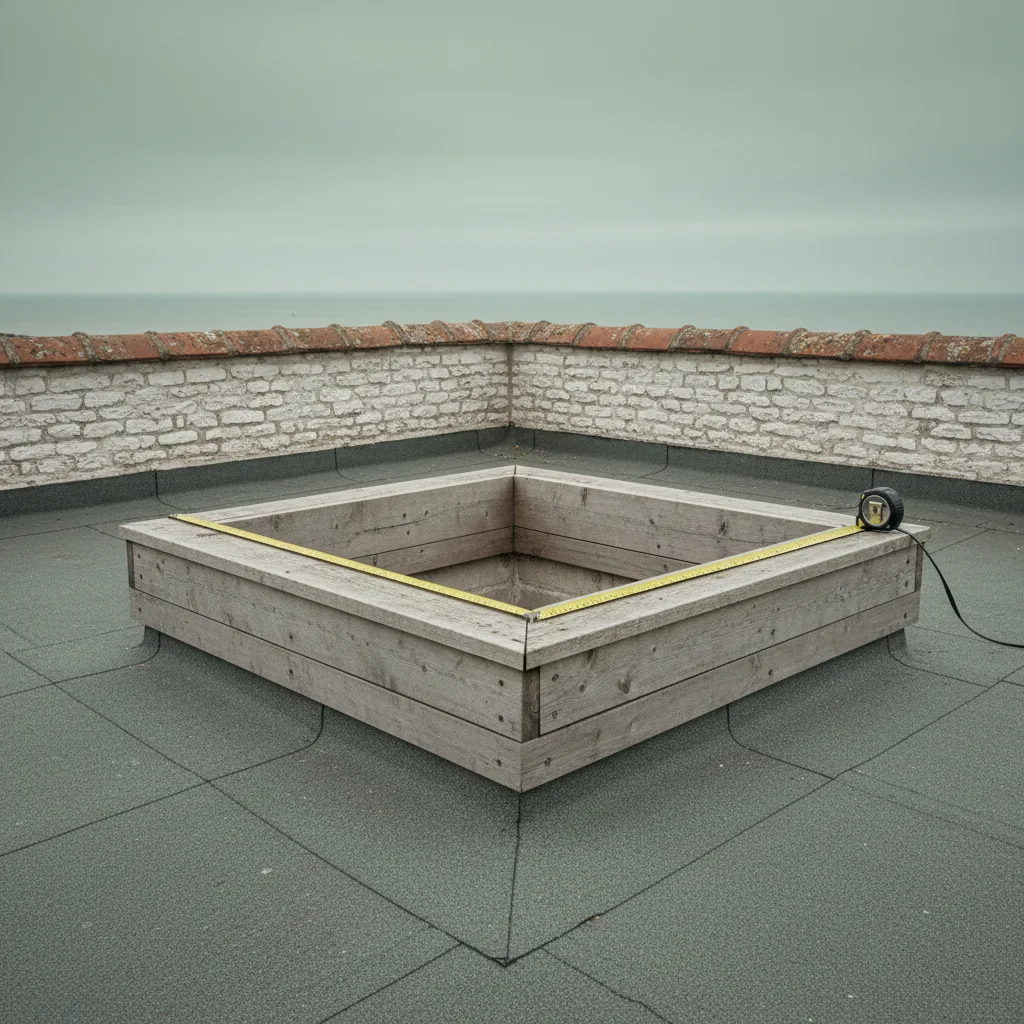
Making it wider
The change that alters the job.
Widening crosses a rafter or a joist, and their load has to be carried into new members or a designed beam, which is controlled work.
Making it smaller
Easier than making it bigger.
Reducing an opening means infilling with new structure and reinstating the covering across it, and what shows afterwards is the covering rather than the structure.
Moving it
A new opening and a repair, rather than a change.
Relocating a rooflight is forming one opening and closing another, and the closed one has to be structurally sound and invisible in the finished roof.
Changing the kerb height
Worth doing where it was too low.
An upstand built short is the original cause of a great many leaks, and raising it during a replacement stops the same problem recurring.
The heights are on how high should a rooflight kerb be.
Insulating the kerb
The cheapest worthwhile change of all. With the unit off, insulating an upstand properly takes very little time and deals permanently with the winter condensation that gets blamed on the glass.
Splaying the reveal
Free light, effectively. Angling the internal faces spreads daylight into the room noticeably, and it costs the plastering that was happening anyway.
Changing manufacturer
Fine, with one consequence. On a pitched roof it means a new flashing kit, and on a flat roof it means the unit is measured to the kerb rather than matched to the old frame.

Two units instead of one
Worth considering on a long room. Where one rooflight lights a room unevenly, a second opening formed while the access is up is far cheaper than a separate job later.
Matching what is already there
The argument for like for like. Where a house has several rooflights and only one is being changed, matching the frame finish and profile keeps the roof looking intended.
Where changes need notifying
Any change to the opening. Altering the structure is controlled work on the structural side as well as the thermal, and it is arranged before the covering comes off.
That is on does replacing a rooflight need building regulations.
Where changes need permission
Rarely, and worth checking.
A larger unit or one standing higher above the roof plane is assessed rather than treated as a swap, and a designated area changes it further.
The tests are on does replacing a rooflight need planning permission.
What we would change every time
Three things. Insulate the kerb, splay the reveal, and specify the glass for the orientation. None of them is a large item and all three change how the room feels.
Changing to a conservation style unit
Relevant on an older property. Where a plain modern rooflight sits on a visible historic slope, a replacement is the moment to put in something that sits flush and reads correctly from the street.
That product is on the conservation rooflight installation page.
Adding a blind while the reveal is open
Easier now than later. Fixings, a cable for a powered blind and the reveal depth to house it are all straightforward while the plaster is disturbed and awkward once it is not.
What we want to know on a replacement
We ask what the room got wrong with the old rooflight before ordering the new one, because a replacement that repeats the original decision repeats the original complaint.
The whole picture is on the replacing a failed or misted rooflight page.
Thinking about this job? We survey across Worthing, West Sussex and the South Downs and give you a fixed price before any work starts, with a 10-year workmanship guarantee.