It depends which part you mean, and separating them is the useful answer. A good aluminium frame is a very long lived component. A sealed unit has a service life measured in a couple of decades rather than in a lifetime. Gaskets and mechanisms are wearing parts. And the installation around all of it can outlast everything or fail in five years.
The sealed unit
The part with the shortest defined life.
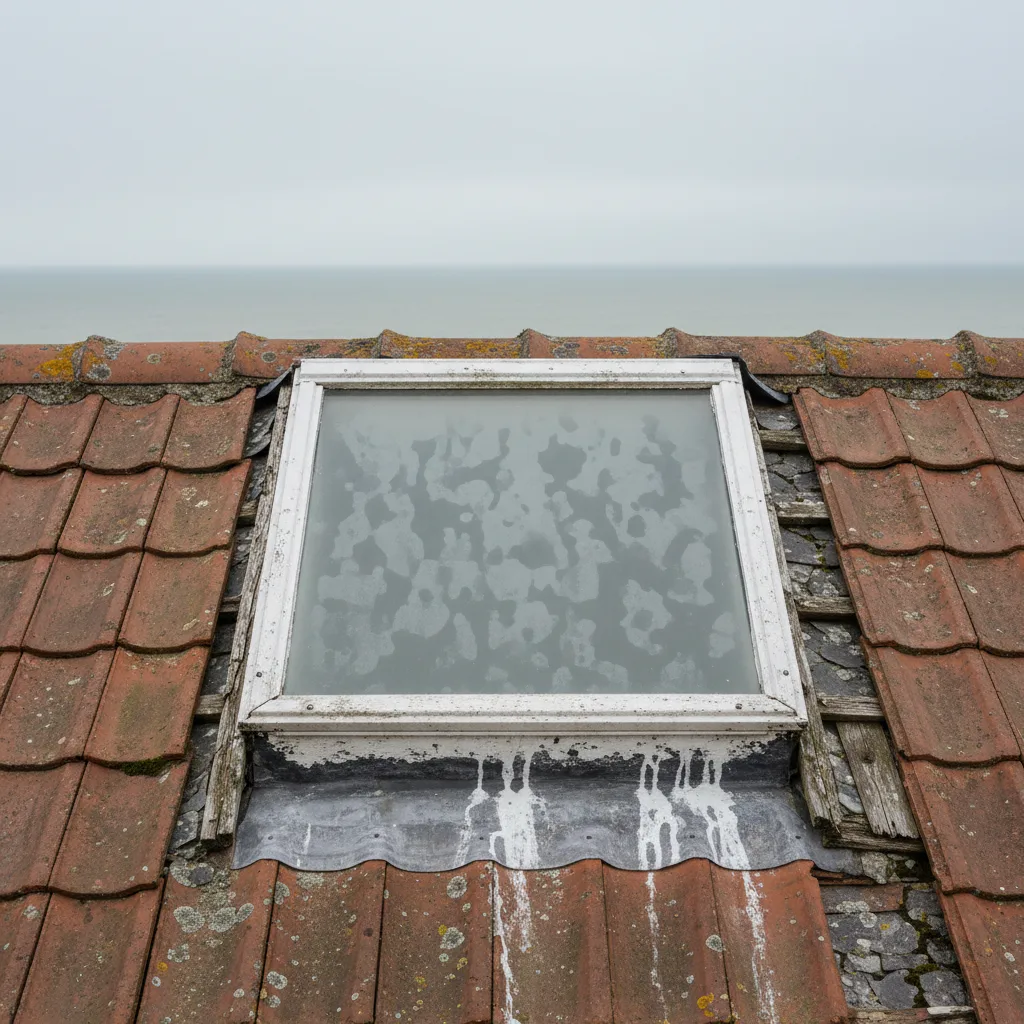
The edge seal that holds the cavity eventually admits moisture, and when it does the unit mists rather than degrading gradually.
How that happens is on why is my rooflight misted up.
Why a roof is harder on it
Temperature and water together.
A pane in a roof takes more direct sun, swings further between day and night temperatures, and on a flat roof holds water at the edge rather than shedding it.
All three work on the seal.
Why a flat pane is harder still
Standing water at the edge.
A pitched pane drains. A shallow one holds a film at the perimeter after every shower, and prolonged wetting is one of the things that shortens a unit.
An aluminium frame
The longest lived part of the assembly.
A properly coated aluminium section does not rot, does not move much and holds its finish for decades, and it will normally outlast the glass in it.
What shortens an aluminium frame
Salt, over a long time.
Within a few miles of the sea a standard coating dulls and can eventually pit, which is why a marine grade specification is worth having here.
What that means is on marine grade coatings against standard powder coat.
A timber cored roof window
Long lived, with one vulnerability.
Laminated timber under a coating or a lacquer is stable and durable, and what ends it is water reaching the timber rather than age.
The component picture is on how long does a VELUX last.
A polycarbonate dome
The shortest lived of the common products.
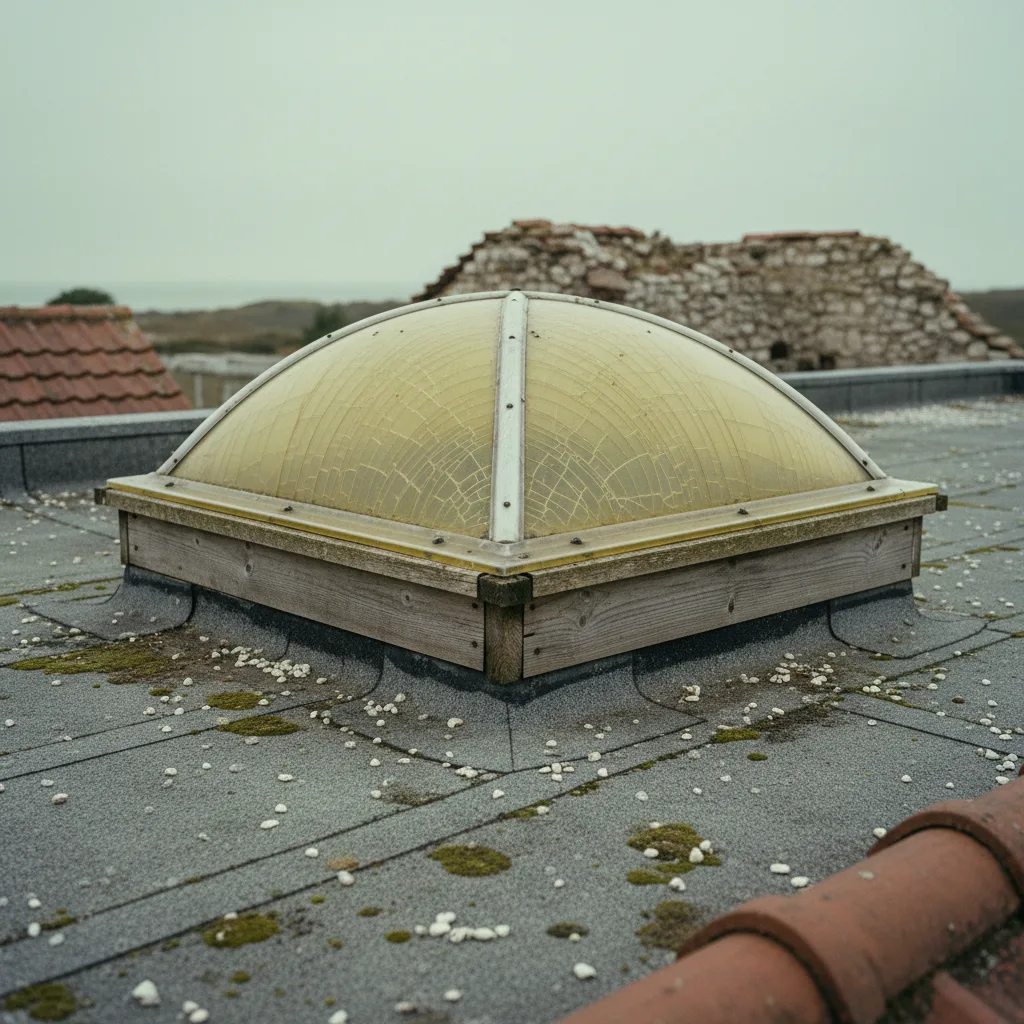
Polycarbonate yellows and crazes under ultraviolet, and a dome from the seventies or eighties on a Sussex flat roof will be visibly aged.
What to do about it is on can a dome rooflight be replaced with glass.
Gaskets and seals
Wearing parts measured in years.
A gasket compresses over time and eventually takes a set, which shows as a draught or a whistle before it shows as anything else.
On a good product it is a stocked replacement part.
Actuators and mechanisms
Serviceable components with their own lives.
A motor, a spring or a friction pad is a wearing item, replaceable independently of the rooflight, and exercise and cleaning extend all of them.
What to do is on do electric rooflights need servicing.
The flashing on a pitched roof
Frequently outlives the window.
A lead or aluminium kit dressed properly and left undisturbed is still sound when the sash is worn out, which is why a like for like replacement is quick.
The kerb on a flat roof
As long as the covering, when built right.
A properly built and weathered upstand lasts as long as the roof around it, and a badly built one is the thing that fails first on the whole assembly.
What one is is on what is a builders kerb.
The covering around it
Often the real clock.
A felt flat roof has a life of its own, and a rooflight in a covering that is coming to the end is best dealt with when the roof is recovered.
What ends a rooflight early
Water getting where it should not.
Almost every premature failure we see traces back to a detail at the perimeter rather than to the product, and that is a workmanship question.
The second commonest
An uninsulated kerb.
A cold upstand runs wet every winter, and years of that gets into plaster, into timber and eventually into the frame fixings.
What extends everything
Twenty minutes a year.
Clearing the weeps, wiping the gaskets and keeping the roof around the kerb clear prevents most of what shortens a rooflight’s life.
What the guarantees say
Read as two documents.
A product guarantee covers the unit for a stated period. An installer’s guarantee covers the fitting and the weathering, which is where the failures actually happen.
Whether to replace before it fails
Occasionally worth it.
Where a roof is being recovered or a room refurbished, replacing a rooflight that is twenty years old while the access is there is cheaper than doing it alone later.
What a new one buys you
Mostly warmth rather than years.
The thermal step between a unit from the nineties and a current one is substantial, and it is usually the reason people replace something that still works.
The comparison is on will a new rooflight be warmer.
What the paperwork tells you about age
More than people expect, and it is usually findable.
A loft conversion file, an extension completion certificate or an original invoice will often date the rooflight, and knowing whether it is fifteen or thirty years old changes the decision entirely.
What the spacer bar tells you
Often a manufacturer and a date. Many sealed units carry a mark stamped into the spacer that is readable through the glass, which is the quickest way to establish the age of the unit itself.
Planning for replacement
Worth thinking in decades rather than reactively.
A house with several rooflights of the same age will want them dealt with over a similar period, and knowing that lets it be planned alongside other roof work.
What we look at on a replacement
We look at the kerb and the covering before we look at the unit, because a rooflight that has failed early is almost always telling you about the installation rather than about the product.
The whole picture is on the replacing a failed or misted rooflight page.
Thinking about this job? We survey across Worthing, West Sussex and the South Downs and give you a fixed price before any work starts, with a 10-year workmanship guarantee.