What happens if the timber underneath has rotted?
It is cut out and replaced. Rotten timber has lost its strength and it will not hold a fixing, so nothing new goes on top of it. How much work that is depends entirely on how far the water travelled and for how long, and that is the one part of a rooflight replacement nobody can price accurately from the ground.
Why it happens
Water reaching timber and staying there.
A failed kerb detail, a short flashing lap or a covering fault lets water into the construction, and timber that stays damp for long enough decays.
How the water gets in is on why is water coming in around my rooflight.
Why it goes unnoticed
Because it happens above a ceiling. A leak that shows as a faint stain in a corner once a winter can be soaking a trimmer continuously, and nothing visible from the room reflects that.
Which timber is usually affected
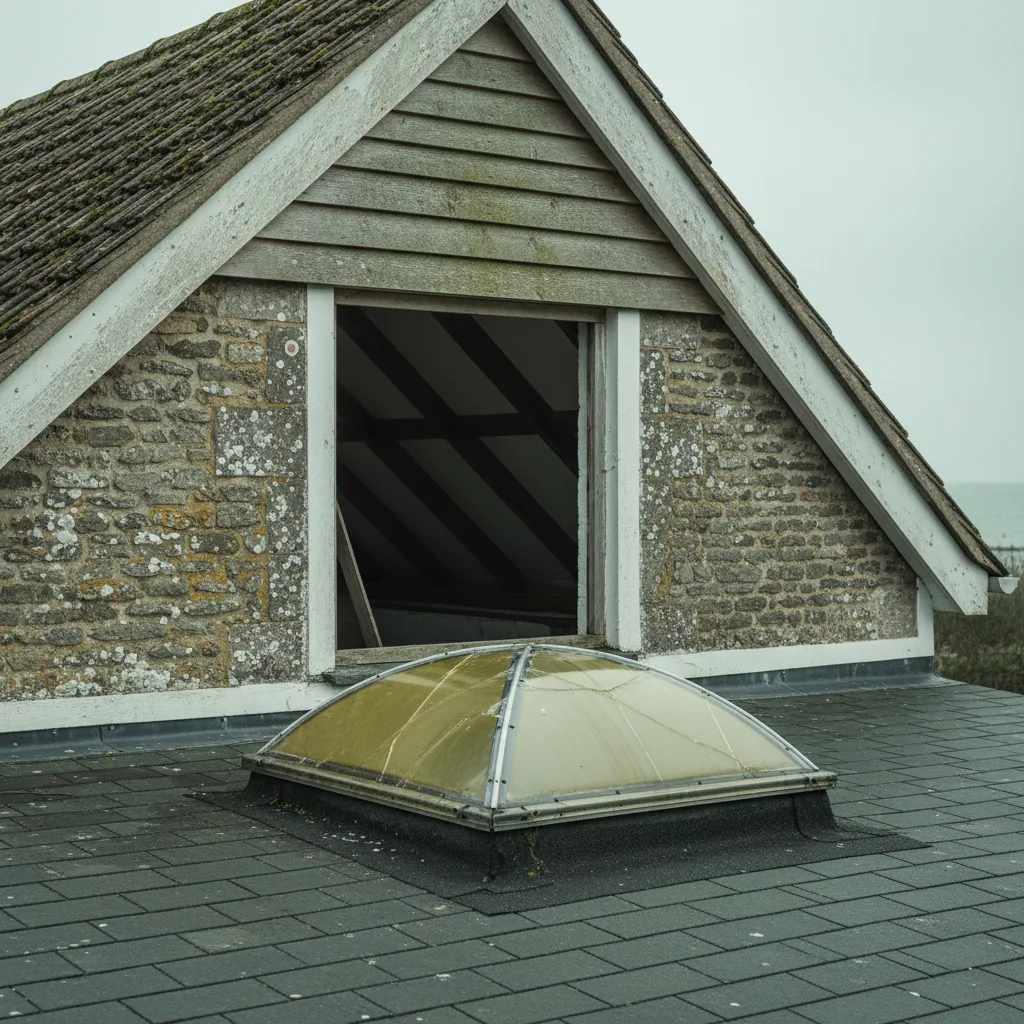
The kerb first, then the trimming. An upstand takes the water first because it is what the covering is dressed against, and from there it travels into the joists trimmed around the opening.
How far it spreads
Further than the wet patch suggests. Water runs along a timber before it soaks in, so decay commonly extends well beyond the point where it entered.
How it is assessed
By probing and by feel. Sound timber resists a screwdriver. Decayed timber is soft, crumbles, and often darker, and the extent is found by working outward until it is firm again.
Wet rot
The common case by a long way.
Wet rot needs sustained moisture, stays where the water is, and stops when the timber dries, which is why fixing the leak is the first half of the answer.
Dry rot
Rarer, and a different matter. Dry rot spreads through masonry and beyond the wet area, and where it is suspected it wants proper specialist assessment rather than a carpentry repair.
Why it is not treated and left
Because strength does not come back. A chemical treatment stops further decay in sound timber. It does not restore a member that has already lost section and can no longer hold a fixing.
What is actually done
Cut back to sound and spliced or replaced.
Decayed sections are cut out beyond the damage, new timber is spliced or a whole member replaced, and it is fixed to carry what the original carried.
Where a member is structural
A different level of work.
A trimmer or a joist carrying roof load is replaced properly and, where the span or the detail warrants it, designed rather than judged.
Whether it has to be notified
Where structure is being replaced, generally yes.
Replacing structural members is controlled work, and it is arranged rather than done quietly and covered up.
What applies is on does replacing a rooflight need building regulations.
The deck around it
Frequently affected as well.
A timber or board deck that has been wet delaminates and softens, and any of it that has gone is cut out with the rest.
Insulation that has been wet
Usually replaced rather than dried.
Wet insulation performs poorly and holds moisture against timber, and on a warm deck it is taken out and renewed as part of the repair.
Fixing the cause first
The half that matters most.
New timber under the same failed detail rots again, so the reason the water was arriving is established and corrected before anything is rebuilt.
Rebuilding the kerb properly
The opportunity in a bad situation.
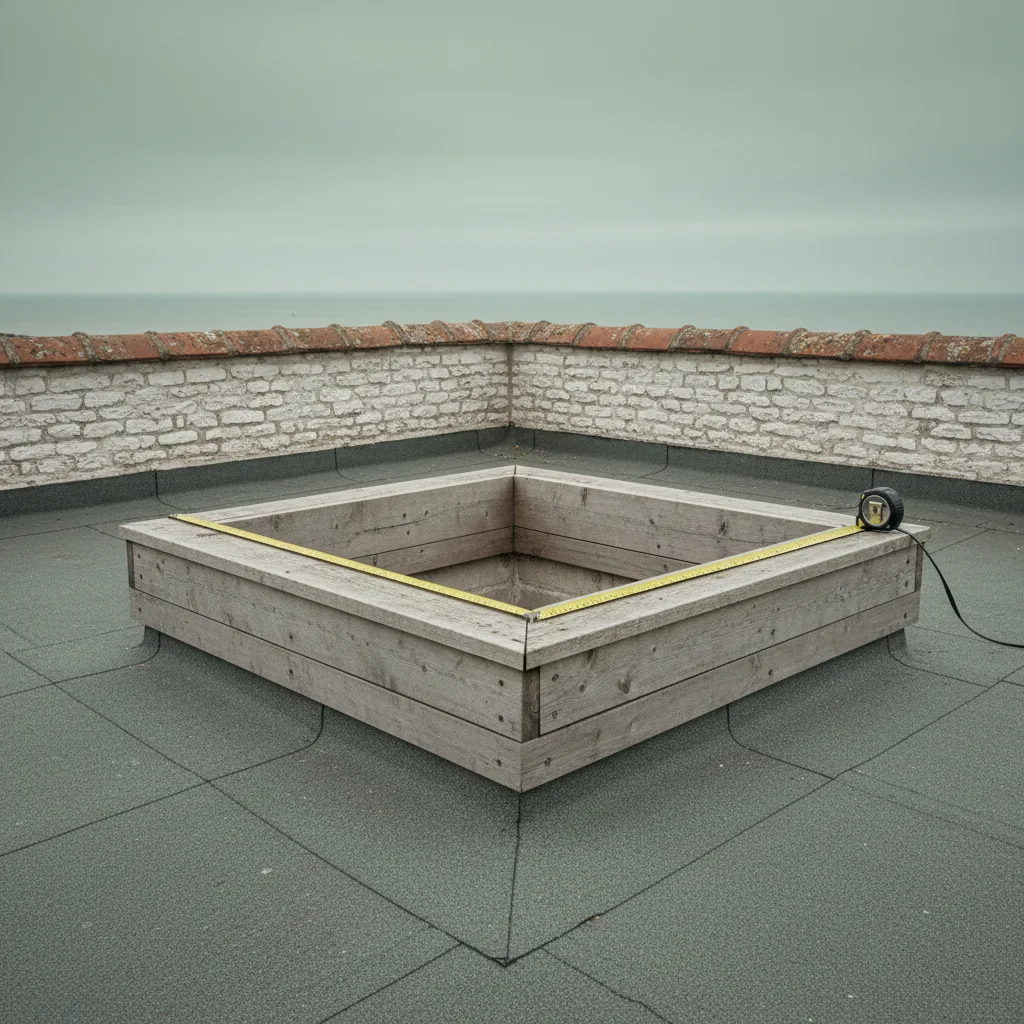
A rebuilt upstand is built to the right height, square, insulated on every face and weathered correctly, which the original probably was not.
What good looks like is on what is a builders kerb.
How long it adds
A day for a modest repair, more for structure.
Cutting out and replacing a section of kerb and some trimming is a day of carpentry. A designed structural repair is longer and may need materials brought in.
What it adds to the cost
Real, and it is why it is quoted separately.
Timber, labour and sometimes a design, and it is a genuine addition rather than something that should have been in the original figure.
How a good quotation handles it
By naming it as a possibility.
A quotation that states what happens if rot is found, and how it will be priced, is more useful than one that pretends the roof is sound.
Whether it can be inspected first
Partly, and rarely conclusively.
A loft or ceiling void can be looked at where one exists, and on a warm deck flat roof there is nothing to inspect until the covering is lifted.
What a long delay costs
The strongest argument against waiting. Every wet month extends the decay, so a leak dealt with this season is generally a carpentry repair and the same leak in two years is a structural one.
Why is on can you replace a rooflight in winter.
Drying out what is left
Part of the repair rather than an afterthought.
Timber next to what was cut out is often damp without being decayed, and it wants a period of air movement before it is closed up with new insulation and covering.
Sealing damp timber under a new warm deck is how a second problem starts.
Preservative on the new timber
Standard, and it is not a substitute for anything.
New members go in treated, and cut ends are treated on site because that is where the protection was removed.
The ceiling below
Frequently part of the making good. Plasterboard that has been repeatedly wet is soft and stained, and it is cut out and replaced rather than painted over, which adds a plastering item.
What we probe
We probe what we can reach before quoting and we say plainly what we cannot see, because a replacement price that assumes sound timber on a roof that has been leaking for years is not an honest one.
The whole picture is on the replacing a failed or misted rooflight page.
Thinking about this job? We survey across Worthing, West Sussex and the South Downs and give you a fixed price before any work starts, with a 10-year workmanship guarantee.