Yes. Opening versions carry one or more panes hinged within the frame, usually driven by a chain actuator and operated from a switch or a handset. In a kitchen that is worth having, because an opening at the highest point of a room clears cooking heat and steam far faster than anything at wall level does.
What opening does for a room
Uses the shape of the space.
Warm air rises, so an opening at the top of a room lets it out and draws cooler air in at the doors, which is a far more effective exchange than opening a window.
In a kitchen with a lantern it is the difference between a room clearing in minutes and in an hour.
Which panes open
Usually one or two faces rather than the whole structure.
A lantern is a rigid frame carrying fixed glass, and specific panes within it are made as opening lights while the rest stay fixed.
Which ones is a design decision taken at order.
How they open
Hinged at the ridge or at a bar, pushed by an actuator.
A chain actuator extends and pushes the pane outward a stated distance, and retracts to pull it closed against the seals.
What one is is on what is a chain actuator.
How far they open
Less than a window, and enough. The opening distance is a stroke figure rather than an angle, and even a modest opening at the top of a room moves a lot of air because of the stack effect.
Controls
A wall switch, a handset, or an automation system.
Most systems take all three, and where a house has more than one powered opening they are worth putting on the same system.
The options are on how is an electric rooflight controlled.
The rain sensor
Effectively essential on a lantern. A pane on a roof left open in a shower is a problem, and a sensor that closes it automatically is what makes leaving it open during the day reasonable.
What it does is on what is a rain sensor rooflight.

Opening on temperature
Worth having in a kitchen and often overlooked.
A thermostat or an automation rule can open the pane when the room passes a set temperature, which manages a south facing kitchen in summer without anybody thinking about it.
That is on can a rooflight open automatically on temperature.
Manual opening
Available on some systems and less common.
A manual opener worked by a pole is possible, and on a lantern it is generally awkward enough that powered is what people end up with.
What it needs electrically
A supply and an electrician. A mains actuator needs a cable to the lantern position, which on a new extension is straightforward and on a finished ceiling is a chase or a trunking run.
Whether one is needed is on do electric rooflights need an electrician.
Planning the cable early
The practical advice that saves the most.
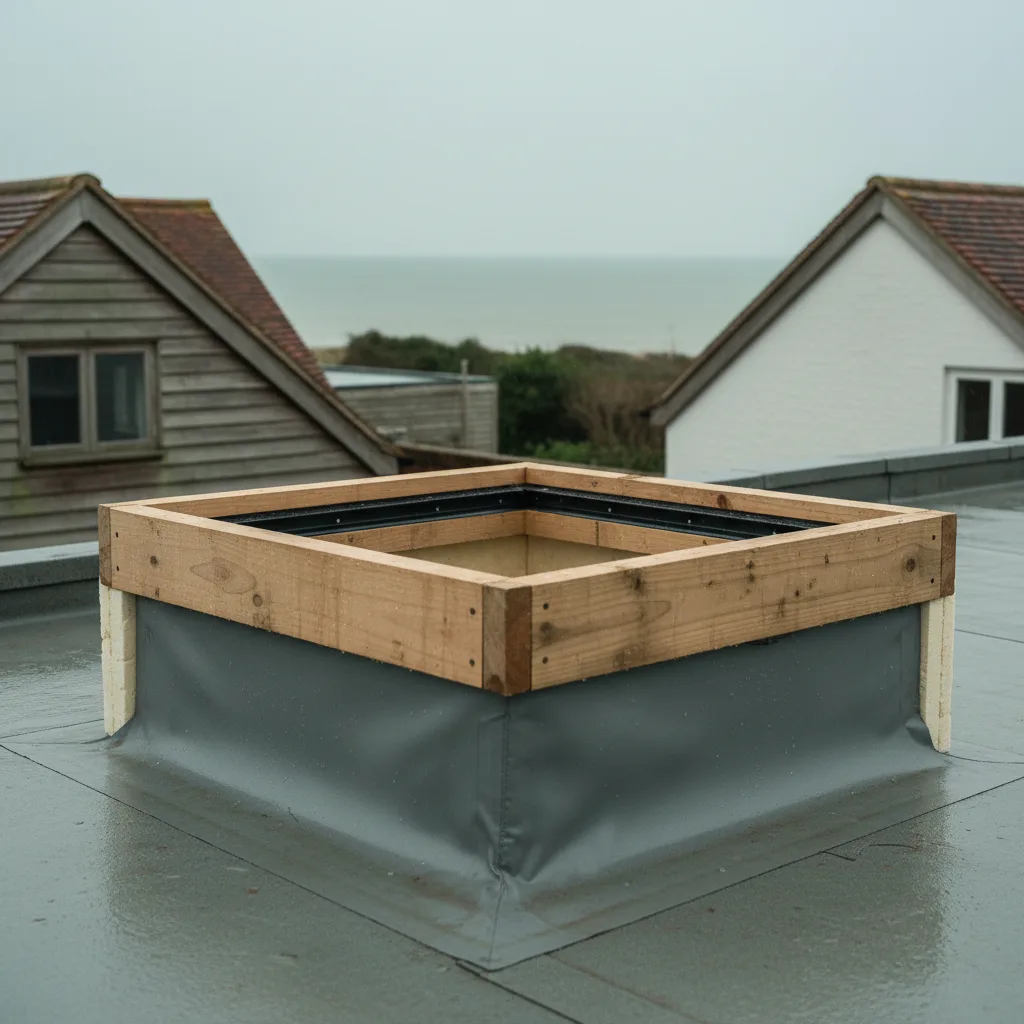
Running a cable to the kerb while the roof is open costs almost nothing, and doing it after the ceiling is plastered is a different job entirely.
It is worth doing even where the opening pane is deferred.
What it adds to the price
The actuator, the controls and the frame change.
An opening face is a different frame arrangement as well as a motor, so it is a step rather than an accessory.
Where it falls is on how much does a roof lantern cost.
Whether it leaks more
No, when it is a proper opening light.
An opening pane has its own gaskets and its own drainage, and it is engineered as part of the system rather than added to it.
The general position is on do opening rooflights leak more than fixed ones.
Noise
A soft mechanical hum for a few seconds.
An actuator is audible rather than loud, and in a kitchen it is unremarkable.
In a power cut
It stays where it is. Without a backup, a powered pane does not move during an outage, which matters more for a pane left open than for one left shut.
The options are on can an electric rooflight be opened in a power cut.
Insect screens
Worth asking about at order. An opening at the top of a kitchen on a summer evening draws insects toward the light, and screens for lantern openers exist though they are less common than for roof windows.
Retrofitting an opener
Generally not, and this is worth knowing.
A lantern built with fixed panes cannot usually be converted, because the opening light is a different frame section rather than a fitting added to glass.
It is decided at order or not at all.
Servicing
Light, and it is worth doing. Keeping the seals clean and checking the actuator runs its full stroke once a year is the whole of it, and it is done from a ladder rather than from the roof.
Where an opening pane should sit
On the face that suits the wind rather than the view.
A pane opening into the prevailing south westerly catches rain and gusts, and one on the sheltered face is the one that actually gets left open on an average day.
On our coast that is worth a moment at design.
Two openings rather than one
Better ventilation for a modest step in cost.
Two panes on opposite faces let air cross the lantern rather than simply leave it, and in a kitchen that clears the room noticeably faster.
Whether they run together is on can two rooflights open together.
What we run on a lantern
We run a cable to the kerb on every lantern we install on a new extension, whether or not an opening pane is being ordered, because the cost of doing it later is out of all proportion.
The whole picture is on the roof lantern installation page.
Thinking about this job? We survey across Worthing, West Sussex and the South Downs and give you a fixed price before any work starts, with a 10-year workmanship guarantee.