Yes, and it is done through the winter every year. The roof is opened, trimmed, kerbed and weathered in a controlled sequence so it is watertight at the end of each day, and the lantern goes on when the structure beneath it is ready. What genuinely dislikes cold weather is the plastering afterwards, not the roofing.
What the sequence protects
The house, at every stage.
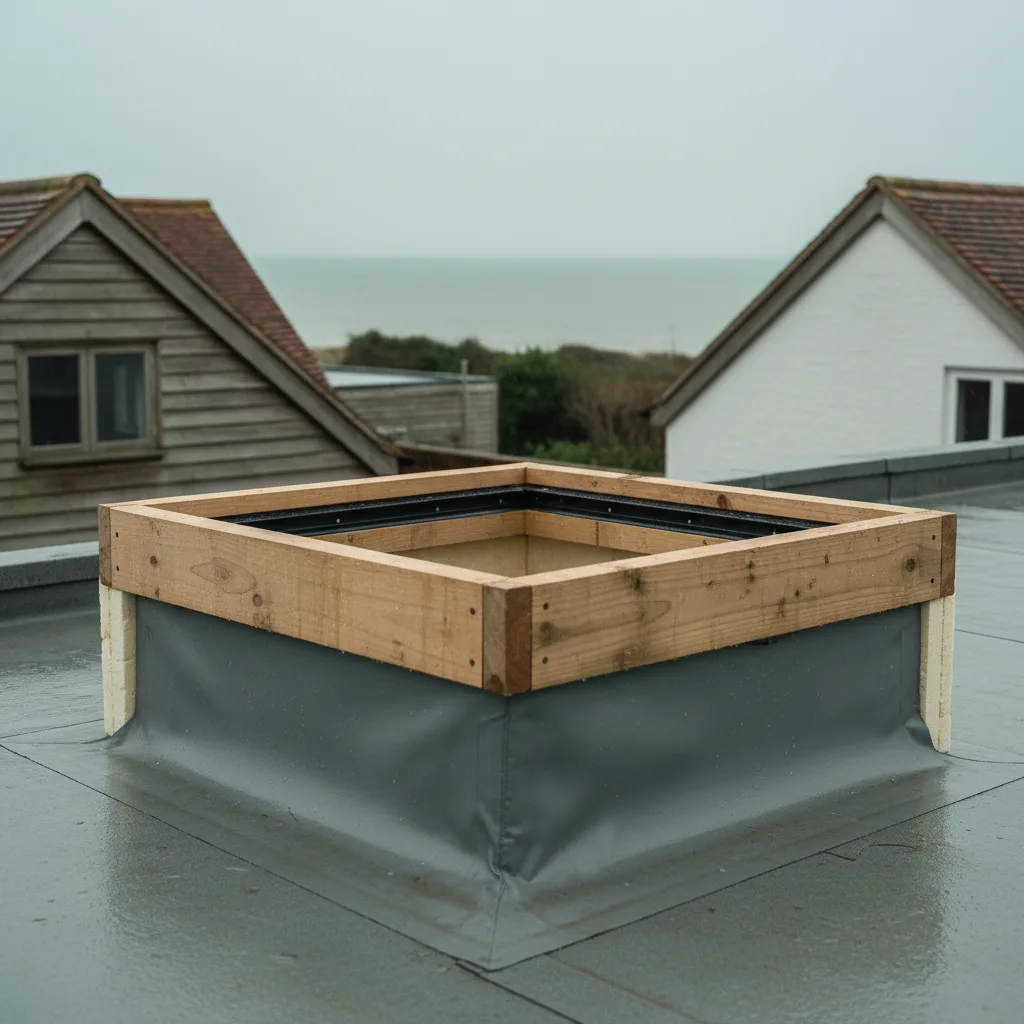
The opening is formed and covered, the kerb is built and weathered into the covering, and only then does the lantern arrive, so at no point is there a hole relying on a sheet overnight.
That is how it is done in any season and it matters more in January.
The day the roof is open
The one genuinely weather dependent day.
Cutting the deck and trimming the joists needs a dry working period, and that day is moved rather than pushed through on a forecast that will not hold.
A short winter day is the real constraint rather than the temperature.
Daylight hours
The thing that actually slows a winter job.
There are fewer usable hours on a roof in December, so what is a comfortable day in June becomes a tight one, and the programme allows for it rather than pretending otherwise.
Torched felt in cold weather
Works, with care.
A torch applied membrane can be laid in cold conditions provided the substrate is dry and the material is handled properly, and roofers do this routinely through the winter.
Damp is the problem rather than cold.
Single ply in cold weather
Also fine, and it prefers dry.
Hot air welded membranes are laid year round, and the requirement is a clean dry substrate rather than a particular temperature.
Liquid systems
The one with a genuine temperature limit.
Cold applied liquid membranes cure to temperature and humidity, and manufacturers state a minimum, so a very cold spell can mean a different detail or a wait.
It is checked before the day is booked.

Sealants and gaskets
Less flexible when cold, and it is worth knowing.
Gaskets are stiffer and sealants gun harder below a certain temperature, so materials are kept warm before use rather than taken straight off a cold van.
The glass itself
Unbothered by cold and bothered by wind.
Large panes are handled above head height on a roof, and a gusty winter day makes that unsafe regardless of the temperature.
That is the commonest reason a winter fitting day moves.
Ice on the roof
A safety matter rather than a technical one.
A frosted flat roof or a wet membrane is slippery, and work does not start on one, which occasionally means a late start rather than a lost day.
The plastering afterwards
Where the season genuinely tells.
Plaster dries by evaporation, and a cold room with the doors open dries slowly, so the interval between plastering and decorating stretches in winter.
It is worth planning for rather than being surprised by.
Keeping the room usable
Harder in winter, and manageable.
A kitchen open to the roof is cold as well as dusty, so the days when the opening is being formed are the ones to plan around.
How the programme runs is on how long does a roof lantern take to fit.
Why winter is sometimes the better time
Availability, and it is a real advantage.
Lead times on lanterns and installer diaries are both shorter in the winter months than they are in the spring rush, so a job booked in January often happens sooner.
Seeing the room at its worst
An underrated benefit.
A lantern installed in December shows you immediately what it does on a dull day, which is the condition it will be judged on for most of its life.
Condensation in the first weeks
Expected, and it settles.
A newly plastered room carries a great deal of water, and that shows on the coldest surface, which is the new glass, until the plaster has dried out.
It is not a fault with the lantern.
Why people misread it
Because it looks like a failure at exactly the wrong moment.
Water running down new glass in the first month of a new extension is drying plaster rather than a seal, and it stops.
How to tell is on is it condensation or a leak.
Heating the room during the work
Helps the plaster and not much else.
Gentle background warmth and some air movement dry a room properly. Forcing it with a heater cracks plaster and is worth avoiding.
Storm season
A real consideration on our coast.
Autumn and winter bring the strongest winds across the exposed ground here, and a job is planned so that the roof is never open going into a forecast blow.
What exposure means locally is on roof lanterns and wind loading on the Downs edge.
Snow load
Designed for rather than worked around.
A lantern is engineered to carry snow, and the pitch is what sheds it, so a winter installation is not carrying a risk a summer one avoids.
The scaffold in bad weather
Left up longer than in summer, occasionally.
Where days are lost to weather the access stays in place, which is a nuisance rather than a cost on most jobs.
How we book it
We book winter work with a spare day in the programme rather than a tight one, because the honest constraint is a lost day to weather rather than anything about the materials.
The whole picture is on the roof lantern installation page.
Thinking about this job? We survey across Worthing, West Sussex and the South Downs and give you a fixed price before any work starts, with a 10-year workmanship guarantee.