Yes. Adjustable elbows in a rigid run, or a flexible section, will take a tube around an obstruction. Every bend costs light, though, and it costs it sharply rather than gently. A run with two elbows behaves as though it were considerably longer than it measures, so the first question is always whether the bend can be designed out.
Why a bend costs light
Because it forces extra reflections.
Light travelling down a straight tube reflects at shallow angles. At a bend it strikes the wall more steeply and more often, and each of those reflections takes a share.
The mechanism is on how much light does a sun tunnel give.
How much a bend takes
A meaningful proportion each.
Manufacturers treat a bend as equivalent to a length of tube, and two of them in a run of any length is why a tunnel can disappoint.
Why the angle matters
A gentle bend costs less than a sharp one.
A shallow deflection changes the light path modestly, where a right angle forces a great deal of it into steep reflections.
Two gentle bends against one sharp one
Usually better.
Splitting a change of direction into two shallow deflections costs less light than achieving the same thing in a single sharp elbow.
Adjustable elbows
How it is done on rigid tube.
An adjustable elbow rotates to give a range of angles, so a rigid run can follow a route that is not perfectly straight without custom parts.
Flexible sections
The alternative, and it is not free either.
A short flexible piece will negotiate an obstruction without a fitting, and its own losses are higher than rigid tube along the same distance.
The comparison is on what is the difference between rigid and flexible sun tunnels.
What forces a bend
Something in the loft.
A purlin, a water tank, a chimney breast, a truss web or a run of pipework in the direct route is what makes a bend necessary.
What a survey looks for is on can a sun tunnel go through a loft.
The first alternative
Move the diffuser.
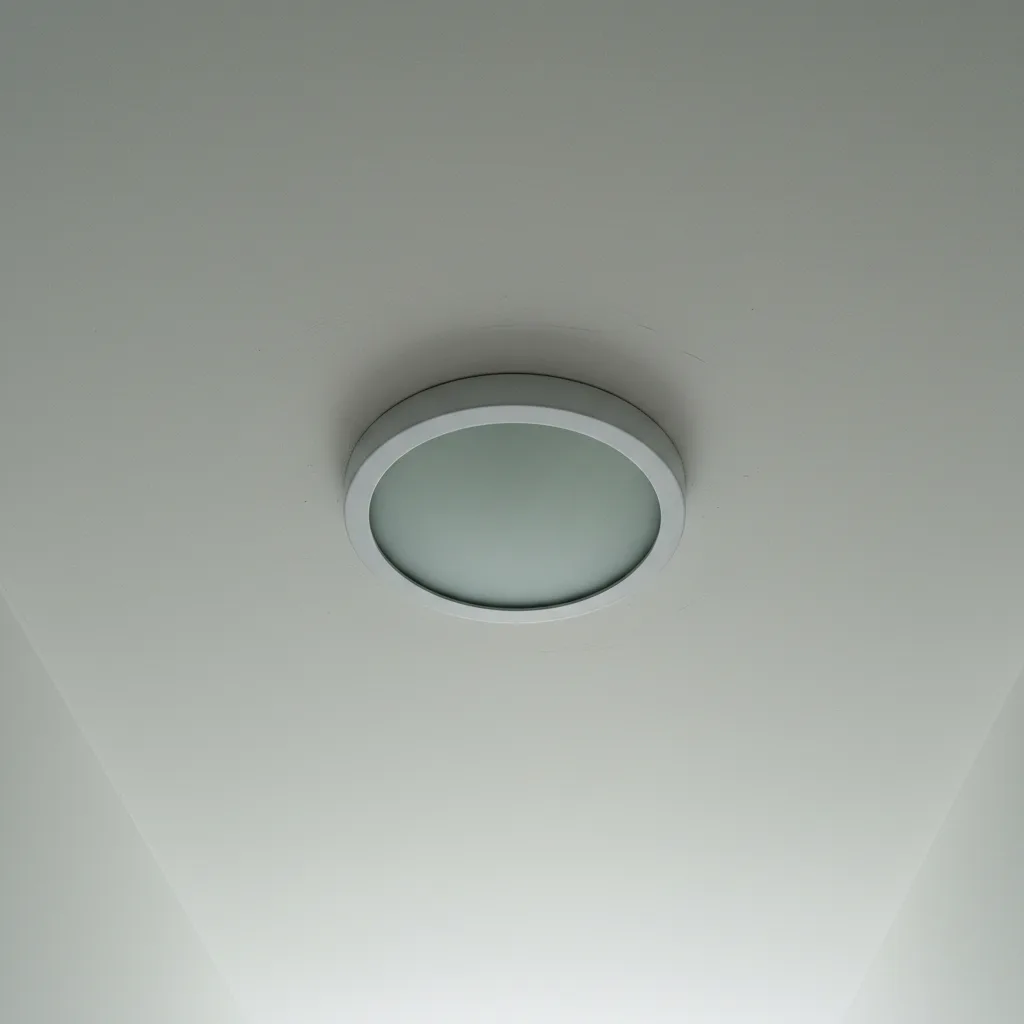
Shifting the ceiling position half a metre to find a clear straight route is almost always possible in a hallway or a landing, and it costs nothing.
The second alternative
Use a different slope.
Where the nearest slope is obstructed, a slightly longer straight run to another slope frequently beats a shorter bent one.
The third alternative
Move the obstruction. Cables and pipework can generally be repositioned by the relevant trade, and doing that to keep a run straight is often the cheapest option of all.
What cannot be moved
Structure. A purlin, a binder or a truss member is never cut for a tube, so where one is in the way the route goes round it or the position changes.
Going up a size
The compensation where a bend is unavoidable.
A larger diameter loses proportionally less, so the next size up is the straightforward way to recover what a bend costs.
How to choose is on what size sun tunnel do I need.
Two bends
Where we would stop and rethink. A run with two bends is losing a great deal, and it is usually a sign that the position or the slope is the wrong one rather than that more elbows are needed.
Where a bend is genuinely fine
A short run with one gentle deflection.
Where the total distance is small, a single shallow bend to clear something costs little in absolute terms and the room will not notice.
What a bend does to installation
Adds parts and time. Elbows are components to be bought, set and taped, so a bent run is a longer job as well as a dimmer one.
The programme is on how long does a sun tunnel take to fit.

Supporting the tube at a bend
A practical point in the loft. A bend is where a tube wants to sag or pull apart, so it is supported and taped so it stays in the position it was set in.
Insulating around a bend
Harder, and it still has to be done.
An elbow is an awkward shape to insulate neatly, and leaving it bare is exactly where condensation will form.
Why is on do sun tunnels cause condensation.
Going round a corner horizontally
Possible, and it is a long run.
A tube that runs across a loft before turning down to a ceiling position is a two bend arrangement with real length, and it is worth questioning.
What a quotation should say
How many bends, and why. A quotation naming the tube type and the number of bends can be compared with another, and one that does not cannot.
Offsetting without a bend
Sometimes possible, and worth asking about.
A run at a slight angle from a pitched roof to a ceiling position is still a straight tube, so a modest horizontal offset can often be achieved with no bend at all.
It is why marking out from inside matters.
What a straight angled run looks like
Perfectly normal in the loft. A tube running diagonally from a roof slope to a ceiling ring is the usual arrangement rather than an exception, and it costs nothing extra in light.
Two tunnels rather than one bent one
Occasionally the better answer. Where a single run would need two bends to serve two areas, two short straight tunnels frequently give more light for a similar cost.
What we move
We move the diffuser rather than add a bend wherever the room allows it, because half a metre in a hallway ceiling is worth more than any elbow in the loft.
The whole picture is on the sun tunnel installation page.
Thinking about this job? We survey across Worthing, West Sussex and the South Downs and give you a fixed price before any work starts, with a 10-year workmanship guarantee.