A properly fitted one does not. What causes trouble is a tube crossing a cold loft without insulation, with a gap at the ceiling letting warm moist room air up around it. That combination puts humid air against a cold metal surface, water forms on the outside of the tube and runs, and it arrives at the diffuser looking exactly like a leak.
How condensation works generally
Warm moist air meeting a cold surface, set out on why is there condensation on my flat rooflight.
What follows is what a tube through a roof space adds to it.
Why a tube is a cold surface
Because a loft is cold.
A ventilated roof space is close to outside temperature, and a metal tube crossing it is at that temperature along its whole length.
What condenses on it
Moisture in the loft air.
Any humid air that reaches the loft will give up water on the coldest object it meets, and a metal tube is a very good candidate.
Where that humid air comes from
Usually the house.
Gaps around light fittings, a loft hatch, pipe penetrations and an unsealed tunnel all let warm moist air from the rooms below into the loft.
The commonest single cause
An extract fan venting into the loft.
A bathroom or a kitchen fan ducted into the roof space rather than to outside puts a great deal of moisture up there, and everything cold runs wet.
Why that matters in a bathroom is on can a sun tunnel go in a bathroom.
Why the tunnel gets blamed
Because it is where the water shows.
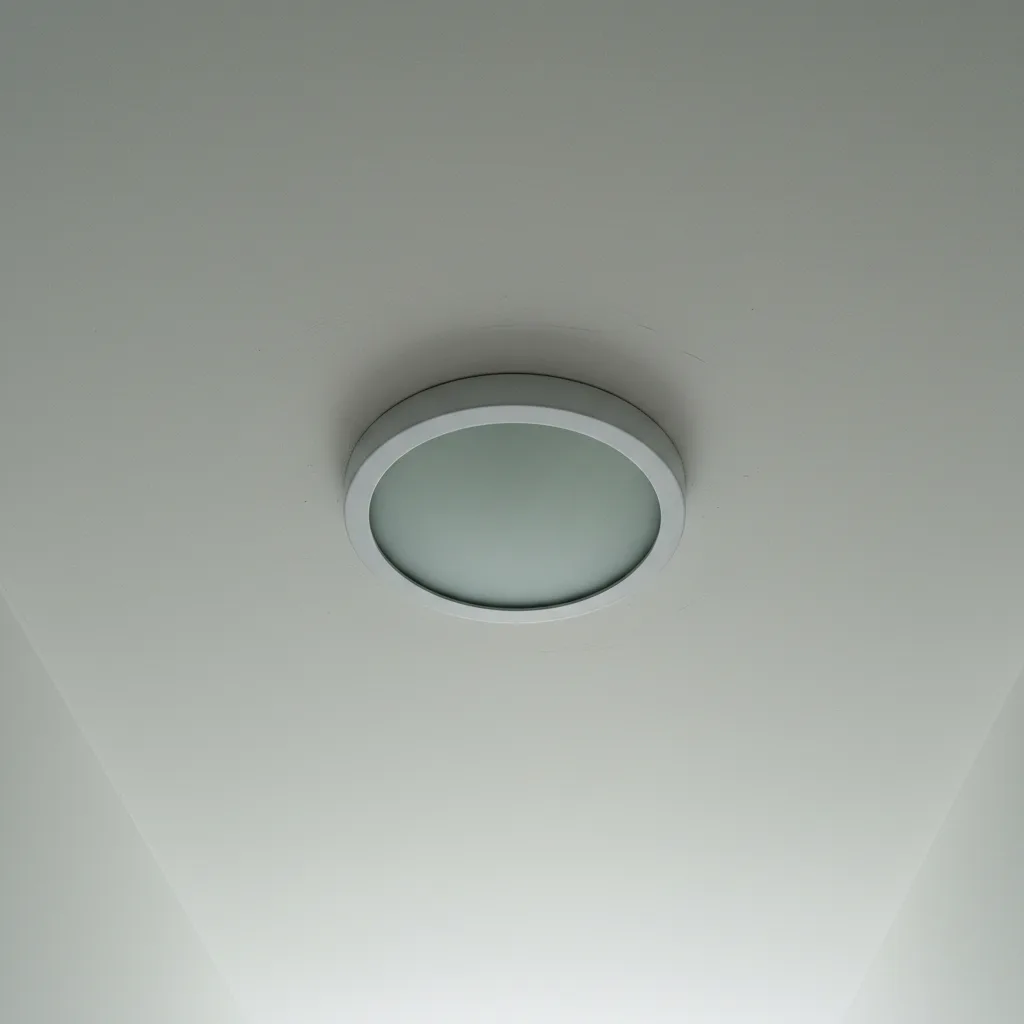
Water condensing on the outside of a tube runs down it and appears at the ceiling ring, which reads as the tunnel leaking rather than as a loft problem.
How to tell it from a leak
Weather, as always.
Water appearing in cold weather with no rain is condensation. Water appearing during or after driving rain is a leak.
The full method is on is it condensation or a leak.
Looking at the tube
The check that settles it.
A torch in the loft on a cold morning shows beads of water on the outside of an uninsulated tube, which is unambiguous.
Insulating the tube
The first of the two fixes.
An insulated tube stays closer to room temperature along its length, so loft air reaching it is not cooled below its dew point.
What to insulate with
A purpose made sleeve, ideally.
Manufacturers offer insulated tube sections and sleeves, which fit properly and stay in place, and loose insulation wrapped round is a poor substitute.
Sealing at the ceiling
The second, and the more important. Sealing where the tube passes through the ceiling stops warm moist room air being pushed up into the loft around it, which removes the moisture rather than the cold.
Why both matter
Because they address different halves. The seal reduces how much moisture reaches the loft, and the insulation removes the cold surface, and doing only one leaves the problem in place.
Condensation inside the tube
Rarer, and it means a seal has failed.
Moisture within the tube points at the roof unit seal or an unsealed joint between sections, and it is diagnosed from the loft.
Taping the joints
Part of a proper installation. Tube sections are joined and taped so the tube is closed along its length, which keeps loft air and dust out of the light path.
Condensation on the diffuser
A room problem rather than a tunnel one.
Water on the room face of a diffuser in a bathroom means the room is humid and the extract is inadequate, and the tunnel is simply the cold surface.
What fixes that
Extract, ducted outside. A properly sized fan running to an external terminal is what removes bathroom moisture, and nothing about the tunnel is a substitute for it.

Loft ventilation
Worth checking while you are up there.
A loft that cannot breathe holds moisture, and blocked eaves ventilation is a common finding once somebody actually looks.
Where the insulation was disturbed
A cold ring at the ceiling. Loft insulation pulled back during the installation and not packed back leaves a cold patch of ceiling, which then condenses in the room.
What a good installation does is on can a sun tunnel go through a loft.
A double diffuser
Helps in a humid room. A second diffuser or a sealed unit at the ceiling keeps the room face warmer, so it is less likely to be the surface moisture chooses.
Whether it can be fixed afterwards
Yes, and it is loft work.
Insulating the tube and sealing at the ceiling can both be done on an existing installation without touching the roof at all.
The first winter after fitting
Worth watching, and usually uneventful. A tunnel fitted in summer is not tested until December, so the first cold spell is when a marginal detail would show, and it is worth a look in the loft then.
What a torch in the loft tells you
More than anything in the room does.
Water on the outside of the tube, damp insulation around it, or a wet patch on the underside of the roof, each point at a different cause.
Where the whole loft is wet
Not a tunnel problem at all.
Condensation across the underside of a roof means a moisture source and inadequate ventilation, and the tunnel is one of several cold surfaces showing it.
What we insulate on a sun tunnel
We insulate the tube and seal at the ceiling as standard rather than as an option, because those two details take fifteen minutes and they are the whole of the difference.
The whole picture is on the sun tunnel installation page.
Thinking about this job? We survey across Worthing, West Sussex and the South Downs and give you a fixed price before any work starts, with a 10-year workmanship guarantee.