Rooflight and Skylight Installation in Middleton-on-Sea
- Fixed quote before we start
- Roof never left open overnight
- 10-year workmanship guarantee

- Fixed quote before we start
- 10 years workmanship guarantee
- 25 years fitting rooflights
- Skylights only, not a general roofer
Middleton is as close to the beach as domestic building gets on this coast, and it has a hazard that almost nowhere else does in the same degree: shingle. In a serious storm the sea throws stones over the defences, and they land on roofs. It is not a theoretical risk and it changes what glass belongs in a rooflight here.
What we install in Middleton-on-Sea
Replacement to a marine specification with stainless fixings throughout, on a stock that sits almost entirely within the reach of the sea.
The corrosion specification is the baseline and it is well understood. What is under-considered is the impact question, and it is the reason this page exists.
Shingle on a roof
The local condition, and it is worth stating without exaggeration.
The beach here is shingle rather than sand, and in a storm with a high tide the sea lifts and throws it. Stones clear the defences and land on roads, gardens and roofs behind them.
Most of the time it is a nuisance: stones in a gutter, chips out of paintwork. Occasionally it is more than that, and a rooflight is the only part of a roof where an impact matters immediately.
Why glass is the vulnerable part
Because everything else on a roof shrugs a stone off.
A tile takes a chip. A slate may crack and is replaced for a few pounds. A metal flashing dents. None of those admits water on the day it happens.
Glass is different. A pane that breaks is an opening, in a storm, over a room, and it is the one component where a single impact is an emergency rather than a repair to schedule.
| Make-up | If struck | What it means at the time |
|---|---|---|
| Annealed glass | Breaks into shards | Opening, and a hazard below |
| Toughened | Breaks into small pieces | Opening, less hazardous |
| Laminated | Cracks, holds together | Stays weathertight, usually |
| Toughened outer, laminated inner | Outer goes, inner holds | The sensible specification here |
| Plastic dome | Cracks or punctures | Depends on age and brittleness |
| Old crazed dome | Shatters | The worst case |
What we specify here
A laminated inner pane, as a matter of course, on any unit within reach of thrown shingle.
A laminated pane has an interlayer bonding the glass, so when it cracks it holds together rather than opening. The unit is damaged and needs replacing, and the room stays dry and safe in the meantime.
It costs a modest amount more at order. Against the possibility of an open roof in a storm, on this beach, it is not a close decision.
Overhead glazing anyway
Worth noting, because it is a requirement rather than only a good idea.
Glass overhead has its own considerations regardless of location, and a laminated inner pane is the ordinary way of satisfying them so that a failure does not drop glass into a room.
So the specification we recommend here is not exotic. It is the sensible one everywhere and it is the obviously correct one on this beach.
Plastic domes, and why we replace them
The commonest thing we are called to here and it is an age question.
A plastic dome is reasonably tough when new and it becomes brittle with years of ultraviolet exposure. A twenty year old dome that has gone yellow has also gone fragile, and it is the component most likely to fail under an impact.
Which means on this stretch a dome is worth replacing on age alone before it is worth replacing on appearance. It is one of the few places where we will suggest doing it sooner rather than later.
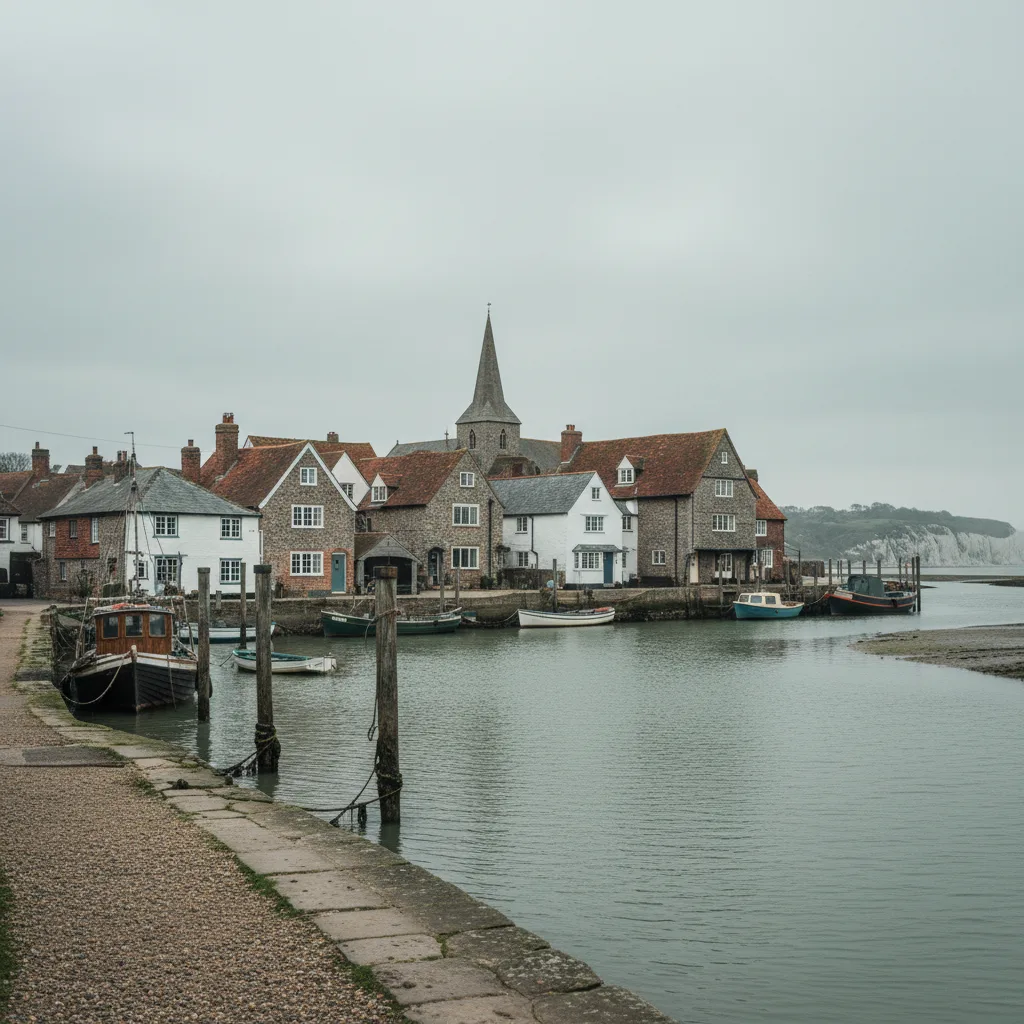
Sand and shingle as abrasive
The slower version of the same problem, and it affects appearance rather than integrity.
Wind blown sand and fine shingle scour a glazed surface over years, and wiping a dry unit drags it across the glass. Rinsing first and then wiping keeps a unit clear.
Dry polishing every spring on this beach will visibly dull a unit within a few years. It costs nothing to say once.
The corrosion specification
The baseline, and it is not negotiable at this distance from the water.
Marine grade coatings throughout, stainless on anything exposed, ironmongery rated for the environment, and fixings to the manufacturer’s exposed schedule.
What continuous salt exposure does, and why it works on metal rather than glass, is covered on the coastal pages. Here it simply applies in full, everywhere in the village.
Wind on an open beach
The other half, and there is nothing in front of these houses at all.
What wind does to a roof, how uplift concentrates at edges and what an exposed fixing schedule actually requires, is on the Washington page.
It applies here with salt and shingle added, which is why the fixings and the flashing restraint are followed exactly rather than approximated.
Sea defences, and what they change
Worth understanding, because they vary along this frontage.
Rock structures, groynes and shingle recharge all reduce how much material reaches the properties behind, and they are maintained rather than permanent. Their condition and position change what a given plot experiences.
Which means the household’s own account of what has landed on their roof over the years is better evidence than anything else available, and we ask for it.
The stock, and how varied it is
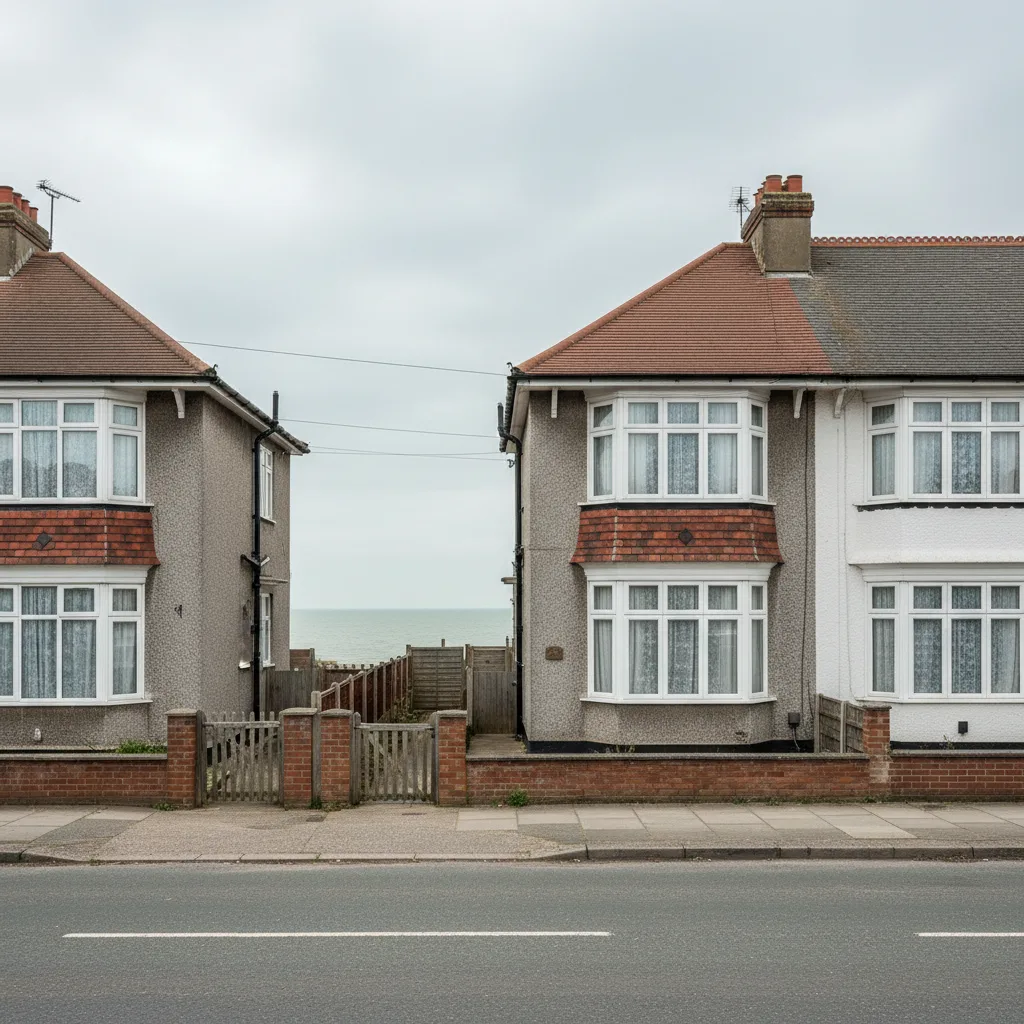
Mostly twentieth century, mostly low, and considerably less uniform than an estate.
Clay plain tile and concrete interlocking, mixed structures, and a good deal of extension and alteration over decades. Two adjacent houses are frequently nothing like each other.
Which means nothing here is quoted from a photograph, and the survey establishes the roof rather than assuming it from the age of the property.
Bungalows, and what they make easy
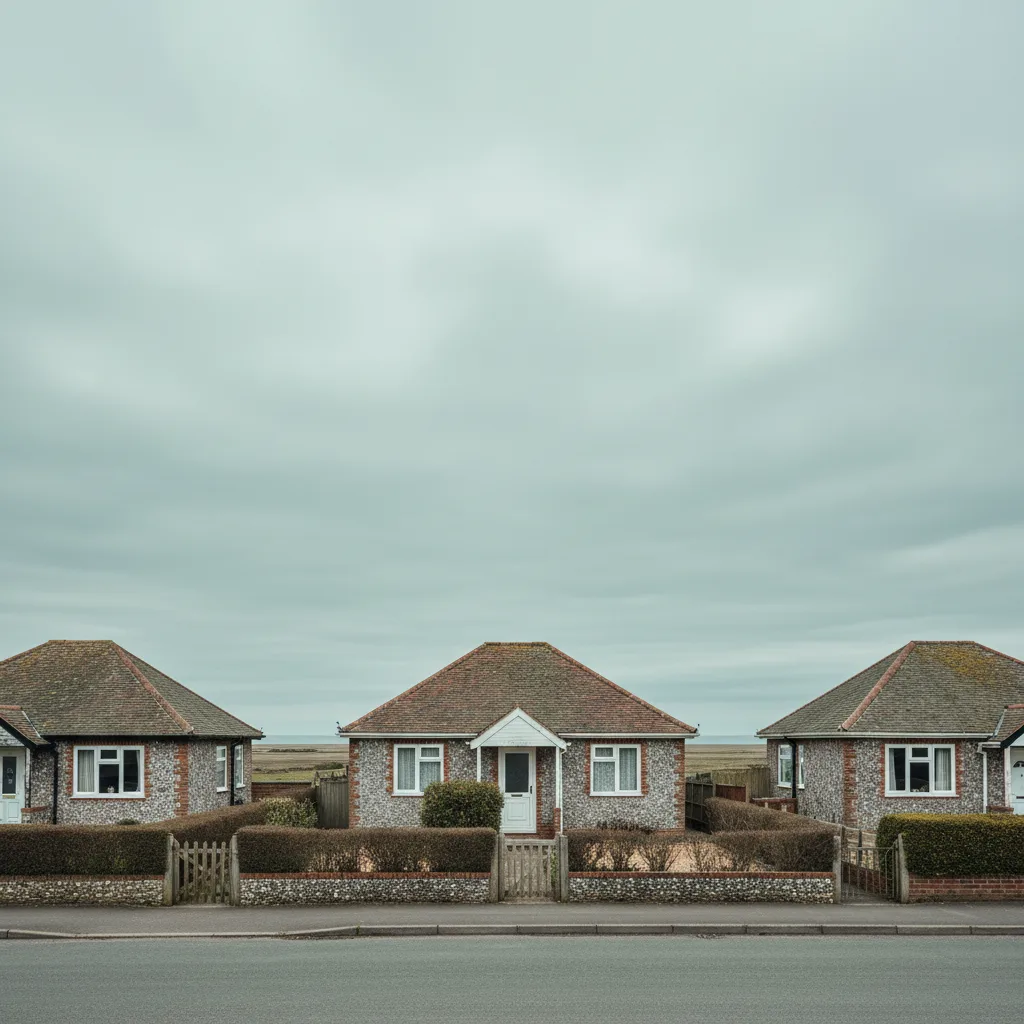
A large share of the stock, and it helps on every count except the environment.
Every room is reachable from the roof space, a tower reaches the roof without a scaffold, and the unit is reachable afterwards for the rinsing this position demands.
What a coastal bungalow specifically asks for is on flat roof rooflights on a coastal bungalow.
Flat decks near the beach
Common here and worth checking properly.
Shallow falls, coverings renewed more than once, and shingle collecting at low points and around outlets. A blocked outlet on a shallow deck is how a sound detail becomes a wet one.
Clearing shingle and debris from a deck after a storm is worth doing, and it is one more thing that is easy on a bungalow and neglected on anything taller.
Insurance, and a cracked pane
Worth knowing before it happens rather than after.
Damage from a storm is generally an insured event, and a cracked laminated pane that is still holding is damage rather than an emergency. Photographing it before anything is touched is the sensible first step.
We will provide a written description of what failed and why, because an insurer will ask and a clear account of an impact is easier to settle than a claim about a unit that simply broke.
What a household should do after a storm
- Look at the roof from the ground for anything obviously displaced.
- Check the gutters and any flat deck outlets for shingle.
- Rinse the frame and fixings of any rooflight with fresh water.
- Look at the inside of the unit for any new crack in the glass.
- Report a cracked laminated pane rather than leaving it; it is holding, not fixed.
None of that takes long and all of it is worth more than an annual inspection would be, because on this beach the events are what matter rather than the years.
Living close to the water
Worth a paragraph, because it is what people here actually want from a rooflight.
These are houses bought for the sea, and daylight from above in a low room a few metres from a beach is a different thing from daylight in a suburban kitchen. Reflected light off water changes through the day in a way nothing inland does.
Which is a reasonable thing to design for. A larger unit, or a second one, in a room somebody sits in, earns its place here more clearly than it would elsewhere, provided the glass make-up is right.
Elmer, and the rock defences
Worth a note, because the frontage is not uniform and the properties behind each part experience different things.
Where offshore rock structures sit in front of a stretch, the wave energy reaching the beach is reduced and less material is thrown. Where the defence is a shingle bank or a groyne field alone, more of it arrives.
So two properties the same distance from the water can have quite different histories, and the household’s account of what has landed on their roof is the evidence that matters rather than the map.
Storage in the roof space
A small practical point on a bungalow in this position.
Where a loft is boarded and used, everything in it sits directly under a roof that occasionally takes an impact. It is worth knowing what is up there before an opening is formed, and worth moving anything that matters away from the working area.
It takes ten minutes and it saves an awkward conversation about a box of photographs.
Two units rather than one
Frequently the better answer on this stock, and the reasons here are structural as well as visual.
A large single unit presents more area to uplift and more glass to a possible impact, on roofs that are frequently lightly built. Two smaller units spread both, and a failure in one does not open the whole opening.
They also light a long room more evenly, so the recommendation costs nothing to make.
Getting to the roof in Middleton-on-Sea
Generally easy, and the roads are the variable.
Plots have space, roofs are low and a tower reaches most of them. Some of the beach roads are unadopted with surfaces that reflect it, so a lorry with a made to size unit is limited by the approach rather than the plot.
The route is driven at survey rather than looked at on a map.
What the survey establishes
- What has actually landed on the roof over the years, asked of the household.
- The age and condition of any existing plastic dome.
- Whether the glass make-up includes a laminated pane.
- The fall on any flat deck and whether outlets clog with shingle.
- Member sizes, against the exposed fixing schedule.
- The approach road, driven rather than assumed.
Building Control
A replacement into an existing opening is not normally notifiable, though the unit still has to meet the limiting thermal standard. A new opening is, and goes to Arun District Council or an approved inspector.
The thresholds are on do flat rooflights need Building Control.
Permitted development
There is limited designation here, so most rooflight work falls within permitted development, subject to the projection limit above the plane of the roof and nothing forward of the principal elevation.
On a stock this altered it is worth checking whether an earlier alteration was itself unauthorised, which is not unheard of. It is established before a unit is specified rather than after.
How we quote
A free indicative range by email from photographs, then a survey, then a fixed itemised written price that does not move afterwards. Anything we misjudge at survey is ours to absorb.
What is measured at each step is on the how we price and quote page.
Guarantee
Ten years on our workmanship, on every job, limits written down. The manufacturer stands behind the unit; we stand behind the kerb, the flashing and the making good.
The terms, and the accreditations we do not claim, are on the our guarantee page.
Skylight services in this area
Conservation Rooflight Installation
Read moreElectric and Opening Rooflight Installation
Read moreEnergy Efficient Rooflights
Read moreFlat Roof Rooflight Installation
Read moreReplacing a Failed or Misted Rooflight
Read moreRoof Lantern Installation
Read moreRoof Window Installation
Read moreSun Tunnel Installation
Read moreVELUX Window Installation
Read moreWalk-On Rooflight Installation
Read moreThinking about this job? We survey across Worthing, West Sussex and the South Downs and give you a fixed price before any work starts, with a 10-year workmanship guarantee.