Rooflight and Skylight Installation in East Preston
- Fixed quote before we start
- Roof never left open overnight
- 10-year workmanship guarantee

- Fixed quote before we start
- 10 years workmanship guarantee
- 25 years fitting rooflights
- Skylights only, not a general roofer
East Preston has an older population than most places we work and a great many single storey homes, and those two facts change what a good rooflight specification looks like. A unit somebody cannot open, or cannot reach to clean, is a unit that stops being used. This page is about specifying for the person who will actually live with it.
What we install in East Preston
Replacement to a marine specification, and an increasing amount of powered operation.
The corrosion specification follows from the seafront position and it is well understood. The operating question is the one that is under-asked, and it is worth putting first because it is easier to solve at order than afterwards.
Reach, and why it decides the product
The consideration that is usually left out of a specification and should not be.
A manual rooflight is opened by hand or with a pole. That assumes somebody can reach it, hold a pole steady, and turn a handle at arm’s length above their head, and for a good many households here one or more of those is not realistic.
Which means the honest question at survey is not what the room needs but who will be operating it, and in five and ten years’ time as well as now.
| Option | Suits | Limitation |
|---|---|---|
| Manual, within reach | A low unit, an able user | Height and grip |
| Manual with a pole | Higher units, steady hands | Weight, balance, storage |
| Electric, wall switch | Almost everybody | Needs a supply |
| Electric, remote | Limited mobility | Handset gets lost |
| Electric with rain sensor | Anyone away from home | Slightly more to go wrong |
| Fixed, no opening | Daylight only | No ventilation from it |
The cable is the whole decision
The single most useful thing on this page, and it costs almost nothing at the right moment.
An electric unit needs a supply at the opening. While the ceiling is open and somebody is in the roof space, running a cable to it is a few metres and ten minutes of work.
Afterwards it means going back into the roof space, lifting boards and making good a ceiling. The difference between having that cable and not having it is the difference between an afternoon and a job.
So even where a household wants a manual unit now, we will suggest running the cable and leaving it capped. In five years, when circumstances have changed, the decision is a simple one.
Switch position
A detail that decides whether a powered unit actually gets used.
A wall switch at the height of a light switch, by the door, is used. A switch behind furniture, or at the far end of a room, is not, and a handset that has to be found first is used considerably less than a switch.
It is worth deciding where the switch goes by standing in the room rather than on a drawing, and it is worth having both a switch and a handset rather than only the second.
Rain sensors
Worth having here for a reason beyond convenience.
A sensor closes an open unit when rain starts, which matters most for a household that is out, asleep, or would find getting to it quickly difficult.
It removes the reason people leave a rooflight shut all summer, which is the fear of leaving it open and being caught out. On a bungalow where ventilation is genuinely useful, that is a real gain.
Cleaning, and who does it
The other reach question, and it is separate from operating.
A unit on this coast wants rinsing to lift the salt film, and glass wants cleaning when it is dirty. Both assume somebody with a ladder.
Where that is not realistic, it belongs in an arrangement with somebody rather than on a household’s own list. We will say so, because a specification that assumes maintenance nobody will do is not an honest specification.
Blinds, and operating those too
The same question one layer down.
A manual blind on a rooflight is operated with a pole, which has all the difficulties above. An electric blind is operated from the same switch or handset as the unit.
Where a blind is wanted at all, and on a south facing slope here it usually is, it is worth deciding at order. Retrofitting to a unit already in place is possible and considerably more awkward.
Ventilation in a room somebody is in all day
A point that matters more in this village than in most.
Where a household is at home through the day, background ventilation and the ability to open something matter more than in a house that is empty from eight until six.
An opening unit at the highest point of a single storey room is the most effective vent position available, and where it can be operated easily it gets used. Where it cannot, a fixed unit and a separate vent is the more honest answer.
Living through the work
A practical consideration on a bungalow with somebody at home.
There is no upstairs to retreat to, so a day of work in the middle of the house is a day in the middle of the house. The room is sheeted and sealed at the door, debris is carried out, and we say plainly which room is out of use and when.
Most of these jobs are a single day, and on a bungalow that is the difference between an inconvenience and a disruption.
The village and the designation
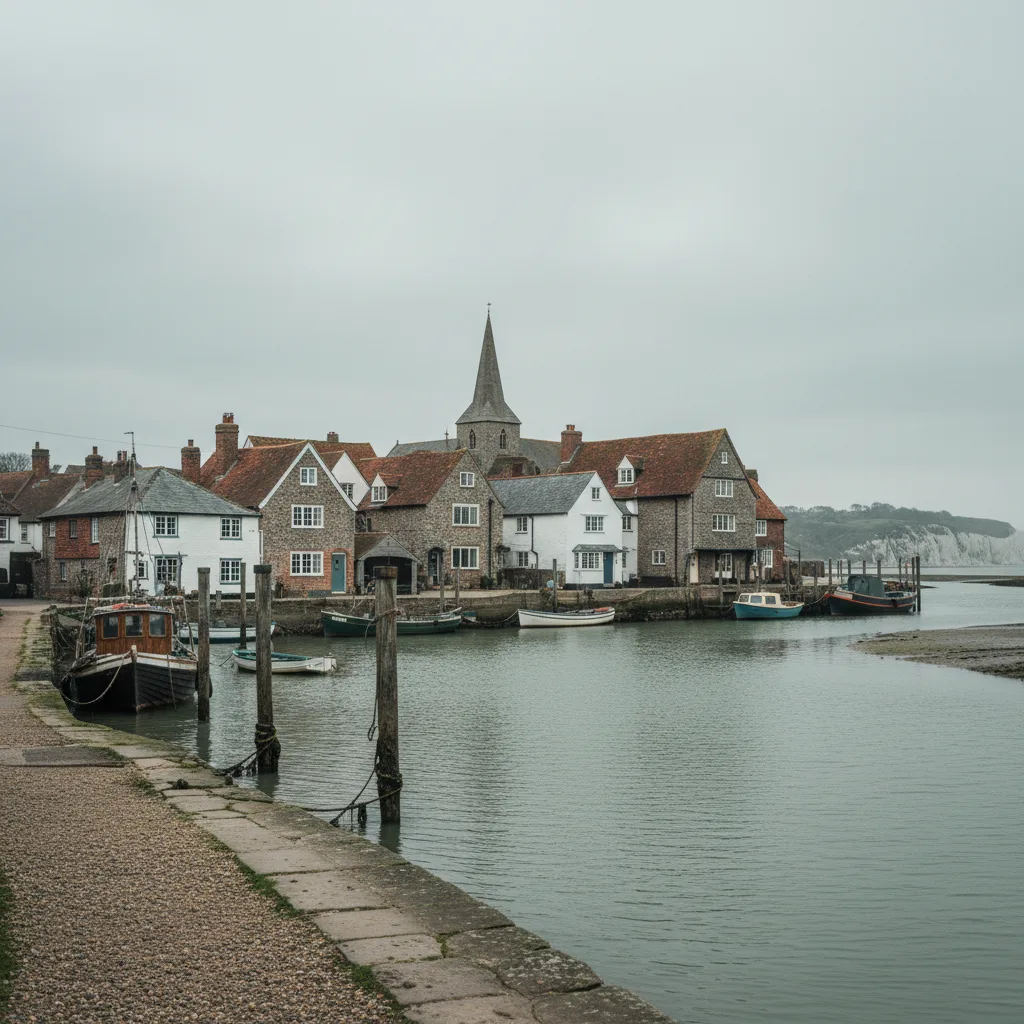
A conservation area over the old village around the green, which is a small part of a largely twentieth century place.
Inside it the usual considerations apply: what reads from the street and the green, slim flush units on anything visible. Across an open green a roof is seen square on from a distance, which makes the flush profile matter more rather than less.
How designation narrows permitted development is on article 2(3) land and permitted development.
Flint in the old village
The walling on the older buildings, and it decides the scaffold rather than the roof.
What flint is and where a tie can legitimately go is on the Poynings page, where it is the dominant condition.
Most of the village is later and brick built, and the question does not arise there at all.
Coastal specification
The environmental position, and it varies across the village.
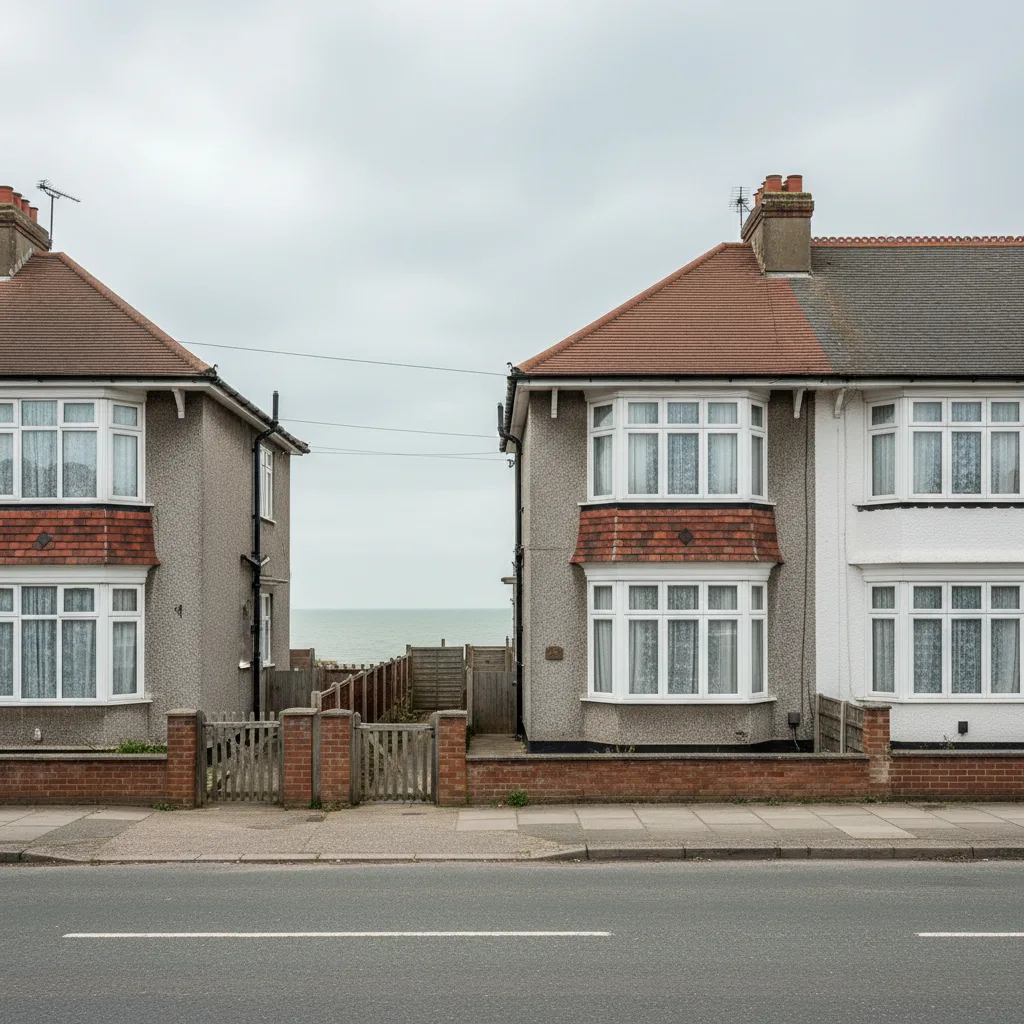
Seafront plots take the salt film and need marine grade coatings and stainless fixings on anything exposed. Further back, with development between the plot and the sea, standard coatings hold up.
It is judged at the plot rather than by postcode, and we will specify standard where standard is right rather than adding a grade the position does not need.
The private estate on the seafront
A stretch of the frontage here is a private estate with its own scheme of covenants.
What that means, why estate approval is separate from planning, and in what order to approach both, is on the Aldwick page where it is the dominant condition.
Which properties it applies to is in the deeds rather than in local knowledge, and it is checked at the outset.
The bungalow stock
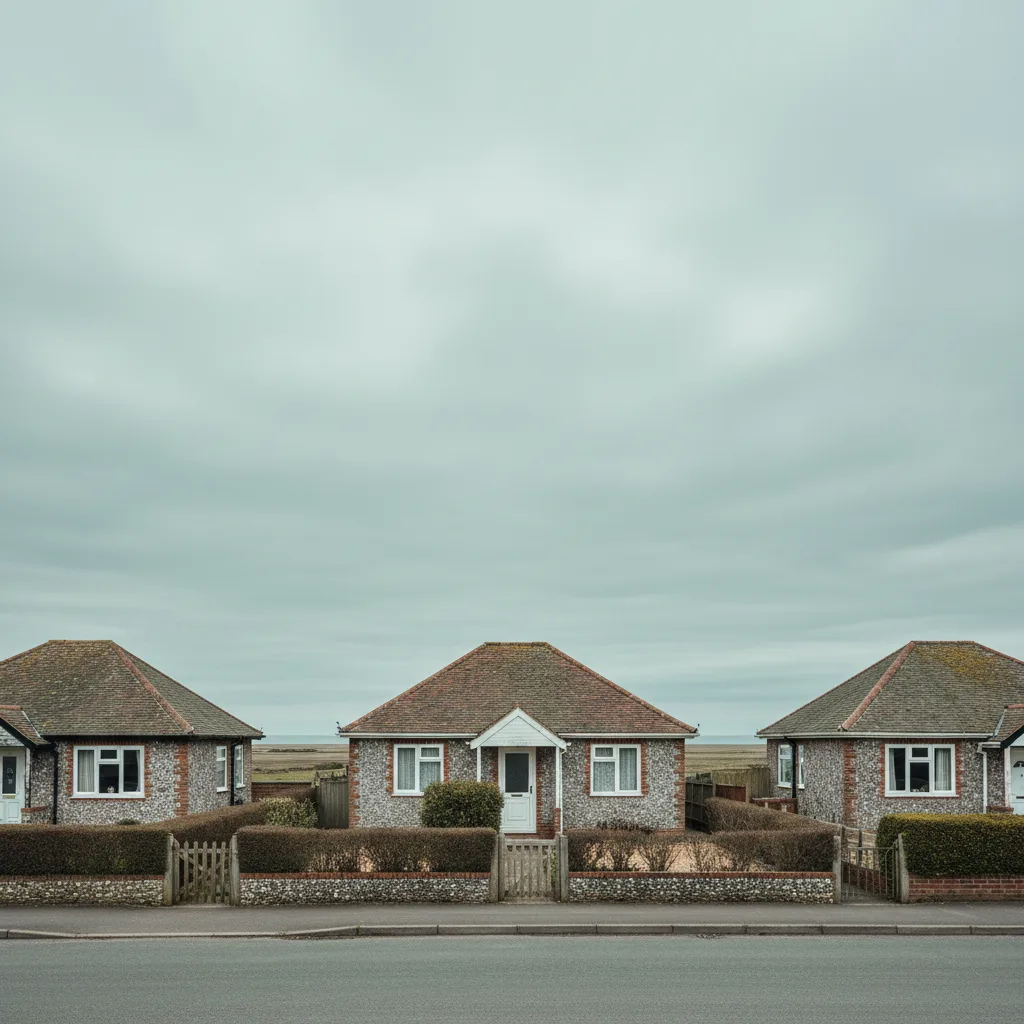
Most of the village, and it makes almost everything easier.
Every room is reachable from the roof space, a tower reaches the roof without a scaffold, and the unit is reachable afterwards. Sun tunnels reach hallways and bathrooms that no window could.
What a coastal bungalow specifically asks for is on flat roof rooflights on a coastal bungalow.
Sun tunnels and reach
A point in favour of tunnels for this stock specifically.
A sun tunnel has nothing to operate. There is no handle, no pole, no motor and no blind, and the only maintenance is rinsing a dome that on a bungalow is reachable from a ladder.
Which makes it the lowest demand daylight product there is, and in a household where operating a unit would be difficult that counts for a good deal.
The estate roofs and kerbs, in short
Trussed rafters and a builder’s kerb under the rear extension, as on every post-war estate. The dimensions and the kerb questions are on trussed rafters and what is a builders kerb.
Neither is what makes a job here different from one two miles inland.
Handles, catches and grip
A detail nobody specifies and everybody eventually notices.
Rooflight handles vary considerably in how much force and how fine a grip they need. A stiff catch at arm’s length above the head is a different proposition from one at shoulder height, and a handle that needs a pinch grip is harder than one that takes a whole hand.
Where a household includes somebody with limited hand strength, it is worth asking to try one before ordering. Manufacturers’ showrooms will let you, and it takes an afternoon that saves years of not opening a window.
Servicing a powered unit
The question that follows a decision to go electric, and the answer is reassuring.
A motorised rooflight has few moving parts and a long service life, and what usually fails first is a handset battery or a sensor rather than the mechanism.
What matters is that the unit can still be opened if the power is off, and most systems allow it. It is worth confirming for the specific product rather than assuming, particularly where the unit is also providing ventilation somebody depends on.
Writing the operation down
A small thing that we do and few installers bother with.
A short written note left with the household: how to open and close it, where the isolator is, what the sensor does, how to override it, and who to ring. One page.
On a powered unit in a household where somebody may be explaining it to a visiting relative in three years, that page is worth more than the warranty card.
What the survey establishes
- Who will operate the unit, now and in some years.
- Whether a cable can be run while the ceiling is open.
- Where a switch would actually be used from.
- Whether cleaning and rinsing are realistic for the household.
- Whether an estate scheme of covenants applies.
- What stands between the plot and the sea from the south.
Building Control
A new opening is notifiable, so we notify Arun District Council or an approved inspector and the completion certificate comes back to you. Keep it. It is what a solicitor asks for when the house is sold.
Where the line falls between a new opening and a replacement is on do flat rooflights need Building Control.
Permitted development
Across the estates most work is permitted development, subject to the projection limit above the plane of the roof and nothing forward of the principal elevation.
Inside the village designation those rights are narrowed. And permitted development says nothing about estate covenants, so where a scheme applies both are established separately.
How we quote
A free indicative range by email from photographs, then a survey, then a fixed itemised written price that does not move afterwards. Anything we misjudge at survey is ours to absorb.
What is measured at each step is on the how we price and quote page.
Guarantee
Ten years on our workmanship, on every job, limits written down. The manufacturer stands behind the unit; we stand behind the kerb, the flashing and the making good.
The terms, and the accreditations we do not claim, are on the our guarantee page.
Skylight services in this area
Conservation Rooflight Installation
Read moreElectric and Opening Rooflight Installation
Read moreEnergy Efficient Rooflights
Read moreFlat Roof Rooflight Installation
Read moreReplacing a Failed or Misted Rooflight
Read moreRoof Lantern Installation
Read moreRoof Window Installation
Read moreSun Tunnel Installation
Read moreVELUX Window Installation
Read moreWalk-On Rooflight Installation
Read moreThinking about this job? We survey across Worthing, West Sussex and the South Downs and give you a fixed price before any work starts, with a 10-year workmanship guarantee.