Rooflight and Skylight Installation in Upper Beeding
- Fixed quote before we start
- Roof never left open overnight
- 10-year workmanship guarantee
- Fixed quote before we start
- 10 years workmanship guarantee
- 25 years fitting rooflights
- Skylights only, not a general roofer
People ask us whether a rooflight will make a house colder, and the honest answer has three parts: yes a little, no if it is specified and installed properly, and it depends what you are comparing it with. This page sets out what a rooflight actually does to the energy performance of a house, because it is asked constantly and answered vaguely.
What we install in Upper Beeding
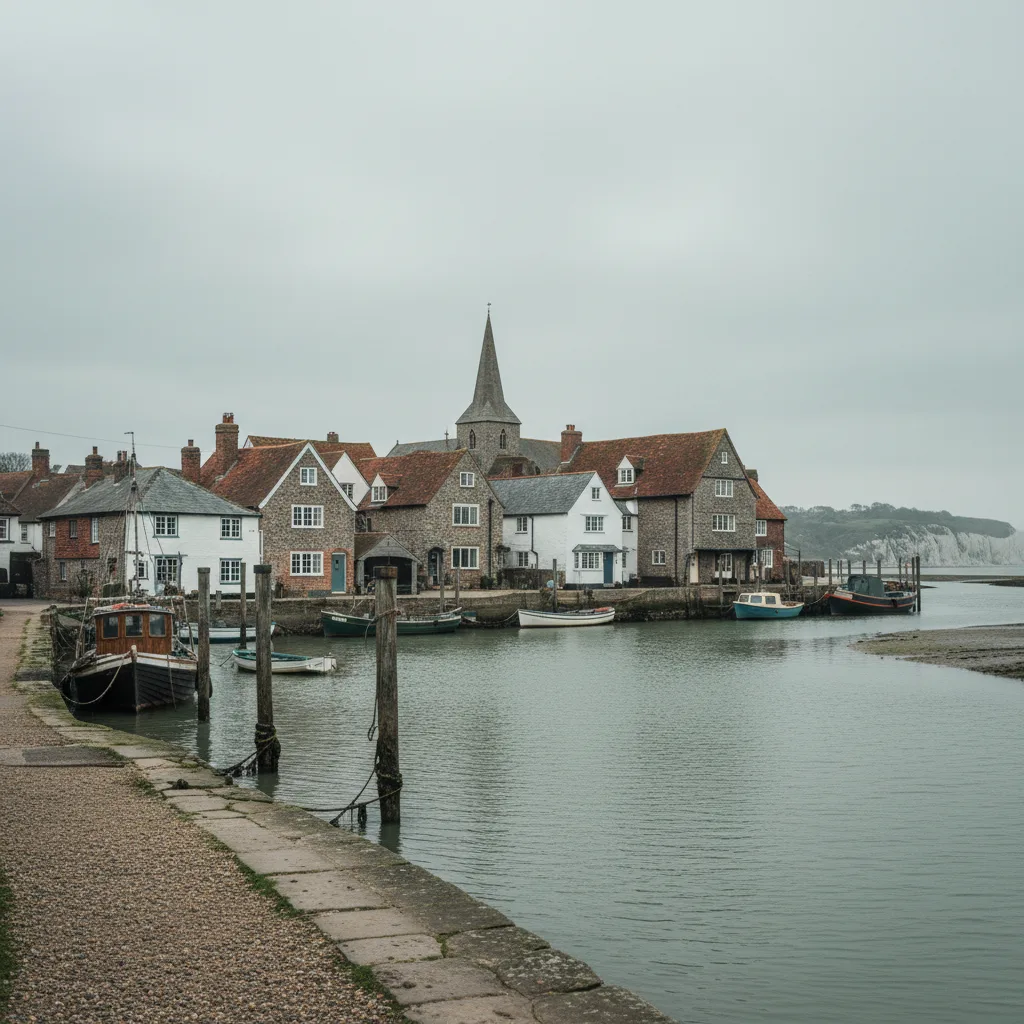
Replacements and conservation units, across a village of older properties around the church and the old street with twentieth century housing beyond.
The technical work is what it is in any Adur valley village. The question that comes up most from customers here, and everywhere, is the one this page is about.
The straightforward part
Glass loses more heat than an insulated roof, and there is no arguing with it.
A modern insulated roof performs several times better than even a good glazed unit. So replacing a square metre of insulated roof with a square metre of glass increases the heat loss through that part of the building.
That is true, it is unavoidable, and it is a much smaller number than people imagine once it is set against everything else the house is doing.
| Factor | Effect | Controlled by |
|---|---|---|
| Area of glass | Direct and proportional | Unit size |
| Glass specification | Substantial | Coating, fill, spacer |
| Frame and its thermal break | Real | Product choice |
| Insulation at the reveal | Frequently the largest | Installation |
| Air leakage at the frame | Frequently underestimated | Installation |
| Solar gain in winter | Offsets some of the loss | Aspect |
The installation matters more than the product
The point worth taking away, because it is where the real losses happen.
A well specified unit fitted with insulation stopping short of the frame and no continuity of the vapour control layer loses considerably more than its glass specification suggests, through the gap around it rather than through it.
Insulation carried right up to the frame, and the vapour control layer sealed to it, is what makes the calculated performance the actual performance. It is done at installation or not at all.
The cold bridge at the reveal
The specific mechanism, and it costs more than most people would guess.
Where insulation stops short at a reveal, heat takes the short path around the insulation rather than through it. That path is continuous around the whole perimeter of an opening.
On a modest unit that perimeter is several metres of cold bridge, and it also produces the water forming along the frame on winter mornings that gets reported as a failed unit.
What the glass specification buys
The part that is in the order rather than in the work.
A low emissivity coating, an argon fill and a warm edge spacer together account for a large part of the difference between a good unit and a poor one, and they are ordinary specification rather than exotic.
Triple glazing improves it further and costs more, weighs more and is not always the right answer on a roof. On most domestic jobs a good double glazed unit properly installed outperforms a triple glazed one installed carelessly.
Solar gain in winter
The offsetting factor, and it is genuinely worth counting.
A south facing rooflight admits solar energy on bright winter days, at the season when it is most useful, and that gain offsets part of the fabric loss over a heating season.
It is not enough to make glass better than insulation. It does mean the net effect of a south facing unit is smaller than its heat loss figure alone suggests, and that a north facing one is the worse case.

Solar control cuts both ways
A trade-off worth understanding before specifying it.
Solar control glass reduces summer overheating by cutting the solar energy admitted, and it cuts it in winter too, when that energy was useful.
Which is why it belongs on a south or west facing unit over a room that genuinely overheats, and does not belong on a north facing one or on a unit over a room that is cold anyway. It is a decision rather than a default.
What it does to an EPC
The practical question people are usually asking underneath the technical one.
An EPC is a modelled assessment, and adding glazed area to a roof will generally move the modelled fabric performance slightly the wrong way. On a typical domestic rooflight the effect on a rating is small.
What moves an EPC materially is insulation, heating and controls rather than one rooflight. Where somebody is worried about a rating specifically, we will say honestly that a rooflight is not where the points are.
Replacing an old unit improves things
The comparison that actually applies to most of our work here.
Where a single skin plastic dome or an early double glazed unit is being replaced, the new unit performs several times better and the sealing detail is done properly rather than not at all.
So a replacement is generally an improvement in energy terms rather than a cost, sometimes a substantial one. It is worth saying, because people assume the opposite.
Air leakage, and where it actually is
The loss that does not appear in a glass specification and is frequently larger than it.
An old rooflight in an old opening leaks air around its frame, through a failed seal, and through the gap somebody filled with expanding foam twenty years ago. That is uncontrolled ventilation, and it is heat leaving continuously.
A new unit correctly sealed removes it. On a draughty old installation that single change is frequently worth more than the glass specification.
Ventilation is not the same as leakage
A distinction worth drawing, because sealing a house up is not the goal.
Controlled ventilation, through a trickle vent or an opening unit used deliberately, is necessary and is not a loss in the sense that matters. Uncontrolled leakage through gaps is a loss and is not doing any useful work.
Which is why we seal the frame properly and specify a vent where the room needs one, rather than treating the two as the same thing.
What we will not claim
Worth stating plainly. A rooflight will not reduce a heating bill. It admits daylight, which reduces lighting use modestly, and it loses more heat than the roof it replaced.
What it can be is close to neutral, properly specified and properly installed, in exchange for a room that is transformed. That is a fair trade and it is not an energy saving measure, and we will not describe it as one.
Doing it during other work
Where the energy argument actually points. Where a roof is being insulated or recovered anyway, fitting a rooflight at that point means the insulation and the air barrier are designed around it rather than cut into afterwards.
That produces a materially better result than the same unit added later, and it is the clearest energy argument on this page.
Condensation, and what it is telling you
The symptom that follows a poorly detailed installation, and it is the visible evidence of the cold bridge above.
Water forming along the frame on winter mornings is a cold surface in a humid room, and where it appears in a line around the perimeter it is the insulation stopping short rather than the unit failing.
Which makes it useful as well as annoying: it shows exactly where the heat is leaving. Misting between the panes is a different fault entirely and is a failed seal.
Where the money is better spent
Worth saying, because customers occasionally ask us to justify a rooflight on energy grounds and it does not.
Loft insulation, draught proofing, and a heating control that works are all cheaper than a rooflight and all do considerably more for a heating bill.
A rooflight is bought for daylight and for what daylight does to a room. That is a good enough reason on its own and it does not need an energy argument propped underneath it.
Overheating, which is the other half
Worth putting alongside the heat loss question, because households experience it more.
A room under a rooflight gets warmer in summer than the same room without one, and on a west facing slope over a small room that can be genuinely uncomfortable.
Solar control glass, a blind, and the ability to open something all help, and they work best together. It is a specification conversation at order rather than a problem to solve in July.
The village stock
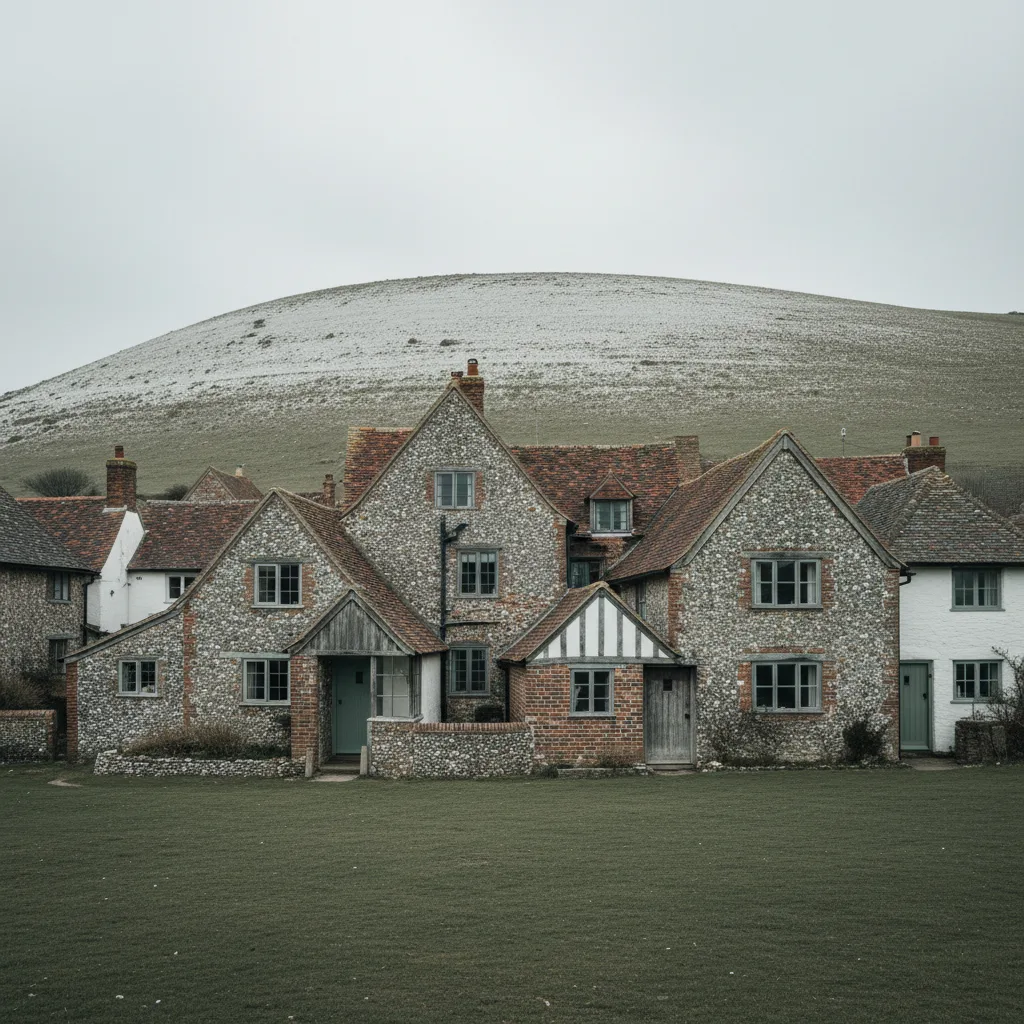
Older properties around the church and the old street, with twentieth century housing beyond and a good deal of it.
The older buildings carry the conditions set out on the Steyning, peg tile and West Tarring pages. The later housing is ordinary work.
Which a property is is established at survey rather than inferred from an address.
Insulating an old roof at the same time
A recurring opportunity on the older stock here.
Opening a roof exposes what insulation there is, which on an old building is frequently very little and frequently blocking the eaves ventilation path.
Correcting both while the roof is open costs a fraction of doing it separately, and it is the single largest energy improvement available on most of these buildings. We will say what we find.
The designation and the National Park
A conservation area around the church and the old street, inside the National Park, so applications go to the South Downs National Park Authority rather than the district council.
How designation narrows permitted development is on article 2(3) land and permitted development, and the Park position is on who is the planning authority in the South Downs National Park.

Getting to the roof in Upper Beeding
Split between the old street and the later housing.
The old street is narrow with frontages close to it, so a scaffold occupies rather than stands beside and needs a licence. The later housing has drives, side gates and space.
Both are settled at survey and priced accordingly rather than averaged.
What the survey establishes
- What is being replaced, and how it currently performs.
- Where the insulation line runs and how it will meet the frame.
- Whether the existing installation is leaking air around its frame.
- The aspect, which decides whether solar control earns its place.
- Whether the roof insulation is worth correcting while it is open.
- Whether the property sits in the designation.
Building Control
A replacement into an existing opening is not normally notifiable, though the unit still has to meet the limiting thermal standard. A new opening is, and goes to the South Downs National Park Authority or an approved inspector.
The thresholds are on do flat rooflights need Building Control.
Permitted development
Outside the designation the ordinary rules apply, subject to the projection limit above the plane of the roof and nothing forward of the principal elevation.
Inside it those rights are narrowed, and the application goes to the Park authority rather than the district. Which applies is established before a unit is specified.
How we quote
A free indicative range by email from photographs, then a survey, then a fixed itemised written price that does not move afterwards. Anything we misjudge at survey is ours to absorb.
What is measured at each step is on the how we price and quote page.
Guarantee
Ten years on our workmanship, on every job, limits written down. The manufacturer stands behind the unit; we stand behind the kerb, the flashing and the making good.
The terms, and the accreditations we do not claim, are on the our guarantee page.
Skylight services in this area
Conservation Rooflight Installation
Read moreElectric and Opening Rooflight Installation
Read moreEnergy Efficient Rooflights
Read moreFlat Roof Rooflight Installation
Read moreReplacing a Failed or Misted Rooflight
Read moreRoof Lantern Installation
Read moreRoof Window Installation
Read moreSun Tunnel Installation
Read moreVELUX Window Installation
Read moreWalk-On Rooflight Installation
Read moreThinking about this job? We survey across Worthing, West Sussex and the South Downs and give you a fixed price before any work starts, with a 10-year workmanship guarantee.