Who is the planning authority in the South Downs National Park?
For any land inside the South Downs National Park, the planning authority is the South Downs National Park Authority rather than the district or borough council. Applications go to the Park, its officers decide them, and its policies apply. Building Control does not follow the boundary and stays with the council or an approved inspector.
Why it is separate
Because a National Park authority has statutory purposes that a district council does not.
Those purposes include conserving and enhancing the natural beauty, wildlife and cultural heritage of the area. That is a different starting point from a district plan, and it is why the same proposal can be received differently either side of a line.
What that changes in an assessment
Landscape and scenic beauty become material in a way they are not elsewhere.
How a building reads in its wider setting, how a village group appears from surrounding high ground, and what a proposal sets up cumulatively across a landscape are all considerations the Park is entitled to weigh.
Which means a roof slope invisible from every street can still matter if it reads from the escarpment.
What it does not change
Three things, and separating them saves confusion.
Building Control remains with the district council or an approved inspector. Listed building consent is still assessed against the effect on the building’s significance. And permitted development rights themselves are national and do not change at the boundary.
What changes is who decides an application when one is needed, and against which policies.
Where the boundary runs
Not where intuition puts it, which is the practical problem.
The boundary follows landscape and administrative features rather than the built edge of a settlement, so it can include modern housing and exclude an older village core a short distance away.
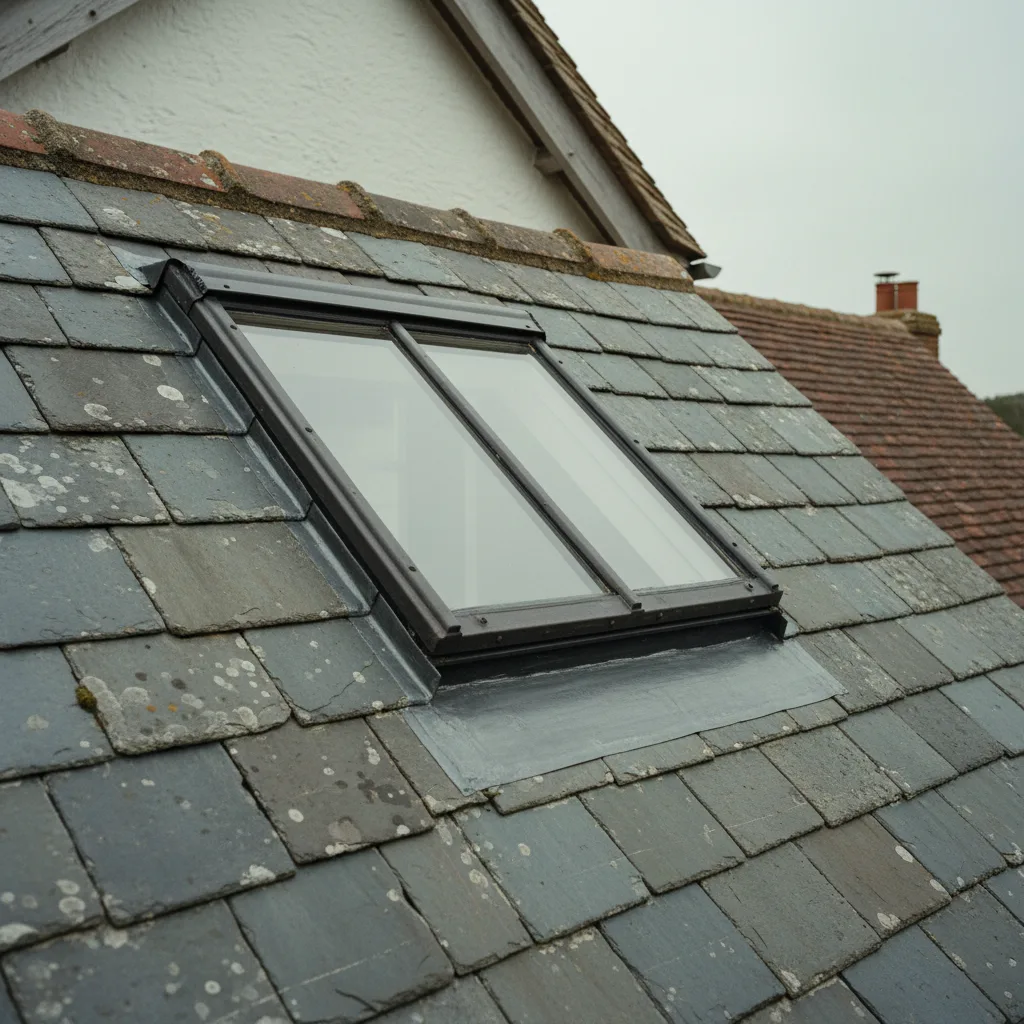
Storrington is the clearest local example, with the line running through the village. The detail is on rooflight installation in Storrington.
Checking an address
Published, mapped and quick. The boundary is available on the Park authority’s own mapping and on the national planning data. An address either falls inside it or it does not, and it is a matter of record rather than opinion.
It takes minutes and we check it before saying anything at all about process.
Which villages are inside
A substantial part of the downland in our radius.
Amberley, Bramber, Ditchling, Findon, Fulking, Poynings, Pyecombe, Slindon, Steyning, Sullington, Upper Beeding and Washington all sit within it, along with part of Arundel and part of Storrington.
Each has its own page setting out what that means locally, because the Park position is only one of the constraints on most of them.
Sending it to the wrong body
The cost of getting it wrong, and it is real.
An application submitted to a district council for land inside the Park is not quietly forwarded and dealt with. It is generally returned, and the time is lost.
On a job with a scaffold booked and a unit ordered, several weeks is a problem rather than an inconvenience.
How the two regimes differ in practice is on article 2(3) land and permitted development.
Does the Park refuse more
A fair question and the honest answer is that it asks a different question rather than a harsher one.
A well judged proposal on a concealed slope, in a slim flush unit, with no historic fabric cut, is received well inside the Park as it is outside it.
What is received differently is a proposal that ignores the wider view, because outside the Park that view may not be a consideration at all.
What helps an application here
Two things, and both cost an afternoon.
Photographs of the roof from the footpaths and high ground that give the wider views, rather than only from the road outside. And a proposal that is visibly the restrained option rather than the maximum one.
Together they show that the landscape consideration has been engaged with rather than overlooked.
Who to talk to before applying
The Park operates a planning service in the ordinary way, with officers who will discuss a proposal.
On a straightforward rear slope that conversation is generally unnecessary. On anything reading in a wider landscape view it is worth having, and it frequently produces a suggestion that makes a scheme work rather than a refusal that does not explain itself.
Local plan policies
Worth a sentence, because they are what an officer actually cites.
The Park has its own local plan with policies on design, on landscape character and on the historic environment, and a decision refers to those rather than to a district plan.
An application that engages with the policy actually being applied is received differently from one that asserts a proposal is in keeping.
Dark skies
A consideration genuinely peculiar to this Park and it occasionally touches rooflight work.
The South Downs is an International Dark Sky Reserve, and light spilling upward from buildings is a matter the Park takes seriously in its policies.
A rooflight is a source of upward light at night when a room below is lit. On a domestic unit it is a small matter; on a large area of glass in an exposed position it is worth considering a blind for that reason as well as for glare.
Conservation areas inside the Park
Both apply at once, and they are not alternatives.
A village conservation area inside the Park is assessed by the Park authority against its own policies and against the ordinary conservation area considerations. A listed building inside it needs listed building consent as well.
Three regimes on one building is common in these villages, and establishing which apply is the first step rather than the last.
What we look for on a designated roof
We check the boundary from the mapped line for every downland address before quoting, because it decides where an application goes and what it has to argue.
Where a property is close to the line we say so and confirm it properly before anything is drafted, rather than guessing from the village name.
Thinking about this job? We survey across Worthing, West Sussex and the South Downs and give you a fixed price before any work starts, with a 10-year workmanship guarantee.