Rain leaks follow rain, condensation follows cold
Water at a rooflight is either coming through the building or coming out of the air, and the two look identical on a ceiling. There is a reliable way to tell them apart, and it is a method rather than an inspection. This page is that method.
What the four surfaces are and why each one wets is set out on the lantern condensation page. This one is about how you find out which you have.
Why looking is not enough
Somebody stands under a rooflight, sees a stain, and forms a view. That view is then defended, and the next two years are spent testing it.
The difficulty is that the evidence which actually distinguishes the two conditions is not present at the moment of looking. It is in the pattern over time: which weather produced it, whether it recurs, whether it clears, whether it is seasonal. A single observation cannot contain any of that.
So the first move is not to look harder. It is to start recording.
The record
A note each time it happens, for a fortnight or a month. Four columns and nothing more.
| Date and time | Weather | Where the water is | How much, and did it clear |
|---|---|---|---|
| Example | Cold, clear, dry, overnight | Frame and reveal, all round | A film, gone by eleven |
| Example | Heavy rain, strong south westerly | Head of the unit, one corner | Dripping, stopped when the wind dropped |
| Example | Mild, wet, still | Nothing |
The blank rows matter as much as the full ones. A wet still day that produces nothing is strong evidence against a leak, and it is the observation nobody thinks to record.
Reading the record
Four or five entries usually settle it, and the pattern to look for is a correlation.
Water that appears whenever it rains hard, regardless of temperature, correlates with rain. Water that appears on cold nights whether or not it rained correlates with temperature. Water that appears only when it is both raining and blowing from one direction correlates with wind, which is a third category with its own answer.
Where there is no correlation at all after several entries, the usual explanation is that two things are happening at once, which is more common than people expect on an old unit.
The summer test
The single cheapest diagnostic there is, and it costs only patience.
Condensation of every kind stops in warm weather. The building fabric dries, the surfaces are above dew point, and the mechanism has nothing to work with. A leak does not care what season it is: a summer downpour produces the same result as a February one.
So a problem that is dreadful in February and entirely absent in July is condensation, and a problem that reproduces in an August thunderstorm is a leak. That one observation resolves a great many cases.
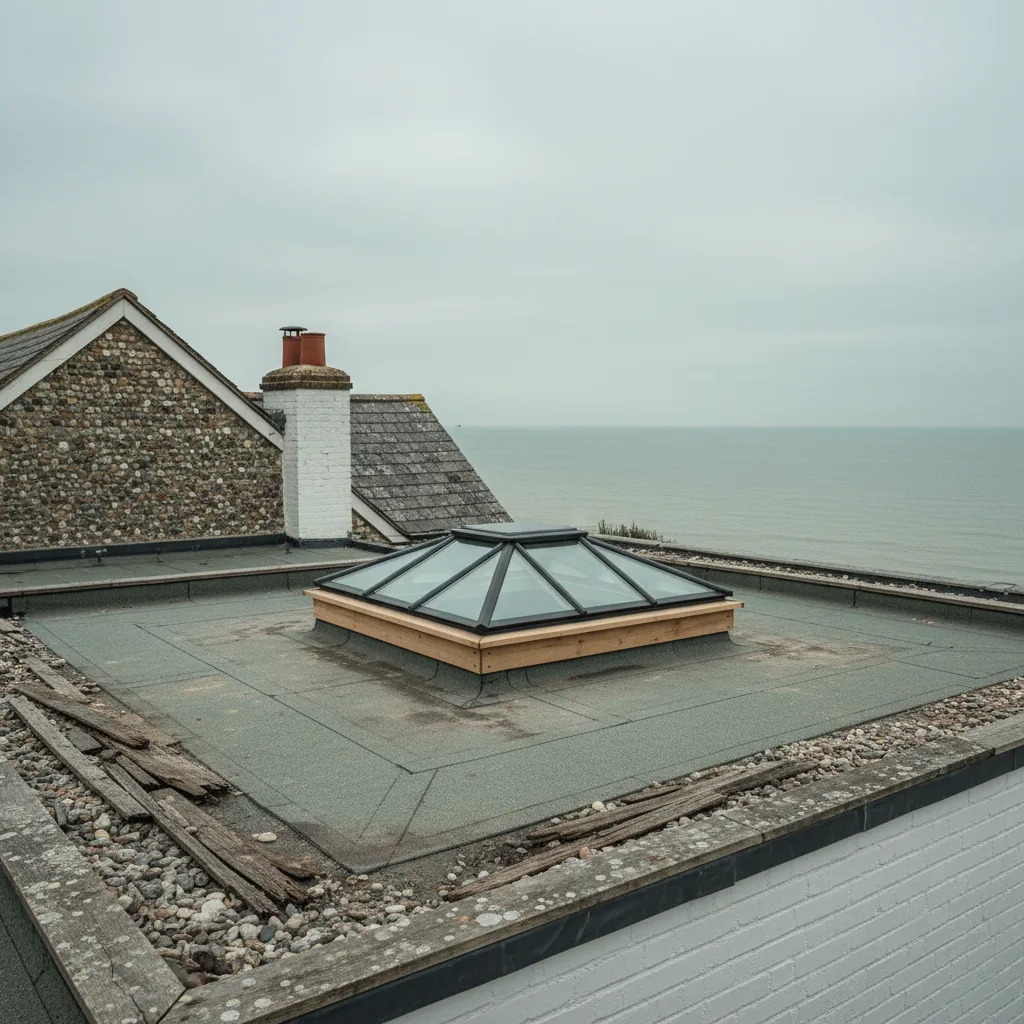
The hose test
The physical test that reproduces rain, and it is worth doing properly rather than approximately.
- Somebody inside watching, with a phone, in contact with whoever is outside.
- Start below the rooflight and work upward, never the reverse.
- One area at a time, for several minutes, then wait before moving on.
- Sides before the head, since the head is where wind driven failures show and gravity ones rarely do.
- Note the exact area being wetted when anything appears inside.
- Stop at the first positive result. You have found it.
Soaking the whole roof at once tells you that it leaks somewhere, which you already knew. Working upward in stages tells you where.
What a negative hose test proves
This is the part that gets misread, and it is the most useful result of the lot.
A hose runs water down a roof under gravity, which is precisely the condition the covering and the flashing are designed for. A negative result means those are doing their job.
So on a unit that definitely admits water, a negative hose test is not a failed experiment. It is positive evidence that the fault needs a condition the hose cannot create. On a pitched roof that is almost always wind pressure driving water back under a lap, which points at the underlay collar and has its own page.
Why the wind case is separate
It is worth treating wind driven ingress as a third category rather than a kind of leak, because it behaves differently from both.
It follows rain, so it looks like a leak. It appears only with wind from a particular direction, usually the prevailing south westerly here. It stops when the wind drops even if the rain continues. And it produces nothing under a hose.
Those four together are a signature, and none of the other conditions produces it.
The elimination sequence
Where the record is ambiguous, the tests run in this order, cheapest first.
- The summer test. Free, and it separates the two largest categories.
- Reduce the humidity. Open the trickle vent, use the extract, stop drying laundry in the room. If the symptom reduces, it was condensation.
- The hose test. A positive result localises a leak. A negative one is evidence in itself.
- Wet the head with wind. Not reproducible on demand, which is why the record matters.
- Open up locally. The collars, the insulation, the vapour barrier, the trimmers.
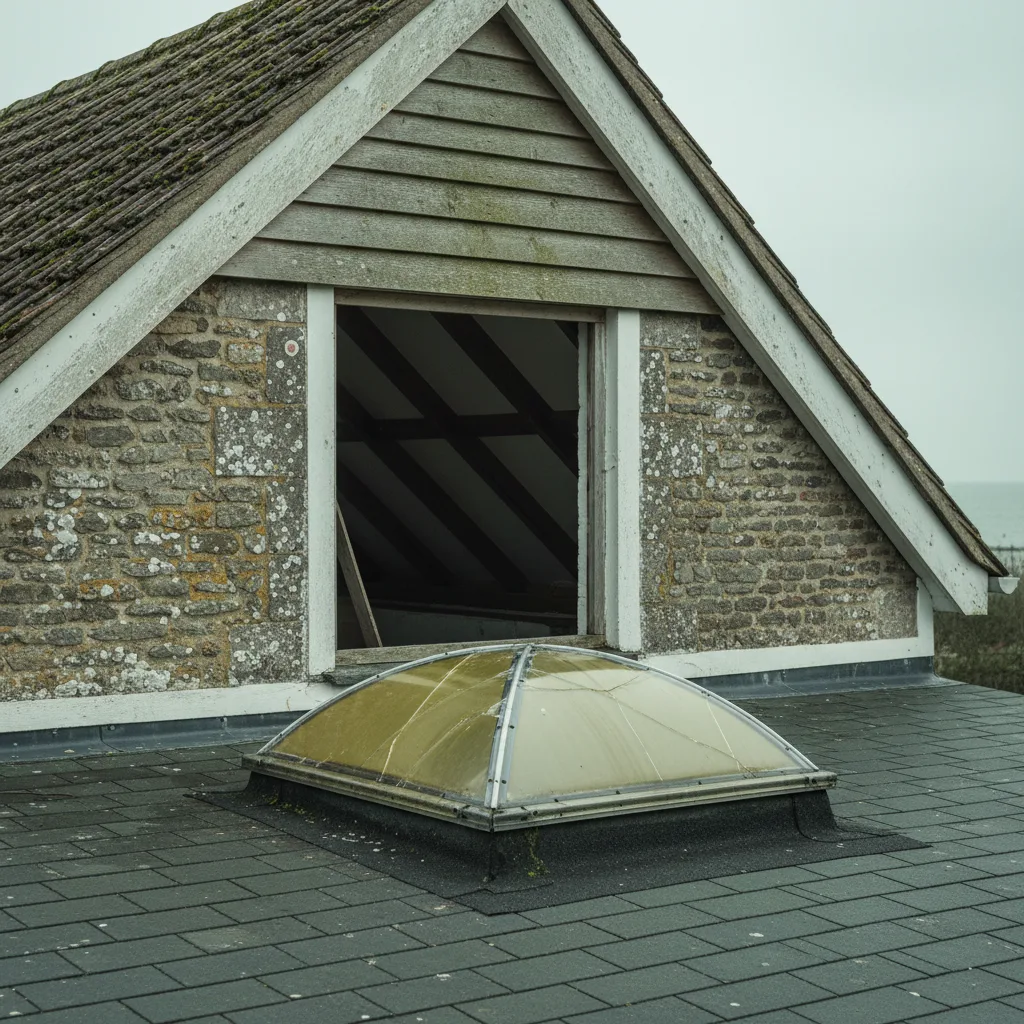
Where the water appears is weak evidence
Worth stating plainly because it is where most investigations start and it misleads.
Water runs. It runs along the outside of a frame, down a rafter, along a deck following the fall, behind plasterboard, and it emerges at the first place it can get through. That point can be metres from where the water actually formed or entered.
Which is why an investigation that starts at the stain frequently starts in the wrong place, and why the weather and the timing are better evidence than the position.
Interstitial condensation, the third possibility
There is a condition that is condensation but does not behave like the surface kind, and it catches people out.
Warm moist air getting into a roof build-up condenses inside the construction, runs along the deck, and emerges through the ceiling somewhere else entirely. It builds through the winter, is worst in late winter, dries up completely in summer, and produces nothing under a hose.
It reads as a slow leak and it is not one. The vapour control page covers it, and the tell is that it is seasonal and unresponsive to a hose.
Two things at once
On a thirty year old unit it is genuinely common, and it is why some records show no clean correlation.
A frame that runs with condensation every cold night, and a flashing that lets water in during driving rain, will produce entries in both categories. Fixing one leaves the other, and the customer concludes the work did not solve it.
The remedy is to name both at the outset rather than assuming a single cause, and to say which one each part of the work addresses.
Testing without a hose
Not every roof can be safely hosed, and there are two other tests worth knowing.
A dye added to the water in a hose test shows where the water actually travelled, which on a roof where it emerges some distance from where it entered is genuinely useful. It needs care on a covering that could be stained, so it is a considered choice rather than a default.
And a simple one that needs no equipment: tape a small sheet of polythene tightly to the inside of the glass, sealed all round, and leave it overnight in cold weather. Moisture forming between the polythene and the glass came from the room. Moisture forming on the outside of the polythene, on the room side, means the source is not the glass surface at all. It is crude and it separates two conditions that look identical.
What to tell whoever you call
Five things, and they can all be given on the phone.
- Whether it happens in rain, in wind, in cold, or regardless.
- Which surface the water is on.
- Whether it stops in summer.
- Whether a hose has been tried and what happened.
- Roughly how old the unit is.
Those five will get a straight answer about what is likely and what the visit will involve, which is worth more than a description of the stain.
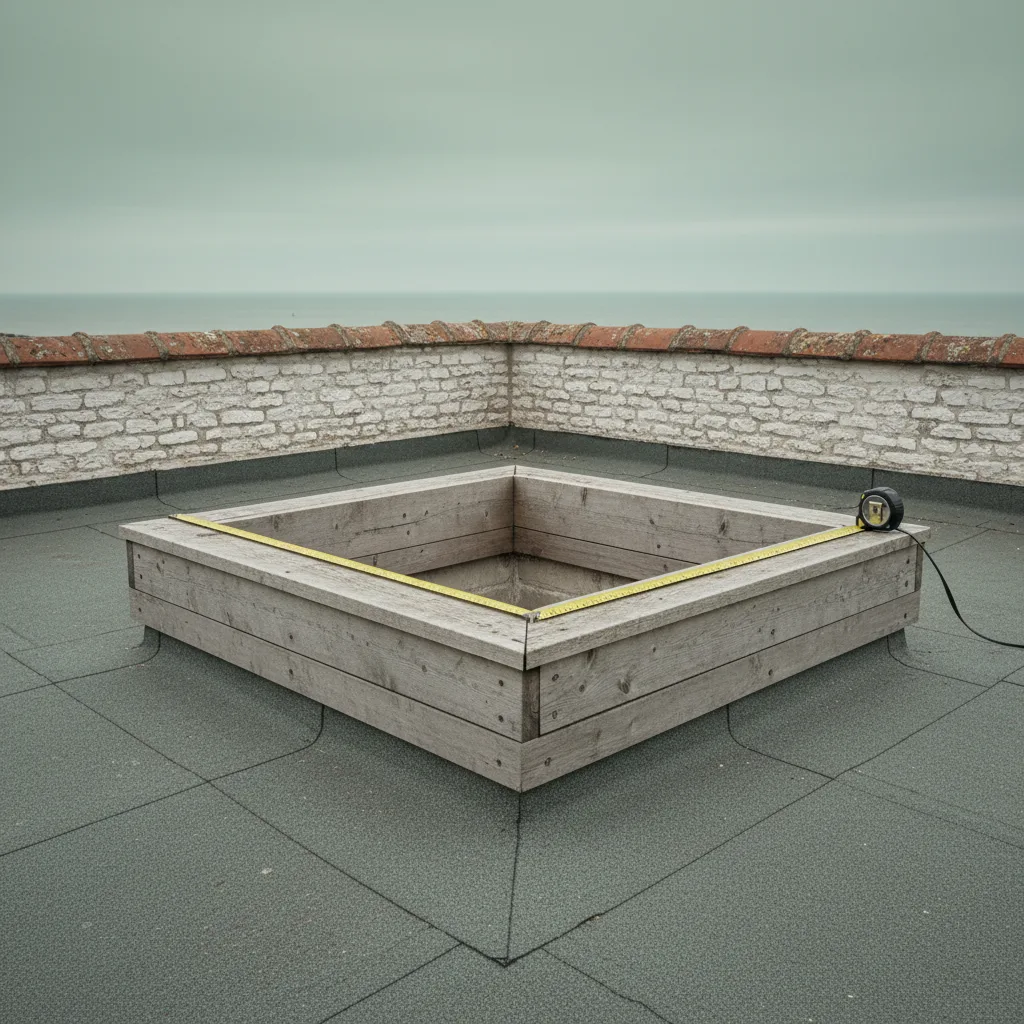
Marking and measuring, so a change is visible
A record of when is good, and a record of how much is better, because it tells you whether something is getting worse.
Where a stain is the symptom, pencil a line round its edge and date it. A stain that has not moved in three months is historic damage from something already fixed or already stopped. One that has grown is live.
Where drips are the symptom, a container under it and a note of how much collected in what weather turns an impression into a quantity. A tablespoon after a storm and half a litre after the same storm point at very different things, and nobody can judge that from memory a week later.
When to stop investigating and open up
There is a point where more observation stops being useful, and it is worth recognising.
Where the record shows a clear correlation, the diagnosis is made and the next step is the work. Where several weeks produce no correlation, or where the record points at something invisible from either side, further watching adds nothing.
At that point a small opening up at the perimeter answers what observation cannot: whether there is a collar, whether the insulation reaches the frame, whether the vapour control layer was sealed, what condition the trimmers are in. It is a morning, it is made good afterwards, and it converts a debate into a finding.
Why this matters commercially
It is worth being open about the incentive, because it explains why the method is not always used.
A replacement unit is a larger job than a service visit or a local repair. An installer who suspects the unit first, and does not investigate, will sell more units. Some of those customers will keep the problem.
Doing it the other way round means quoting for less work and being right more often, which is a better business over twenty five years and a worse one over a fortnight.
What we ask first on a replacement
We ask for the record before quoting where the picture is not clear, and we will wait a fortnight for one rather than guess. We run a hose properly, from the bottom up, one area at a time. We treat a negative hose test as evidence rather than a dead end, and we name both causes where there are two.
Rain leaks follow rain. Condensation follows cold. Wind driven ingress follows the wind. Almost everything else is somebody reading a stain instead of a pattern.
Thinking about this job? We survey across Worthing, West Sussex and the South Downs and give you a fixed price before any work starts, with a 10-year workmanship guarantee.