Thermal performance you gain from a like for like replacement
Replacing a rooflight of a certain age with a modern one is one of the larger single improvements available to a domestic building envelope. This page is about what changes, in what proportion, and which of those changes you will actually notice.
What an old unit was
Take a rooflight fitted in the mid 1980s. Depending on the product it may have been single glazed, or a double glazed unit with two panes of clear glass, air in the cavity, and an aluminium spacer at the edge.
No low emissivity coating, because they were not in common use. No gas fill. No warm edge spacer. Frequently a frame with no thermal break, or an early one. And on a flat roof, a kerb whose outer face was almost certainly never insulated.
Each of those is a component that a modern unit has and that one did not.
What a modern one is
A low emissivity coating on a cavity face, which stops the radiant transfer that dominates heat loss in a plain double glazed unit. An argon fill. A warm edge spacer. A thermally broken frame. And a laminated inner pane as standard, which is a safety change rather than a thermal one.
Fitted properly it also gets an insulation collar carrying the insulation up to the frame, and a vapour control seal, neither of which the original almost certainly had.
Where the gain actually comes from
| Change | What it addresses | Relative size |
|---|---|---|
| Adding a low emissivity coating | Radiant transfer across the cavity | The largest single item by a wide margin |
| Insulating the kerb or reveal | A bridge round the whole perimeter | Large, and frequently underestimated |
| Thermally broken frame | Conduction through the frame | Meaningful |
| Warm edge spacer | The bridge at the glass edge | Modest, and very cheap |
| Argon fill | Conduction and convection in the cavity | Modest, and very cheap |
| Sealing the vapour control layer | Air leakage, not conduction | Meaningful and rarely counted |
The top two are most of it. Which is why a modern unit fitted onto an uninsulated kerb gives away a substantial part of what was bought.
Like for like is rarely like for like
The phrase means the same size in the same opening. It does not mean the same performance, and the difference between the two is the point of the job.
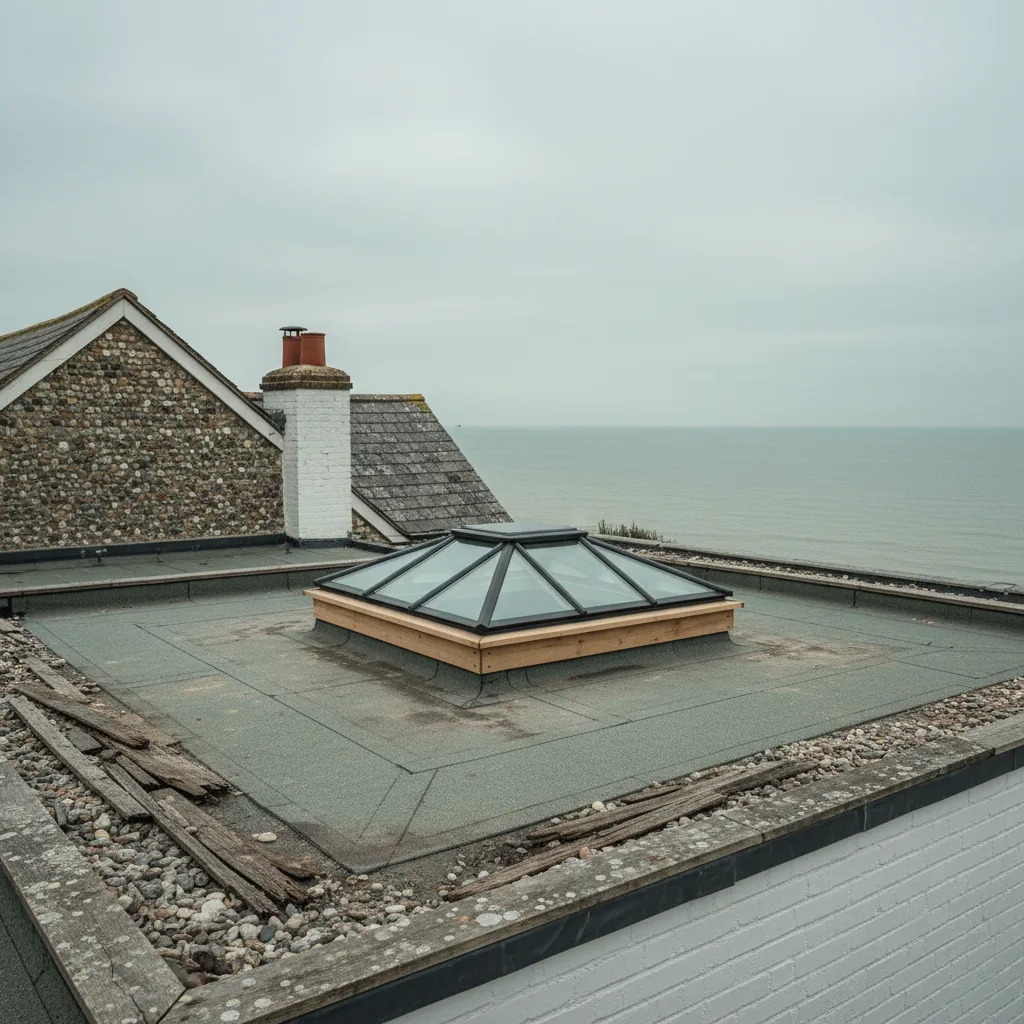
A replacement into an existing opening has to meet the limiting U-value standard for a replacement rooflight, which any current product clears comfortably. So even a straightforward swap is a substantial upgrade whether or not anybody set out to make one.
Where it stops being like for like is in the detailing. A replacement done properly adds the collars, which is work the original opening never had, and that is where a good proportion of the real gain sits.
What you will actually notice
Four things, and people report them in a consistent order.
The cold stops falling off it. A poorly insulated overhead unit has a cold inner surface that radiates coolness downward and sets up a draught of cool air dropping into the room. That stops, and it is the change people describe first.
The condensation reduces. A warmer inner pane and a warmer perimeter means less water on the glass and none on the frame, which for somebody who has wiped a windowsill every January for twenty years is the most tangible improvement of all.
The room is quieter in rain. A laminated inner pane damps the panel, and against a single skin dome or a thin old unit the difference is substantial.
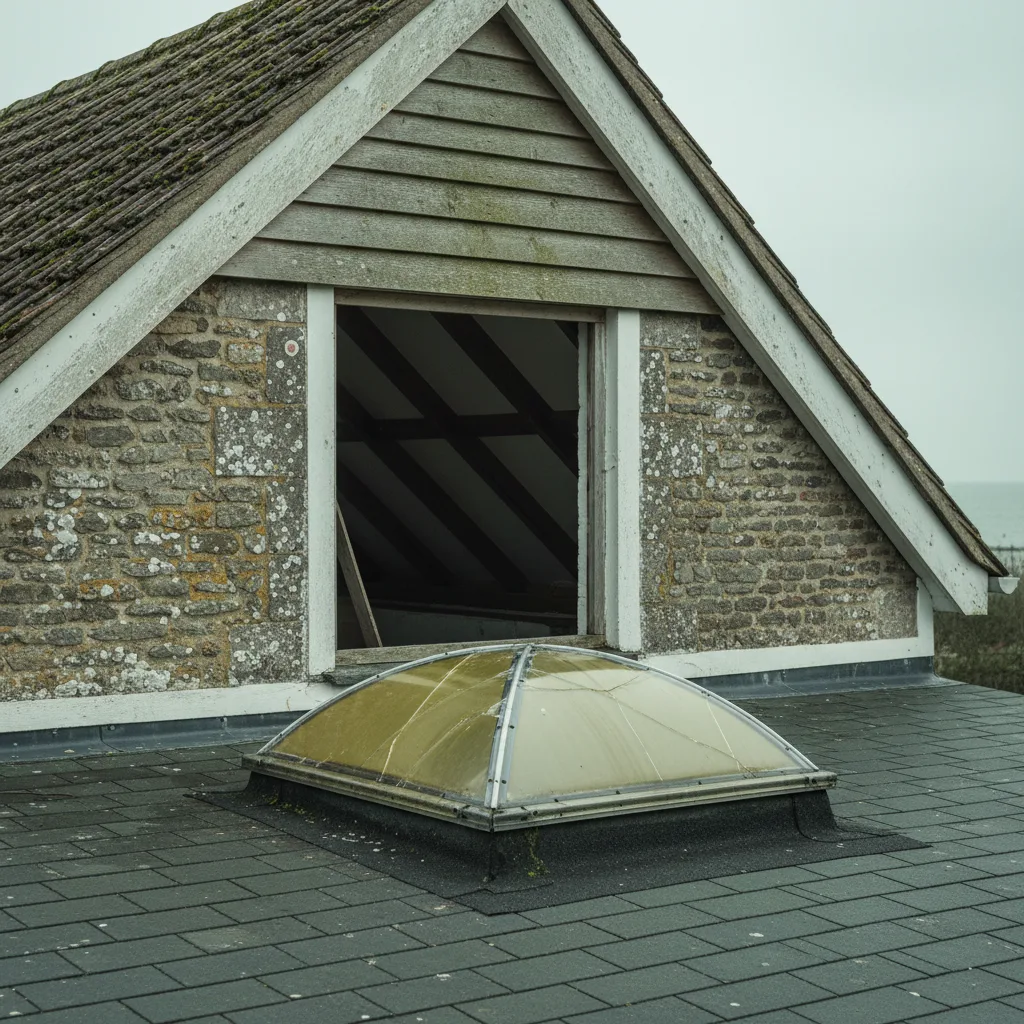
The light is better. Where the old unit was a yellowed dome or a crazed plastic, this is the largest change of all and it is not thermal.
What the bill will not show
Being straight about this, because the energy saving argument is routinely oversold in this trade.
A rooflight is a small proportion of a building’s total envelope. Improving one unit, however dramatically, changes the heating demand of a house by a modest amount, and the payback period calculated on fuel alone is long.
Nobody replaces a rooflight and sees it in the bill. What they see is that the room is usable in January when it was not.
Comfort is the honest argument
Which is where the case actually sits, and it is a strong one.
Comfort is not the average temperature of a room. It is the radiant environment: how cold the surfaces around you are, whether there is a draught of cool air falling from above, whether the surface overhead is wet.
A large area of poorly insulated overhead glazing affects all three, directly above where people sit. Replacing it changes how the room feels at the same thermostat setting, and that is worth more than the fuel.
The kerb is the multiplier
Worth repeating in this context because the arithmetic is stark.
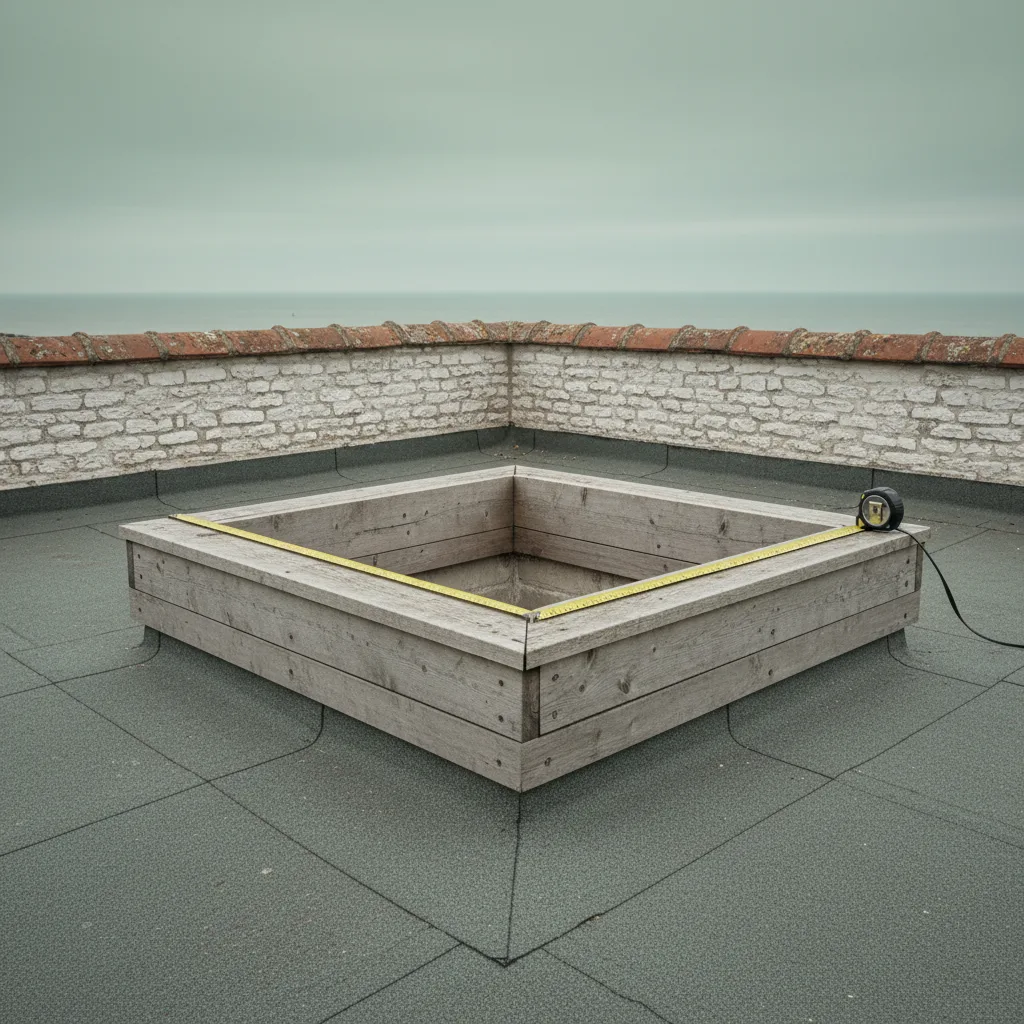
An uninsulated kerb is a thermal bridge running the entire perimeter of the opening, and on a small unit the perimeter is a large proportion of the whole. It also produces the condensation on the frame and reveal that people find most objectionable.
Insulating it costs very little at the moment the unit is off and is unreachable at any other. A modest unit on a well insulated kerb outperforms an excellent unit on a bare one, and it is the single most cost effective decision in the job.
Air leakage, which nobody counts
The component of the improvement that appears in no U-value and is frequently the one people feel.
A thirty year old unit with hardened gaskets, and an opening whose vapour control layer was never sealed to the frame, leaks air continuously. That is heat leaving and cold arriving by a route that has nothing to do with conduction through the glass.
New gaskets and a sealed vapour control layer stop it. It is the reason a replacement frequently feels better than the numbers predict.
Solar gain, and the other direction
A replacement is also the moment to fix summer, and it is worth taking.
An old clear glazed unit over a south or west facing room admits a great deal of solar energy. A modern one can be specified with solar control chosen for the orientation, at very little additional cost, and it is fixed at ordering.
Doing a replacement without considering this means solving the winter problem and keeping the summer one, which is half a job on a room that has both.
The safety change
Not thermal and worth naming because it is the change nobody asks for.
Older overhead units were frequently toughened on both panes, or on very old products annealed, and a great many plastic domes are now brittle. A modern unit has a laminated inner pane, which holds together on its interlayer if it breaks rather than falling.
Over a kitchen island, a dining table or a bed, that is a real improvement in a category people do not think about until they do.
Where the gain is largest
Four situations where a replacement does the most.
- Replacing a single skin plastic dome. Close to no insulation to something modern. The biggest single jump available.
- A large unit over a room in constant use. More area, more hours, more noticed.
- A north facing unit. All loss and no solar gain to offset it, so the U-value works hardest.
- Any unit where the kerb is being insulated for the first time. Because that is the perimeter bridge going away.
Where it is smaller
Equally, and worth saying. Replacing a unit from the mid 2000s that already has a low emissivity coating and argon gives a modest thermal improvement, because the large steps had already been taken. If that unit has failed, replace it; if it has not, the money does more elsewhere in the house.
The honest test is what the existing unit has. A unit with a coating and a gas fill is already most of the way there.
Doing them all at once
Where a house has several old rooflights, the case strengthens.
The access is set up once, the survey is one visit, and the total glazed area being improved is what drives the effect on the room and the building rather than any one unit. A house with three yellowed domes replaced together is a noticeably different house.
It also avoids the odd result of one modern unit alongside two old ones, where the old ones now feel worse by comparison.
What to ask for so the gain is real
- Low emissivity coating, argon fill, warm edge spacer. Standard, and worth confirming.
- A thermally broken frame.
- An insulation collar, or the kerb outer face insulated, with a photograph before the covering goes back.
- The vapour control layer sealed to the frame.
- Solar control chosen for the orientation, where the room faces south or west.
- A laminated inner pane, which should not need asking for.
Items three and four are the ones most likely to be left off a quotation, and they are two of the largest contributors.
Where the money goes further
Being even handed, because a rooflight installer recommending rooflights is not a surprise to anybody.
If a house has an uninsulated loft, single glazed windows or no draught proofing, those are larger contributors to its heating demand than one rooflight and they cost less to address. Anybody replacing a rooflight purely on energy grounds, in a house with those outstanding, has the order wrong.
Where a rooflight replacement moves to the top of the list is when the unit has failed, when the room is genuinely unpleasant under it, or when the light itself is the reason. Those are good reasons and they are not the same as a payback calculation.
Grants and schemes
Worth a brief and cautious mention because people ask.
Energy efficiency schemes come and go, and eligibility varies by household, property and measure. Rooflight replacement is not usually a headline measure in the way loft insulation or heating is, and it is sometimes eligible as part of a wider package.
We are not advisers on that and we would not use it as a selling point. Anybody in doubt should check the current position independently rather than take it from a contractor, including us.
What we fit on a replacement
We fit the collars as part of every replacement rather than as an option, and photograph them before the covering goes back so you can see what you paid for. We specify the glass for the orientation rather than matching what was there, and we say plainly that the improvement is comfort rather than a payback period, because that is the truthful case and it is the stronger one.
Nobody replaces a rooflight and notices it in the bill. They notice it in January, standing under it.
Thinking about this job? We survey across Worthing, West Sussex and the South Downs and give you a fixed price before any work starts, with a 10-year workmanship guarantee.