Decayed timber found on opening up, flagged rather than sprung
No survey sees inside a roof. On a replacement, some of what matters is only visible once the unit is off, and a proportion of the time what is underneath is not sound. How that is handled is a question about honesty rather than about carpentry.
Why it cannot be known in advance
The condition of a trimmer, a kerb top or a rafter end is hidden by the covering above it, the unit sitting on it and the reveal below it.
A survey can establish a great deal: the covering, the fall, the kerb dimensions, the structure from inside the roof space, the pitch, the access. What it cannot do is see the timber immediately under a unit that is still in place.
So a quotation for a replacement is a quotation with a genuine unknown in it, and pretending otherwise is where the trouble starts.
Where decay actually is
| Location | Why | How likely |
|---|---|---|
| Top edge of a kerb | Water past a failing seal for years | Common on units over twenty five years |
| Trimmer ends | Where water ran along and stopped | Where there has been a known leak |
| The low corner of a kerb | Where water arrives on a falling roof | Common where clearance was inadequate |
| Rafter ends at a pitched opening | Underlay never collared, water for years | Where there was a driving rain leak |
| Deck around the opening | Ponding against the kerb | Where tide marks were visible at survey |
The pattern is that decay follows water, and water at a rooflight follows the detail. Which means the survey can frequently predict where to expect it even though it cannot see it.
Predicting it at survey
A good survey narrows the unknown considerably, and these are the indicators.
- A reported history of leaks, and for how long.
- Staining on the reveal or the ceiling, current or painted over.
- Tide marks on the roof showing where water stands.
- Kerb clearance measured at the low corner and found short.
- The age of the unit, since seals fail and then leak quietly for years.
- Springiness underfoot near the opening.
Where several of those are present we will say at quotation that we expect to find something, and price the likely work as a provisional item rather than discovering it.
How we quote for the unknown
Three parts, stated separately, so it is clear what is fixed and what is not.
The known work. The unit, the kerb correction we can already see, the flashing, the collars, the making good. Fixed.
The named unknowns. What we cannot see, what we expect based on the indicators, and what each would cost if found. Stated in advance with a figure attached.
Anything genuinely unforeseen. Rare, and dealt with by stopping and talking rather than by carrying on and invoicing.
The second is the one that matters. An unknown that has been named, priced and agreed before work starts is not a surprise when it appears.
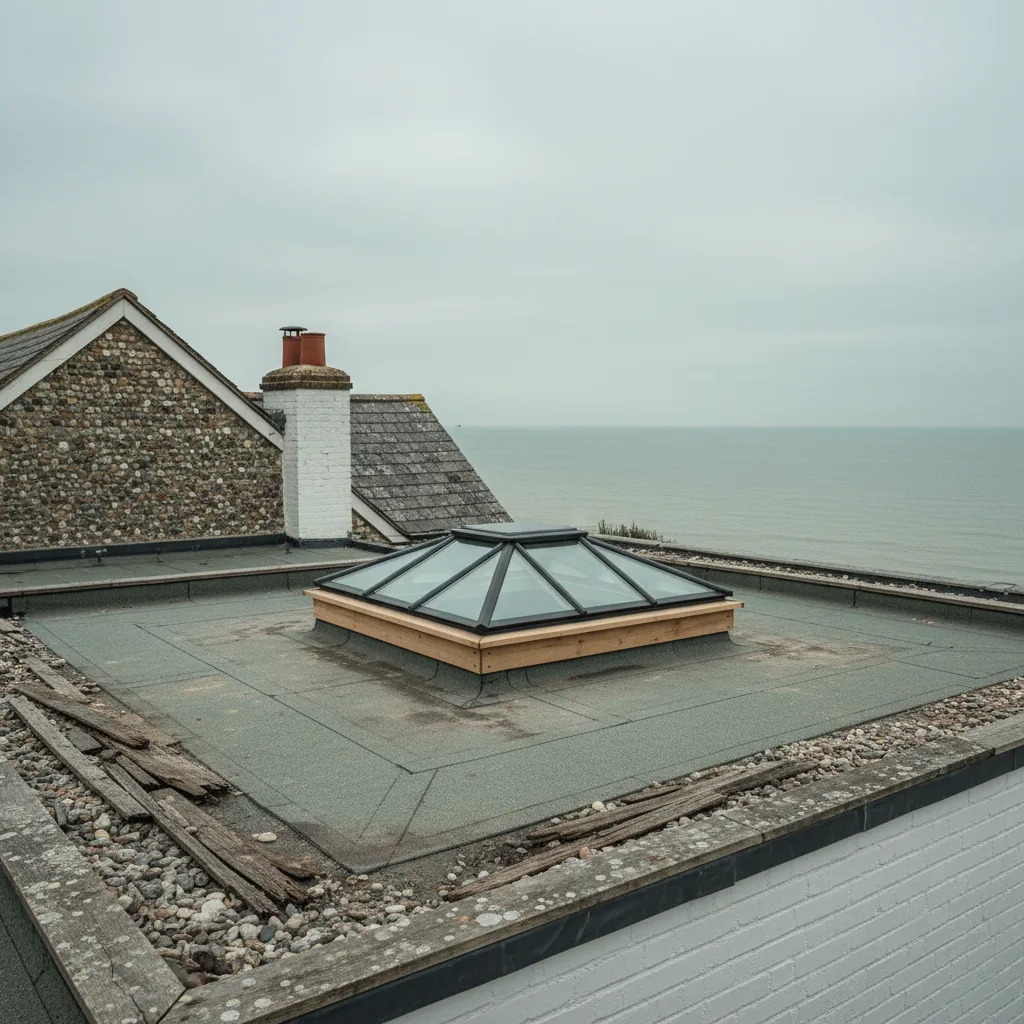
Flagged rather than sprung
The phrase is deliberate and it describes a choice.
Sprung is finding decay, carrying on, and presenting it afterwards as an unavoidable extra on an invoice. It is legal, it is common, and it puts the customer in a position where refusing is impractical because the roof is open.
Flagged is stopping, photographing it, explaining what it is and what the options are, and getting a decision before continuing.
The difference is who decides. A customer with an open roof and an unexpected bill has not agreed to anything; they have been informed of it.
What flagging looks like on the day
- Stop at the point of the finding rather than working on past it.
- Photograph it clearly, including enough context to see where it is.
- Establish the extent by probing, not by guessing.
- Set out the options, with what each costs and what each leaves.
- Make the roof safe and weathertight while the decision is made.
- Proceed on an agreed instruction.
Step five is what makes the rest possible. A customer who is not under pressure because the roof is open can think about it properly.
Assessing the extent
Decay is not always as bad as it looks, and it is sometimes worse. Establishing which takes a few minutes.
Surface greying and weathering is not decay. Timber that a probe enters easily is decayed, and the extent is found by probing outward until sound material is reached.
The useful question is not how bad the worst point is but how far the affected area extends, because that decides whether it is a local repair or a rebuild.
Wet rot and dry rot
Two different things and the distinction matters for what has to be done.
Wet rot is decay of timber that is wet, it stays where the moisture is, and it stops when the timber dries. It is much the more common finding at a rooflight and it is dealt with by removing the affected timber and fixing the water source.
Dry rot spreads through and beyond timber, can cross masonry, and does not need the timber to stay as wet. It is far less common and it is a specialist matter rather than a carpentry one.
Where we suspect the second we say so and recommend it is looked at properly rather than cutting out what is visible.
The options when it is found
Usually three, and they are worth setting out plainly.
Cut out and replace locally. The affected timber removed back to sound material and new spliced in. The usual answer, and on a kerb top it is straightforward.
Rebuild the element. Where the affected area is most of a kerb or a trimmer, replacing it entirely is quicker and better than piecing it.
Refer it. Where the decay extends into structure beyond the opening, or where the extent suggests something wider, it needs looking at by somebody assessing the roof rather than the rooflight.
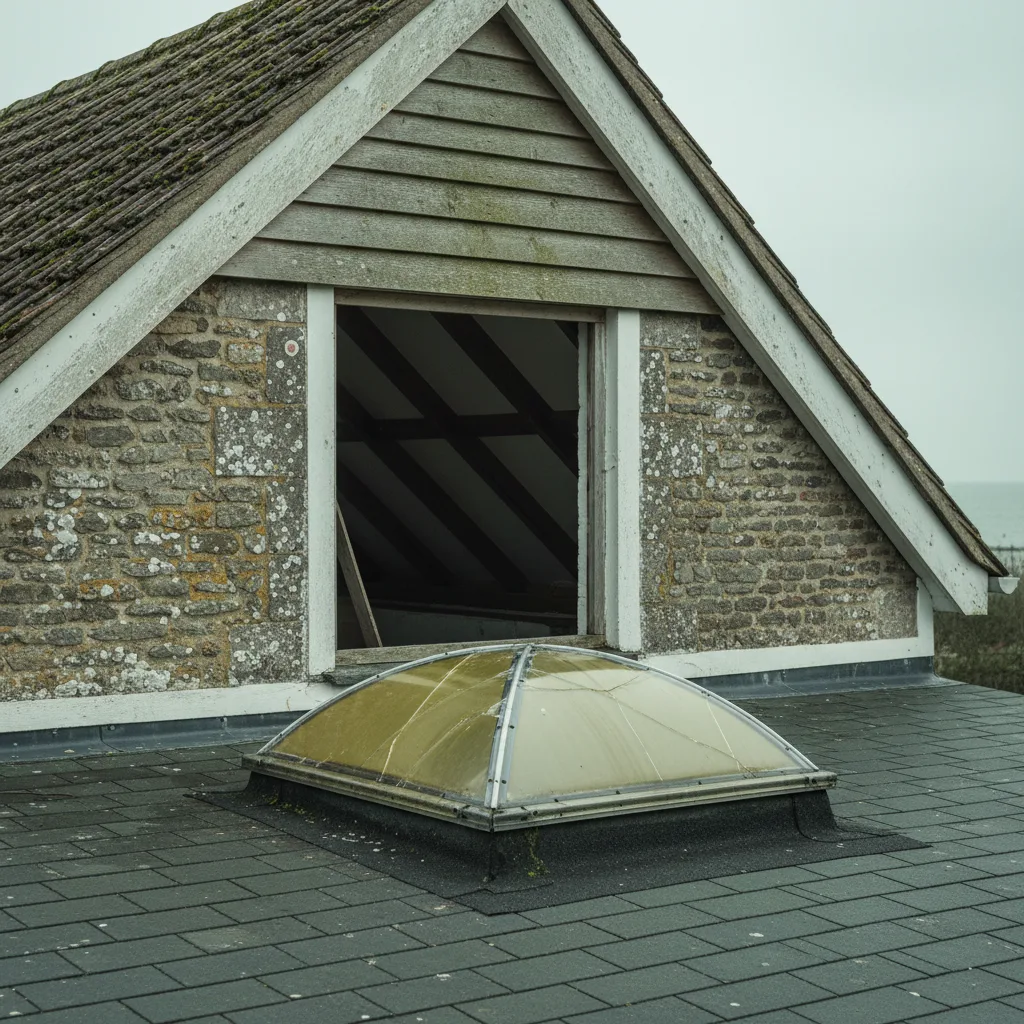
Fixing the cause as well
Replacing decayed timber and leaving the water source is doing half a job.
Decay at the top edge of a kerb means the seal was failing. Decay at a trimmer end means water was running there. Decay at the low corner means the clearance was inadequate.
Which means the correction is timber plus the detail: the kerb height raised, the covering termination remade, the collar fitted, the drainage cleared. That is the difference between a repair and the same repair again in eight years.
Why this is priced as a variation rather than absorbed
An honest word about the commercial side.
Some firms carry a contingency in every price to absorb this, which means every customer whose roof turns out to be sound has paid for somebody else’s decay. Others quote low and rely on variations, which is the sprung model.
We quote the known work at a fixed price and name the unknowns with figures, which means a customer with a sound roof pays for a sound roof and a customer with decay knows the number before it is found.
What we will not do
Three things, and they are worth saying out loud.
We will not fix a new unit onto decayed timber. It has nothing to hold into, the fixings will not stay, and the job fails within a few years.
We will not treat decayed timber and leave it, because a treatment on structurally lost material does not restore it.
And we will not carry on past a finding and mention it at the end. Whatever it costs, it costs the same whether it is discussed now or later, and the difference is only whether the customer had a choice.
The one that is genuinely awkward
Occasionally what is found is not a rooflight problem at all.
Decay extending well beyond the opening, a deck that is soft across a wide area, or structural timber that has been wet for a long time is a roof condition rather than a rooflight one. Fitting a new unit into the middle of it would be putting a good component into a failing roof.
In that situation the honest advice is that the rooflight is the wrong job to be doing first, and we say so even though it means not doing the work. Where the covering needs replacing anyway, doing both together is far better value.
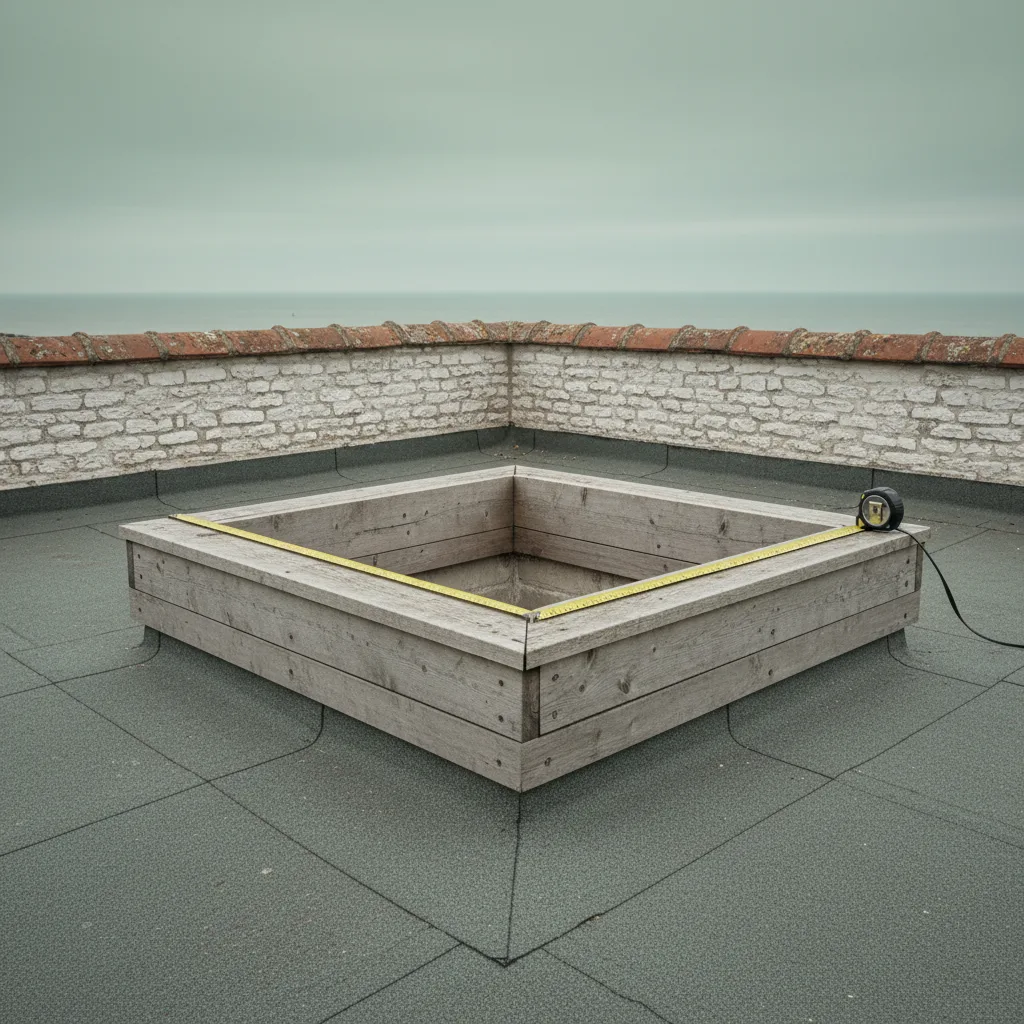
Making the roof safe while it is decided
A practical point that removes the pressure.
An opening can be made temporarily weathertight quickly, properly covered and fixed rather than weighted, and left safe overnight or over a weekend. On this coast that means fixed covering rather than sheeting held down with blocks.
Where a decision needs a day or a conversation with somebody else, that is what makes it possible. It is also why we do not open a roof we cannot close.
What it adds to the day
People reasonably ask how long a finding sets a job back, and the honest answer is usually less than they fear.
Cutting out and splicing a section of kerb top is an hour or two with material we carry. A trimmer end is similar. Rebuilding a kerb entirely is half a day. None of those turns a one day job into a week.
What does extend it is a finding that needs material we do not have on the van, or one that needs a decision from somebody who is at work. Which is why the roof is made safe and closed rather than left open, and why we would rather return the following day than rush a repair.
Insurance, and whether it is claimable
Occasionally worth raising, and worth being straight about.
Gradual deterioration is not usually an insured peril. Decay that has developed over fifteen years because a seal was failing is wear rather than damage, and it is generally the owner’s cost.
Where it may be different is damage traceable to a specific insured event: a storm that lifted a covering, an impact, an escape of water. In that case the photographs taken at the finding are exactly the evidence needed, which is another reason to take them.
We are not insurance advisers and we will provide the record and a written description of what was found, which is what a claim needs from us.
Recording what was done
Photographs of the decay, of the repair, and of the detail corrections, dated and left with the paperwork.
It matters twice. It evidences what was found and why the work was necessary, which is worth having if anybody questions it later. And it tells whoever works on the roof in twenty years what is underneath, which nobody else will know.
What we name
We name the unknowns at quotation with figures rather than discovering them, we stop at a finding and photograph it before doing anything, and we make the roof safe while a decision is made so nobody is deciding under pressure. We fix the water source as well as the timber, and we say when the honest answer is that the roof needs attention before the rooflight does.
Every roof has something under it nobody has seen. The difference is whether that is a conversation or an invoice.
Thinking about this job? We survey across Worthing, West Sussex and the South Downs and give you a fixed price before any work starts, with a 10-year workmanship guarantee.