Pane replacement against whole unit replacement
Where a sealed unit has failed and the frame is sound, changing the glass alone is sometimes possible and sometimes not. The frame decides, not the glass, and the answer is established before anything is ordered.
What reglazable means
A frame is reglazable where the sealed unit can be taken out and a new one put in without dismantling the frame or removing it from the roof.
That requires beads or capping sections that come off and go back, accessible from outside or from inside, and a rebate the new unit can sit in on fresh gaskets or a fresh bed.
Some rooflights are built exactly that way. Others are assembled around the glass at the factory, with the unit bonded in or the frame crimped over it, and there is no route to the glass that does not destroy the frame.
How to tell which you have
| What to look for | Reglazable | Not reglazable |
|---|---|---|
| Beads or caps | Visible, with a joint line, removable | None visible, a continuous section |
| Fixings | Screws or clips holding the caps | Nothing to undo |
| Edge of the glass | Sits in a rebate with a gasket | Bonded, with a structural adhesive line |
| Manufacturer | Publishes glass as a spare | Sells only complete units |
| Data plate | Identifies a model with spares available | Identifies a discontinued model |
The last two are the reliable ones. Whether the maker sells the glass as a part answers the question definitively, and the data plate is what identifies the model.
Structurally bonded units
A design worth understanding because it is increasingly common and it forecloses the option.
In a structurally bonded rooflight the glass is not held mechanically in a rebate. It is adhered to the frame with a structural silicone that carries the load, which is what allows the very slim sightlines and the frameless appearance those products are bought for.
The bond is the structure. It cannot be cut and remade on a roof, and the product is designed to be replaced complete. That is a legitimate engineering choice rather than a defect, and it is a consequence people should know about before buying.
The rebate decides what can go back in
Where a frame is reglazable, the next question is what will fit the rebate.
A rebate is a defined depth and it was designed around a particular overall unit thickness. A replacement unit has to match that thickness, which limits how far the specification can move.
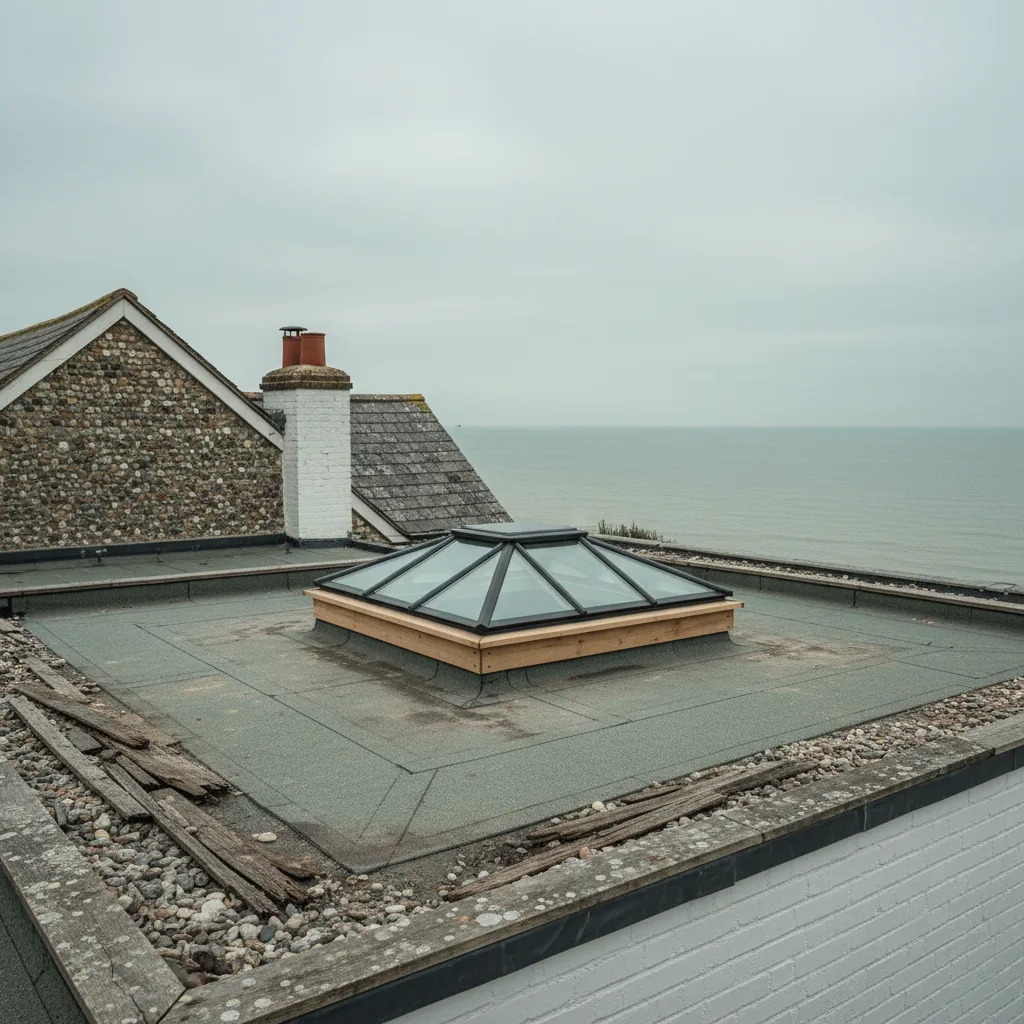
Practically that means going from a plain double glazed unit to a solar control one is usually possible, because the build-ups are similar. Going from double to triple is usually not, because the thickness changes substantially.
Gaskets go back too
A point that gets missed and turns a good job into a leaking one.
The gaskets that bed and seal the glass in the rebate are as old as the unit, and a thirty year old gasket that has been compressed for its whole life does not go back and seal. It has taken a set and hardened.
Reglazing therefore includes new gaskets as a matter of course. Where a supplier quotes glass only, that is worth asking about, because it is the difference between a repair and a repair that leaks.
The honest comparison
Both options have a shape, and the shape is what decides.
Pane replacement costs the glass, the gaskets and the labour. It leaves the frame, the flashing, the fixings and the installation exactly as they are, for better and for worse.
Whole unit replacement costs a great deal more and it changes everything at once: the frame, the coating, the gaskets, the mechanism, the fixings, and the opportunity to fit the collars the original installation almost certainly lacks.
When pane replacement is the right answer
- The frame is sound and the coating is presentable.
- The installation is good: a collar was fitted, the insulation reaches the frame.
- The unit is recent enough that spares are available.
- The failure is a seal rather than anything structural.
- The rebate takes a modern unit of similar thickness.
That combination is most common on units between roughly ten and twenty years old, which is exactly when a first seal failure tends to arrive.
When the whole unit is the better buy
Where the frame has had it, obviously. And in three less obvious cases.
Where the installation is poor, because a new pane in the same detail keeps the cold reveal and the driving rain leak. Where the unit predates laminated inner panes, because the safety specification changes as well as the performance. And where the fixings have corroded, because the unit has to come off to deal with them anyway.
In that third case the labour is largely the same either way, so the marginal cost of a whole unit is smaller than it looks.
The access argument
Frequently the deciding factor and rarely discussed.
On a terrace or a two storey extension, the access arrangement is a substantial share of the job. Once a scaffold or a tower is up, the difference between changing the glass and changing the unit is a fraction of the total.
Which means on a difficult roof the whole unit option gets relatively cheaper, and doing everything the roof needs in one visit is better value than returning. On a bungalow with easy access the reverse applies and pane replacement is a genuinely economical repair.
Handling the glass
A practical point that decides some jobs.
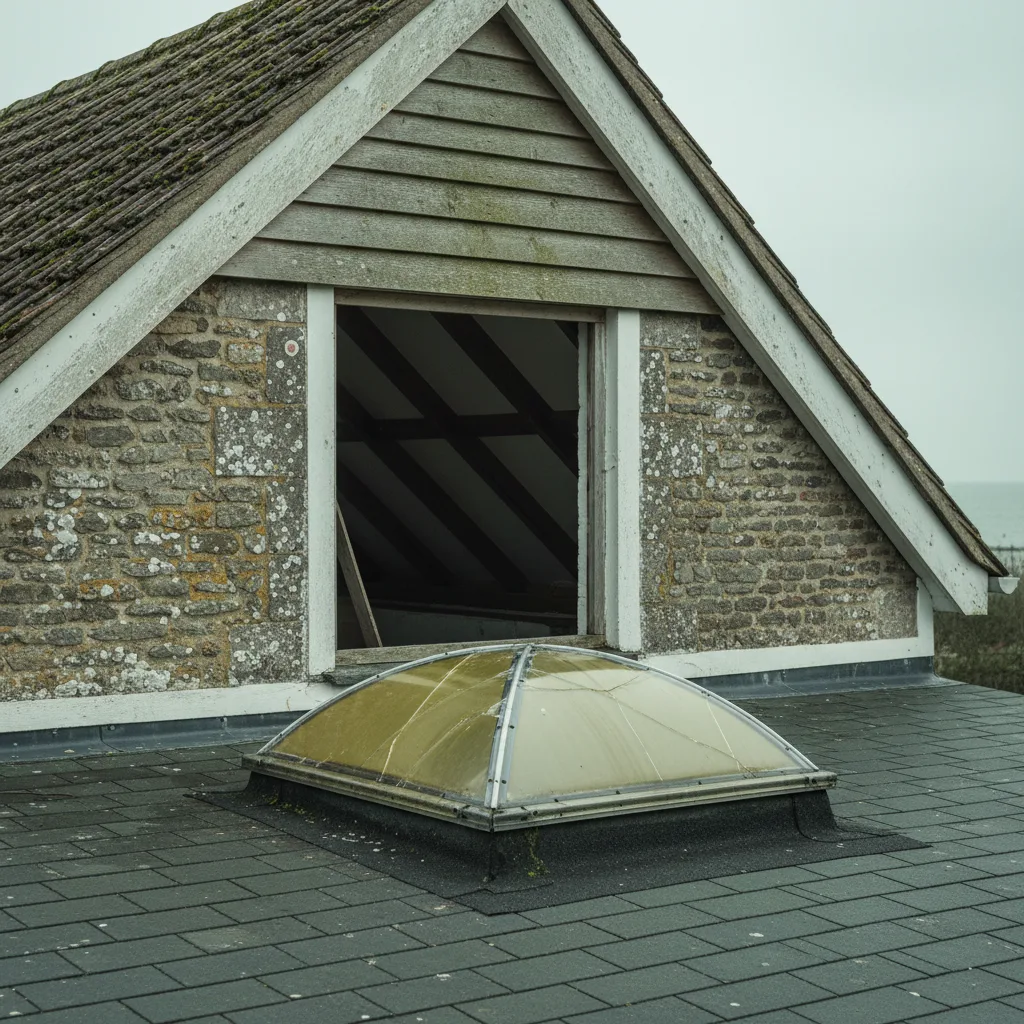
Reglazing means getting a sealed unit onto a roof and into a frame while working at height, without a frame around it to carry it by. That is more awkward than handling a complete rooflight, not less, and on a large unit it is genuinely difficult.
On small and medium units it is routine. On a very large pane it is a reason the whole unit route is sometimes chosen even where reglazing is technically possible.
Lead times
A replacement sealed unit is made to size, like the rooflight, and takes weeks rather than days.
So the sequence is the same: order, take delivery, check what arrived against what was ordered, then book the work. Nothing is opened up until the glass is on the ground and confirmed.
The one difference is that a failed sealed unit is rarely urgent. A misted unit is a cosmetic and performance problem rather than a weather one, so there is usually no pressure to rush the sequence.
What you cannot fix by reglazing
Worth listing, because these are the things people hope a new pane will address.
A cold reveal, which is the insulation collar. A driving rain leak, which is the underlay collar. A chalked frame, which is the coating. A stiff mechanism, which is the ironmongery. A kerb that is out of square, which is the kerb.
Each of those is a different job, and a new pane changes none of them. Which is why the diagnosis comes before the decision about which route to take.
Upgrading while you are there
Where reglazing is the route, it is an opportunity to change the glass specification rather than matching what was there.
Solar control on a south or west facing unit that never had it. An acoustic laminate under a flight path. A laminated inner pane where the original was toughened both sides, which on an overhead unit is a real safety improvement.
All of those fit the same rebate in most cases, and they cost very little more than a like for like unit. It is the one moment the glass can be reconsidered.
Drilling and drying processes
A third option is advertised and it is worth being straight about it.
Processes exist that drill a failed unit, clear the moisture, and fit a small vent. They address the appearance, and they do not restore the unit: the gas fill is gone, the thermal performance is gone with it, the cavity is now vented to outside air rather than sealed, and the seal that failed is still failed.
On an overhead unit we would not recommend it. It buys appearance on a component that has already lost the performance it was bought for.
What we check before recommending either
- The data plate, for the model and whether glass is available as a part.
- The frame, for beads or caps and for a rebate rather than a bond.
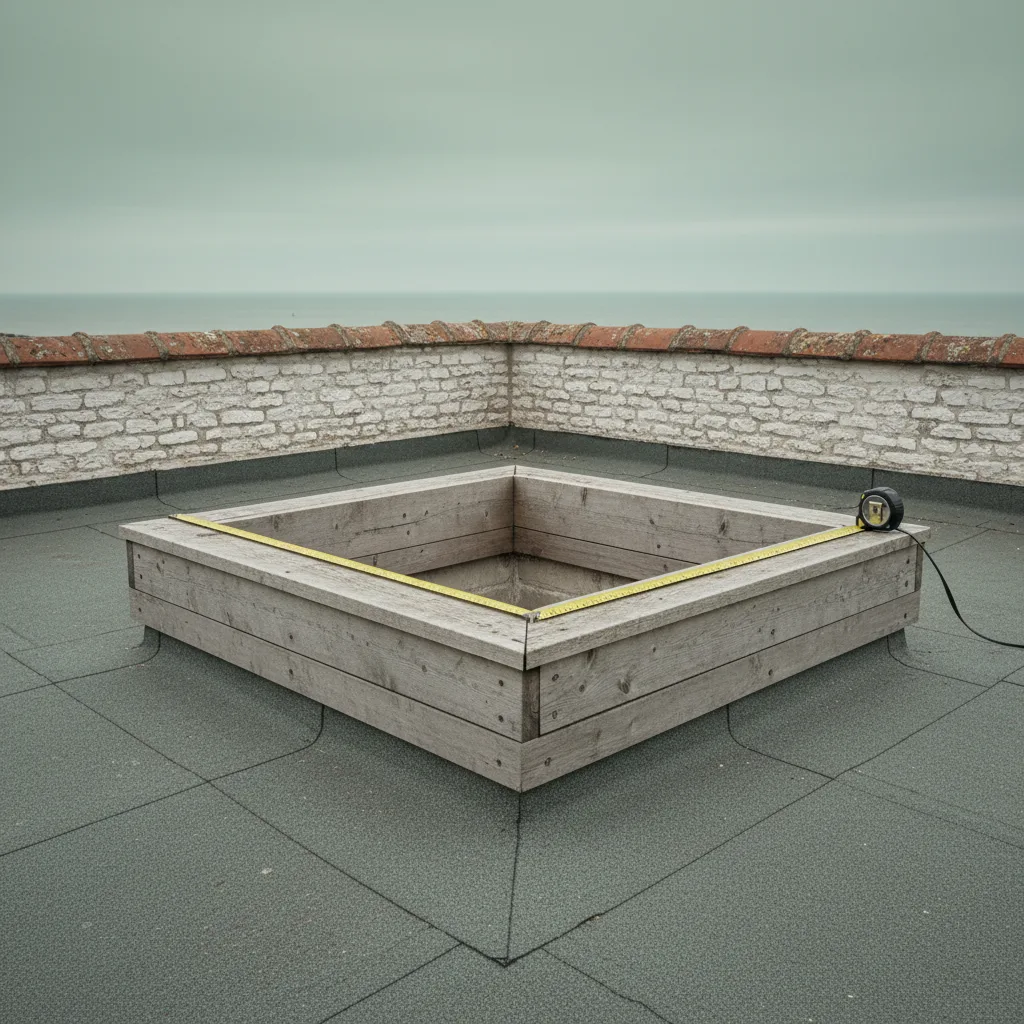
- The rebate depth, against what a modern unit needs.
- The frame condition and the coating.
- The fixings, particularly on a coastal roof.
- The installation: collars, insulation, vapour seal.
- The access arrangement, because it changes the arithmetic.
Toughened, laminated, and the safety upgrade
An older overhead unit may be toughened on both panes rather than laminated on the inner one, and reglazing is the moment that changes.
Toughened glass fails into small blunt fragments, which is far safer than annealed glass and they still fall. A laminated inner pane holds together on its interlayer, which is why it is the standard specification for anything over your head and why it is worth having.
Where a frame is being reglazed, specifying a laminated inner pane is usually possible within the same rebate and costs very little more. On a unit over a kitchen island or a dining table it is the single best reason to reglaze rather than simply live with a misted unit.
Warranty on the new glass
A practical point that affects the comparison.
A new sealed unit carries a manufacturer guarantee against seal failure, and that guarantee generally assumes the unit is installed correctly in a suitable frame. Fitting a new unit into a thirty year old rebate on new gaskets is normally fine; fitting one into a rebate that is distorted or damaged may not be covered.
Which is one more reason the frame is assessed before the glass is ordered. It is also worth asking whether the guarantee on a replacement pane differs from the one on a complete new rooflight, because on some products it does.
Two units, one failed
Where a roof has several rooflights of the same age and one has failed, the question arises whether to do them all.
The honest answer is that seal failures on units of the same age, in the same position, tend to arrive within a few years of each other, and the access is being paid for anyway. Where two of three have gone, doing the third is usually sensible. Where one of three has gone early, it may simply have been a poorer unit.
We will say which we think it is rather than recommending all of them by default.
What we establish first on a replacement
We establish reglazability from the data plate and the frame before discussing either option, because it is the hard constraint. We include new gaskets in any reglaze and say so. We set out both routes with the access cost visible, because on a difficult roof it changes the comparison substantially, and we say plainly which of the things you are hoping to fix a new pane will not touch.
The glass fails and the frame decides. It is worth finding out which frame you have before deciding anything.
Thinking about this job? We survey across Worthing, West Sussex and the South Downs and give you a fixed price before any work starts, with a 10-year workmanship guarantee.