Rooflight and Skylight Installation in Rottingdean
- Fixed quote before we start
- Roof never left open overnight
- 10-year workmanship guarantee
- Fixed quote before we start
- 10 years workmanship guarantee
- 25 years fitting rooflights
- Skylights only, not a general roofer
Rottingdean is a listed village on top of a cliff, which is an unusual and demanding pair of conditions. The village asks for the most restrained units available; the position subjects them to wind and salt at the same time. Those two things pull against each other, and getting both right is what a job here is.
Wind and salt together
The condition that defines this stretch of coast, and it is worth separating into its parts before combining them.
Salt is a chemical problem. It settles as a film, holds moisture against metal, and keeps a component damp for far longer than the weather alone would. It works slowly and continuously on coatings and fixings.
Wind is a mechanical problem. It applies uplift, it works fixings and flashings through small repeated movements, and it drives rain horizontally into details that were designed for water running downward.
On a clifftop both act on the same components at the same time, and that is worse than either alone by more than the sum.
Why the combination compounds
The specific mechanism, because it explains what actually fails here.
A fixing that is working slightly under wind load has a coating that is being flexed. A flexed coating cracks, and a crack lets the salt film reach the metal beneath it. Corrosion then works at the point of greatest movement, which is also the point carrying the most load.
Which means a fixing on a clifftop does not fail the way one on a sheltered inland roof fails, slowly and evenly. It fails at one point, comparatively quickly, and it is the point that mattered.
| Component | Salt alone | With wind as well |
|---|---|---|
| Coating | Chalks and dulls | Cracks at flex points, then fails |
| Fixings | Surface corrosion | Corrode where they work loose |
| Flashing edge | Slow deterioration | Lifts, then admits water |
| Ironmongery | Stiffens over years | Stiffens and takes shock loads |
| Seals | Little effect | Worked by movement |
| Service life | Shortened | Shortened considerably more |
What that changes in the specification
Three things, and they are not the obvious one.
Fixings to the exposed schedule rather than the standard one, because reducing movement is what protects the coating. Flashings mechanically held rather than dressed and trusted, for the same reason. And marine grade throughout with stainless anywhere exposed.
The order matters. Specifying a marine coating and fixing to a standard schedule is the common mistake, and it produces a unit that corrodes at the fixings anyway because they are the parts that move.
Restrictors on opening units
A clifftop specific recommendation that is worth making unprompted.
An opening unit caught by a gust reaches the end of its travel as a shock load rather than a gentle stop, and the hinges and stays take it. Repeated, that is what wears an opening rooflight out here.
A restrictor, or a unit with a controlled opening, prevents most of it. On an electric unit a rain and wind sensor does the same job automatically, and on this cliff it earns its place.
Driven rain
The design case here, and it is what finds a detailing fault.
Water arriving horizontally does not run down a slope. It is pushed up under laps and across flashings, and a detail that relies on gravity works inland and does not work on this cliff.
So flashings are interleaved properly with the covering rather than laid over it, and we will not solve a geometry problem here with sealant. Sealant on this coast is a repair with a date on it.

The village, and what it will accept
The other half of the job, pulling the other way.
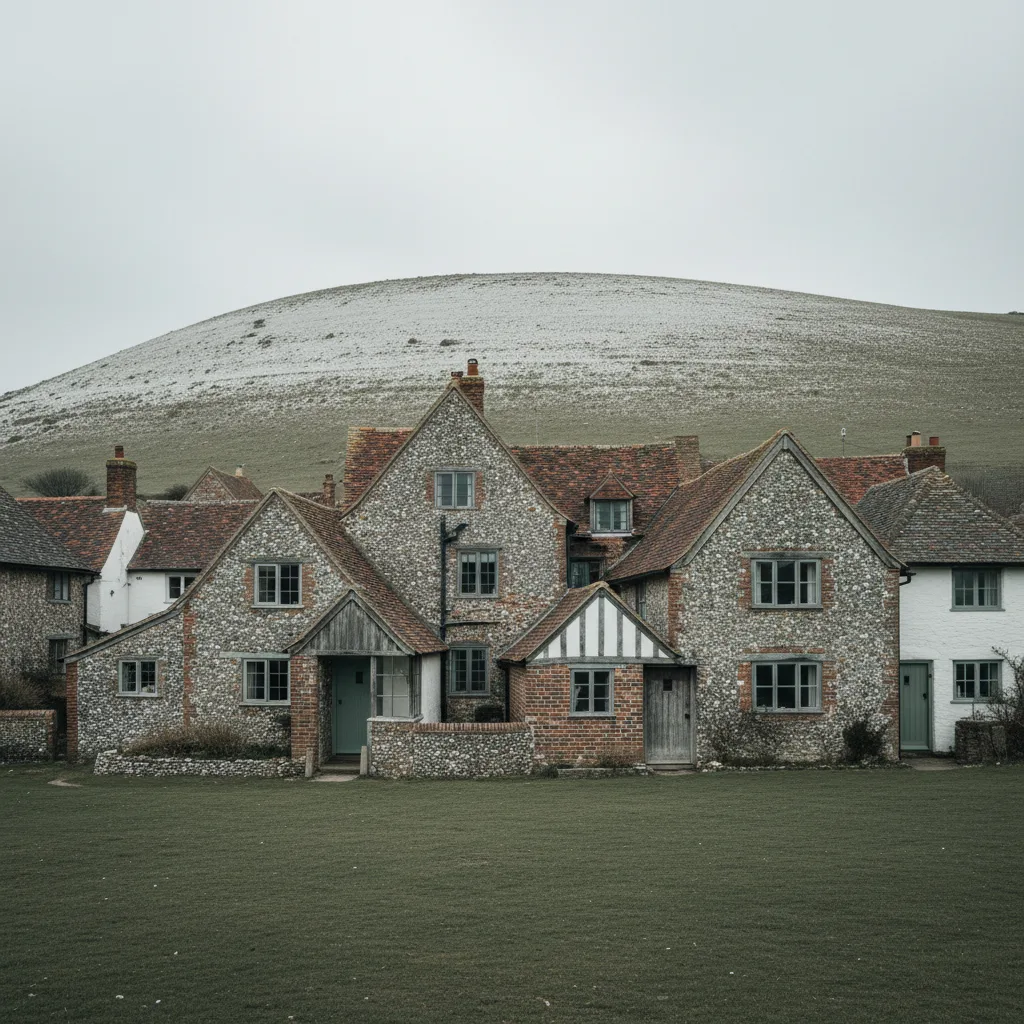
The designation covers the village around the Green, the pond and the High Street, with a high concentration of listed buildings. On a listed building any alteration to the roof needs consent regardless of how modest.
What that asks for is a slim flush conservation unit, which is the least robust family of products available. Which is exactly why the coating, the fixings and the flashing detail have to carry the whole burden here.
Making a slim unit last on a cliff
The practical answer to that tension, and it is achievable.
A conservation profile is about how the unit sits in the plane of the covering and what it looks like. It says nothing about the grade of the coating, the metal of the fixings, or how the flashing is held.
All three of those can be specified up without changing the appearance at all. It costs more and it is the difference between a unit that lasts here and one that does not, and it is worth spelling out to a customer rather than absorbing quietly.
Timber frames in the village
The structure under the oldest cottages, and it changes what an opening is.
A frame carries the roof on principal timbers with lighter common rafters between, jointed rather than nailed and moved over centuries. The plane of the roof follows them.
An opening is a carpentry decision taken on site. Where a principal timber is near the proposed position, the position moves rather than the timber.
Flint, and where a scaffold ties
The characteristic walling here, and it decides the scaffold.
Ties go into brick banding, quoins or around openings rather than into flintwork. What that involves is on the Poynings page, where flint elevations are the dominant condition.
On a listed building a fixing into the elevation forms part of the consent rather than being incidental.
Scaffold in a wind
A genuine constraint on a clifftop rather than a formality.
A scaffold on an exposed cliff edge needs more ties, and sheeting it turns it into a sail, so it is generally left unsheeted, which in turn means less protection for the work and more days lost.
All of that is planned rather than improvised, and it is one reason access here is priced as its own line rather than folded into the labour.
Working days lost
A consequence that affects the date rather than the price, and it is worth setting expectations.
Roof work stops in wind well before it stops in rain, and this position reaches that threshold considerably more often than anywhere inland. A job here can take two or three visits where the same job in Patcham takes one.
We build that into the date rather than the invoice, and an opening is never left unweathered overnight whatever the reason.

The Green, and the sightlines across it
The visibility question in the village, and an open space makes it harder rather than easier.
Across an open green a roof is seen square on from a distance, and the whole plane of it reads at once. A unit that would disappear on a narrow street is conspicuous here.
Which is why the flush profile matters more rather than less on anything the Green can see, and why we walk it before proposing a position.
The mill on the hill
A landmark with a planning consequence for the properties around it.
The windmill above the village is a prominent feature in views from a long way off, and the open slope it stands on is part of what makes it read. Properties on that side are assessed on how they sit in those wider views rather than only in the street.
It is one of the places where a unit invisible from every road is still worth thinking carefully about, and it is checked from the footpath rather than from the drive.
The undercliff, and what it does not shelter
Worth clearing up, because people assume the sea wall helps.
The undercliff walk sits at the foot of the cliff and the village sits on top of it. Nothing at beach level shelters a roof forty metres above, and the salt aerosol lifting over the cliff edge arrives at roof level rather than being blocked by it.
Which means the specification here is set by the height above the sea rather than by any distance measured on a map, and a property looking over the cliff is in the hardest position on this coast.
Chalk dust and the cliff face
A minor local deposit worth mentioning, because it shows on glass.
Chalk lifts off the cliff and the beach in dry windy weather and settles as a fine pale film. It is not aggressive to metal and it does dull glass quickly, and it is abrasive if wiped dry.
Rinse then wipe rather than wipe dry. It is a small habit and on this cliff it makes a visible difference within a couple of years.
Rinsing, and what it is worth here
The maintenance habit that matters most on this coast, and here it is not optional.
Fresh water over the frame and the fixings twice a year lifts the film before it reaches metal through a flexed coating. On a village cottage roof it is a ladder and a few minutes.
It does not substitute for the specification and together they are the difference between a unit that is sound at twenty years and one finished at eight. On a clifftop that gap is wider than anywhere else in the radius.
The gap in the cliffs
A local geography point with a practical consequence.
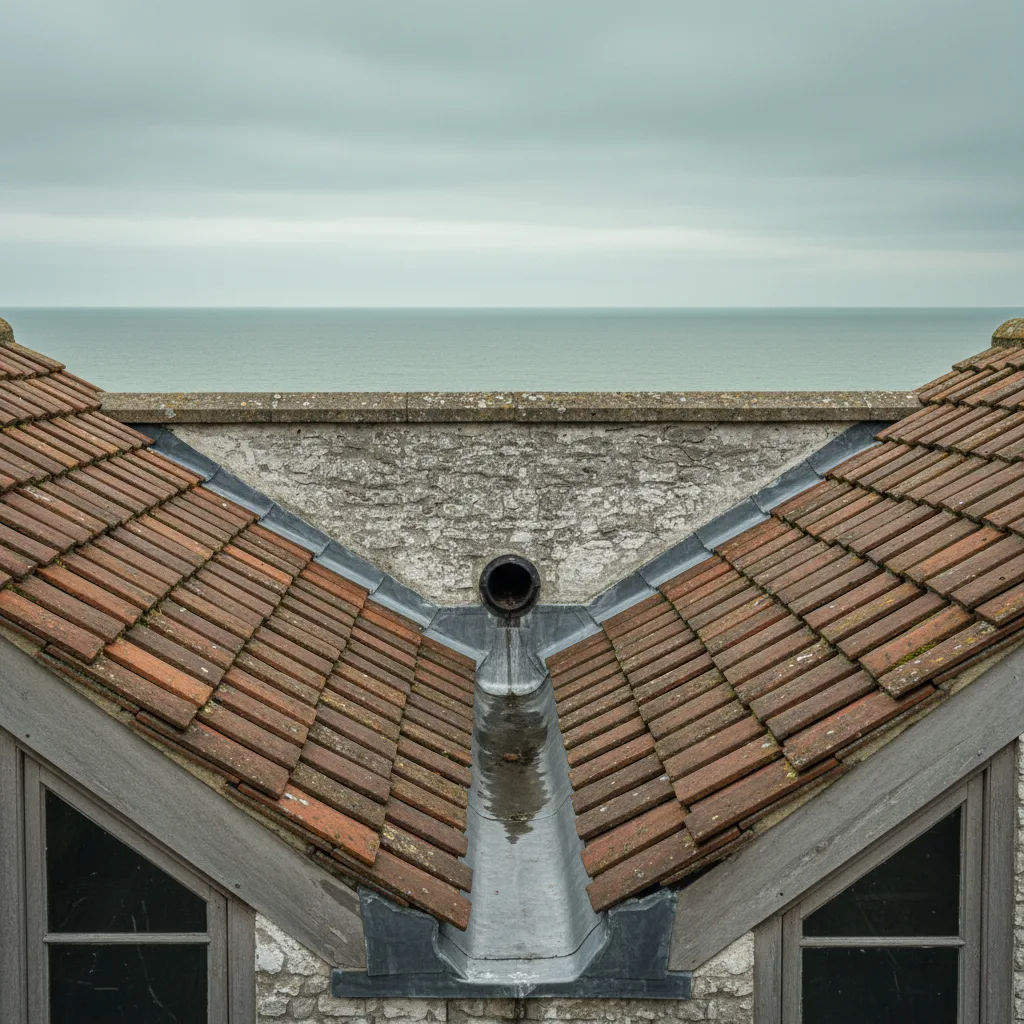
The village sits in a break in the cliff line, which shelters the bottom of the High Street noticeably compared with the properties up on the shoulders either side.
So exposure varies within a few hundred metres, and the specification is judged at the plot rather than for the village. We will say where a position is genuinely more sheltered rather than applying the hardest case everywhere.
What the survey establishes
- How exposed the individual plot is, given the gap in the cliffs.
- Whether the building is listed, including by curtilage.
- Whether the slope is seen from the Green or the High Street.
- Whether the roof is framed or cut, and where principal timbers run.
- Whether an opening unit is wanted, and whether a restrictor is needed.
- Where a scaffold can stand and be tied on a flint elevation.
Building Control
A replacement into an existing opening is not normally notifiable, though the unit still has to meet the limiting thermal standard. A new opening is, and goes to Brighton and Hove City Council or an approved inspector.
The thresholds are on do flat rooflights need Building Control.
Permitted development
Inside the designation those rights are narrowed, and on a listed building the question does not arise because consent is needed regardless of visibility.
Outside the village the ordinary rules apply, subject to the projection limit above the plane of the roof. On a clifftop the projection limit is worth measuring rather than assuming, because a unit specified to stand proud for weathering reasons can exceed it.
How we quote
A free indicative range by email from photographs, then a survey, then a fixed itemised written price that does not move afterwards. Anything we misjudge at survey is ours to absorb.
What is measured at each step is on the how we price and quote page.
Guarantee
Ten years on our workmanship, on every job, limits written down. The manufacturer stands behind the unit; we stand behind the kerb, the flashing and the making good.
The terms, and the accreditations we do not claim, are on the our guarantee page.
Skylight services in this area
Conservation Rooflight Installation
Read moreElectric and Opening Rooflight Installation
Read moreEnergy Efficient Rooflights
Read moreFlat Roof Rooflight Installation
Read moreReplacing a Failed or Misted Rooflight
Read moreRoof Lantern Installation
Read moreRoof Window Installation
Read moreSun Tunnel Installation
Read moreVELUX Window Installation
Read moreWalk-On Rooflight Installation
Read moreThinking about this job? We survey across Worthing, West Sussex and the South Downs and give you a fixed price before any work starts, with a 10-year workmanship guarantee.