No. The name has become the everyday word for the product in the way that other brand names have, but several manufacturers make roof windows to the same broad pattern, with their own size systems and flashing kits. Conservation rooflights are a separate field again, made by specialists rather than by the volume roof window makers.
Why one name dominates the language
Because it arrived first and stayed.
A product that entered British houses at scale under one brand becomes the word for the category, and builders, estate agents and planning officers all use it generically.
It says nothing about what is available.
Who else makes them
Several established manufacturers.
Fakro, Keylite and Roto all make pitched roof windows in timber and coated finishes, with their own size systems, flashing kits and accessory ranges.
They are ordinary alternatives rather than substitutes.
What they have in common
The pattern of the product.
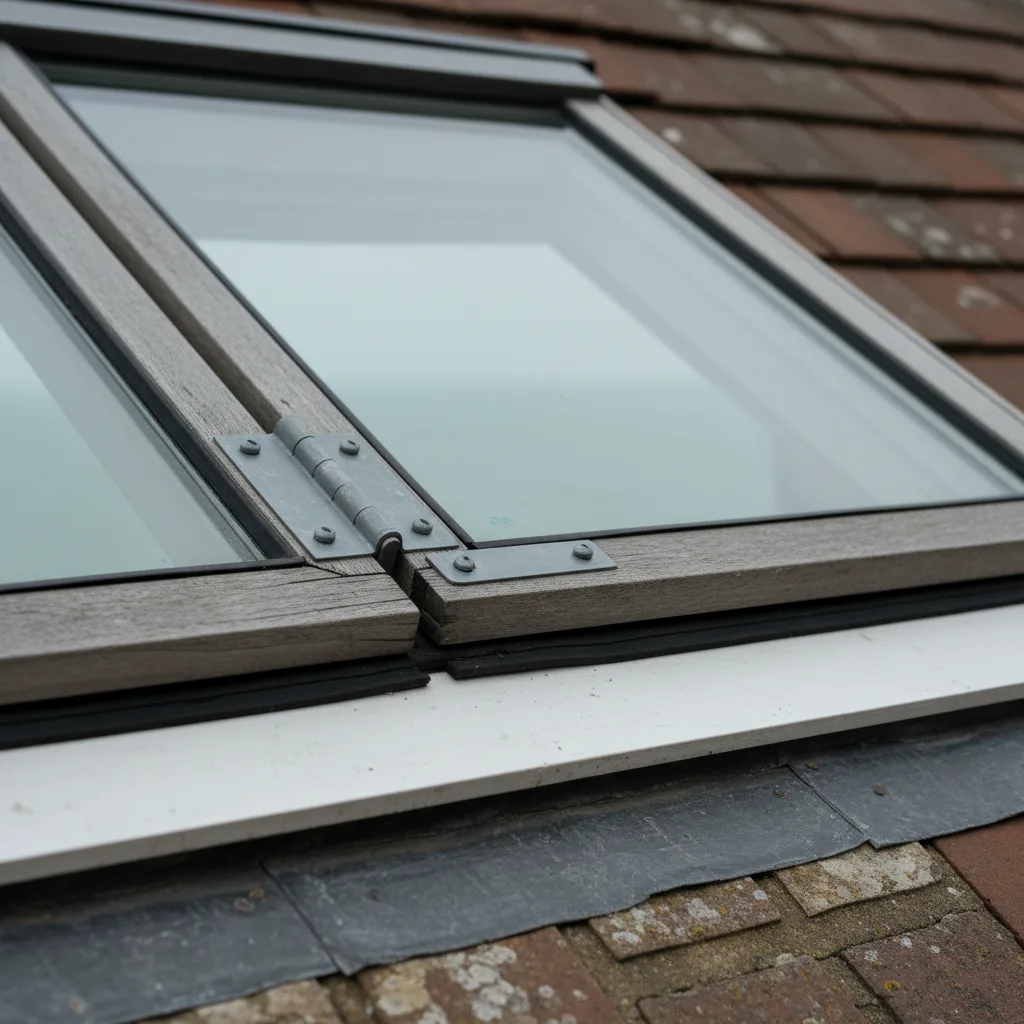
A timber or coated frame, a centre pivot or top hung sash, a flashing kit matched to the covering, and an accessory range of blinds and screens.
The mechanics of fitting are broadly the same.
Where they differ
Size systems, and it matters more than anything else.
Each maker has its own code system and its own frame dimensions, so a kit, a blind or a pane from one does not fit another.
Which is why the brand and the code together are the identity of an installed window.
What that means for a replacement
The practical consequence years later.
Changing brand in an existing opening generally means a new flashing kit and often some adjustment to the opening, where staying with the same maker at the same code is a clean swap.
The swap is on can a VELUX be replaced like for like.
How to compare two products fairly
On four things rather than on the name.
The whole unit thermal figure at the size in question, the glazing options offered, whether service parts are available years later, and what flashing kit exists for your covering.
Those decide how the window performs and how it ages.
The thermal figure
Compared for the whole window, not the glass.
A glass figure flatters every product, and the number that matters is for the unit at the size being bought.
What to look for is on what U value should a rooflight have.
Parts availability
The quiet difference between products.
A seal, a spring or a sealed unit for a window fitted twenty years ago is only obtainable where the maker still supports the range, and support varies.
What that looks like is on can a VELUX window be repaired.
Flashing kits for your covering
Check before choosing, not after.
Every maker offers kits for the common coverings, and the ranges differ at the edges, particularly for deep profiles, recessed installations and combinations.
What to look for is on do VELUX windows come with flashing.
Conservation rooflights
A different field with different makers.
Steel framed units with a central glazing bar, made to sit flush in the covering and to look like a Victorian original, come from specialist manufacturers rather than the volume roof window makers.
That product is on the conservation rooflight installation page.
Flat roof rooflights
Another separate field again.
Bespoke flat glass rooflights for kerbs are made by a number of specialist manufacturers, and a pitched roof window maker is not necessarily the right source for one.
That is on the flat roof rooflight installation page.
Roof lanterns
A distinct product from distinct makers.
A multi facet glazed structure on a kerb is designed and made by lantern manufacturers, and nothing about it overlaps with a pitched roof window.
The difference is on what is the difference between a roof lantern and a skylight.
Budget units
They exist and they are not all the same.
Some are competent windows from established makers at a lower specification. Others are unbranded imports with no parts pipeline behind them.
The distinction is worth making before comparing prices.

Where a budget unit is sensible
A garage, an outbuilding, a workshop.
Where nobody will be looking for a spare part in fifteen years, a competent unit properly flashed is a reasonable decision.
The reasoning is on are VELUX windows worth the money.
Mixing brands on one house
Works structurally, shows visually.
Different makers use different external surround profiles and finishes, so two units from different ranges on one slope will not quite match.
On separate elevations it does not matter at all.
What an installer’s preference is worth
Something, and it is worth asking why.
An installer who works with one system knows its details, its kits and its failure modes, and that familiarity is worth more on the day than a specification sheet is.
Identifying what is already on a roof
Usually straightforward, and it decides the repair route.
Every maker puts a data plate on the sash or the frame head, and the designation on it identifies the manufacturer as well as the size, so a repair enquiry starts there whatever brand it turns out to be.
A photograph of it answers more than a description of the window does.
Where the brand is genuinely irrelevant
Planning, and building regulations.
Neither has anything to say about a manufacturer, and both assess the projection, the structure and the performance of what is installed.
The tests are on do roof windows need planning permission.
What actually decides how a window performs
The installation, on any brand.
The underlay collar, the insulation carried to the frame and the flashing dressed properly are what keep a window dry and warm, and no manufacturer can supply those in a box.
What goes in on a VELUX
We fit what suits the roof and the room and we say why, rather than treating one manufacturer as the answer to every question, because a conservation slope and a garage roof want different products entirely.
The rest is on the VELUX window installation page.
Thinking about this job? We survey across Worthing, West Sussex and the South Downs and give you a fixed price before any work starts, with a 10-year workmanship guarantee.