They fit the window whose size code they are made for. That sounds restrictive and is actually the advantage: a coded blind clips into fixings already built into the frame, sits inside the sash and travels with it when the window opens. A blind that fits any window is a blind fitted to the plaster, and it behaves quite differently.
What the blind types actually do
Blackout, pleated, roller, venetian and awning, each with a different job, are set out on do roof windows come with blinds.
This page is about fit rather than about choosing between them.
The fixings in the frame
Present from new on every unit.
Roof window frames carry pre positioned brackets or slots for blind fixings, so a blind bought years after the window clips in without drilling or measuring.
It is why there is no reason to buy blinds at the same time as the window.
Why the code is the whole order
Because it fixes both dimensions at once.
A blind for a code is made to the exact sash width and drop, so the fabric reaches the channels at the sides and the bottom rail lands where it should.
Finding your code is on how do I find my VELUX size code.
Why a coded blind moves with the sash
Because it is mounted on the sash, not on the opening.
Open the window and the blind goes with it, so a window can be left open with the blind down, which on a sunny afternoon is exactly what you want.
What a plaster mounted blind does instead
Blocks the window.
A blind fixed to the reveal has to be raised out of the way before the sash can rotate, and on a centre pivot that means it is up whenever the window is open.
It also has to clear the handle.

Blackout and the side channels
The reason a coded blackout works and a generic one does not.
A blackout blind is only as good as its edges, and the side channels that hold the fabric are made to the frame section of a particular range.
Fitted to plaster, the same fabric leaks light down both sides.
Older windows
Generally still catered for.
Blinds are made for current and recent generations of the ranges, and where a window is older the plate will say whether it falls within them.
The year on the plate is what a supplier checks.
Where the range has changed
The one case that catches people.
Frame sections have been revised over the decades, so a blind for a current window at the same code may not suit a much older frame even though the size matches.
It is confirmed against the year rather than the code alone.
Generic blinds
They exist and they have a place.
Third party blinds are made for the common codes and fit properly. Others are made to be fitted to a reveal and are a different product with different behaviour.
Which of the two is being bought is worth reading carefully.
Where a generic blind is a fair choice
A window nobody opens.
On a fixed unit, or one high in a stairwell that is never opened, the blind not travelling with the sash costs nothing.
Solar blinds on an old window
The retro fit that surprises people. A solar powered blackout blind carries its own panel and battery, so it needs no cable and can go onto a window that has been in the roof for fifteen years.
How that works is on can you get a solar powered VELUX.
Matching the control system
Worth doing where more than one thing is powered.
A powered blind on the same system as a powered window runs from one handset, and the alternative is a drawer of remotes.
The options are on how is an electric rooflight controlled.
The frame finish
The detail to get right at order.
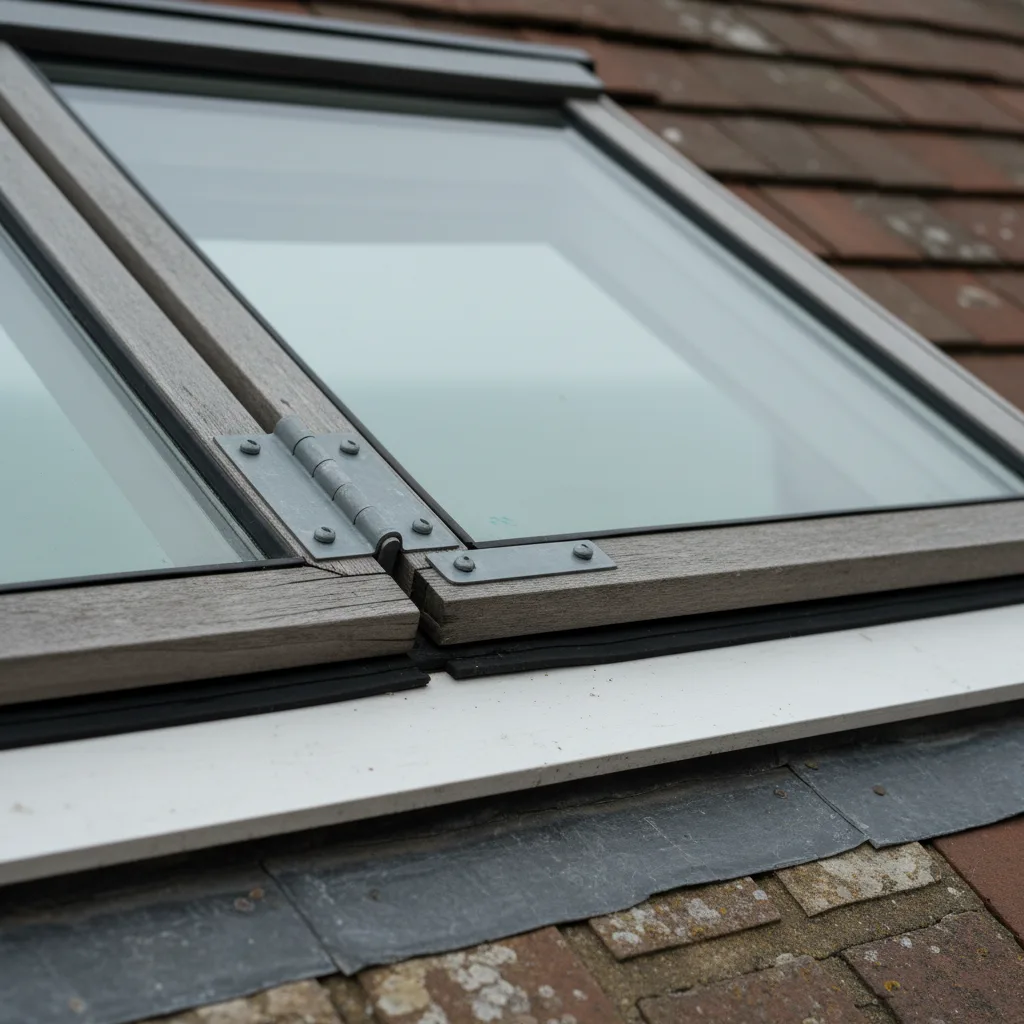
Side channels and rails are made in finishes to suit a white frame or a timber one, and a white channel against pine reads as an accessory rather than as part of the window.
Two blinds on one window
Done more often than people realise. A pleated blind for daytime glare and a blackout for night can both be fitted to the same sash, using different fixing positions.
Insect screens
The same logic and a different product.
A screen made for the code fits into the frame and rolls down over the opening, which suits a bedroom window left open on a summer night.
What they do is on do opening rooflights come with insect screens.
Awnings and the external fixing
Coded as well, and for a different reason.
An external awning has to fix to the outside of the frame above the glass, so it is entirely dependent on the frame section and the size.
Fitting one yourself
Reasonable, with one caution. Most blinds are a bracket each side and a rail that clips in. A blackout is the one to take care over, because the side channels have to be square or the fabric binds.
What we take on a VELUX
We take the code and the year together when a blind is being ordered for an existing window, because the code alone will occasionally give the right size and the wrong frame.
The rest is on the VELUX window installation page.
Thinking about this job? We survey across Worthing, West Sussex and the South Downs and give you a fixed price before any work starts, with a 10-year workmanship guarantee.