Almost every enquiry about replacing an existing roof window starts with the same question, and it has a precise answer printed on the window itself. The data plate tells you what you have, and knowing what you have decides whether the replacement is a morning of work or a considerably longer job.
What the data plate is
A small label fixed to the window carrying the manufacturer identification, a type code describing what kind of window it is, a size code describing the opening it fits, and usually a date or batch reference.
It is the equivalent of a serial number plate on any other manufactured product, and it exists precisely so that a replacement or a spare part can be matched years later.
Where to look for it
On most units it is on the top rail of the sash, visible when the window is opened, sometimes under a cover strip that lifts off.
On a centre pivot
Open the window and rotate the sash to the cleaning position. The plate is usually on the top edge of the sash, facing you once it is turned.
On a top hung unit
Open the sash and look along its top edge from inside. It may need the sash releasing to the cleaning position to be read comfortably.
If nothing is visible
Look along the sides of the sash and at the head of the frame. On older units the plate is sometimes on the frame rather than the sash, and on very old ones it may be a stamped or printed mark rather than a modern label.
What the codes mean
| Element | Tells you | Why it matters |
|---|---|---|
| Manufacturer name | Who made it | Different makers use different size systems entirely |
| Type code | The model family and how it opens | Centre pivot and top hung are not interchangeable |
| Size code | The frame size, as a letter and number | This is the dimension the replacement is ordered against |
| Glazing code | The glass build-up originally fitted | Tells you what you are upgrading from |
| Date or batch | Roughly when it was made | Decides whether the size is still current |
The size code is the important one
Roof window sizes are expressed as a code rather than as millimetres, and the code refers to a defined frame size in the manufacturer range.
Ordering against that code is far more reliable than measuring the window, because measuring gives you the sash or the visible frame and the code refers to the whole assembly including what is buried in the roof.
It is also what tells us immediately whether the size is still made. Ranges change over decades, and some older codes have no current equivalent.

Why we still measure as well
The code is the starting point and it is not the whole survey.
Windows get fitted into openings that were not quite the right size, packed out, or altered by later work. A window can be reported as one size and be sitting in an opening cut for another, and the opening is what the replacement has to fit.
So we read the plate, then measure the structural opening from inside the roof space, and reconcile the two before anything is ordered. Where they disagree, the opening wins.
What the plate does not tell you
It describes the window and says nothing about the installation, which is frequently where the work is.
It does not tell you whether there is an underlay collar, whether the insulation was carried up to the frame, whether the flashing kit matched the covering, or what condition the trimmers are in. All four decide how long a replacement takes and all four need looking at.
When the plate has gone
On a thirty year old window the label may be illegible, painted over, or missing entirely. It is a common situation and it is recoverable.
- Photograph the window fully open from inside, including the hinge or pivot arrangement.
- Measure the visible frame width and height accurately, inside and outside.
- Measure the structural opening from the roof space, between the trimmers.
- Note the covering, the roof pitch and whether the unit is recessed or proud.
- Photograph the handle, the catch and any ventilation flap, since these date a unit closely.
Between the opening dimensions and the ironmongery, the generation and size can usually be established with confidence. Where it cannot, the answer is a made to size unit ordered to the measured opening, which always works.
Dating a unit by its ironmongery
The handle and the ventilation arrangement changed several times over the decades, and they are a reliable rough guide when the plate is gone.
A bar handle across the top of the sash, a separate ventilation flap, a simple friction catch: all of these place a unit in a particular era. So does the glazing, since a very old unit may be single glazed or an early double glazed build-up noticeably thinner than a current one.
We are not dating antiques here. The point is only to establish which generation the size system belongs to.
Why the generation matters
Manufacturers have changed their size ranges over the years, and a code from the 1980s does not necessarily map onto anything currently made.
Where it does, the replacement drops into the existing opening and the covering is barely disturbed. Where it does not, the options are to adapt the opening to a current size, which means altering the trimming and the covering around it, or to order a made to size unit.
Which of those you are looking at is the single biggest variable in the cost of a replacement, and the data plate is what answers it in thirty seconds.
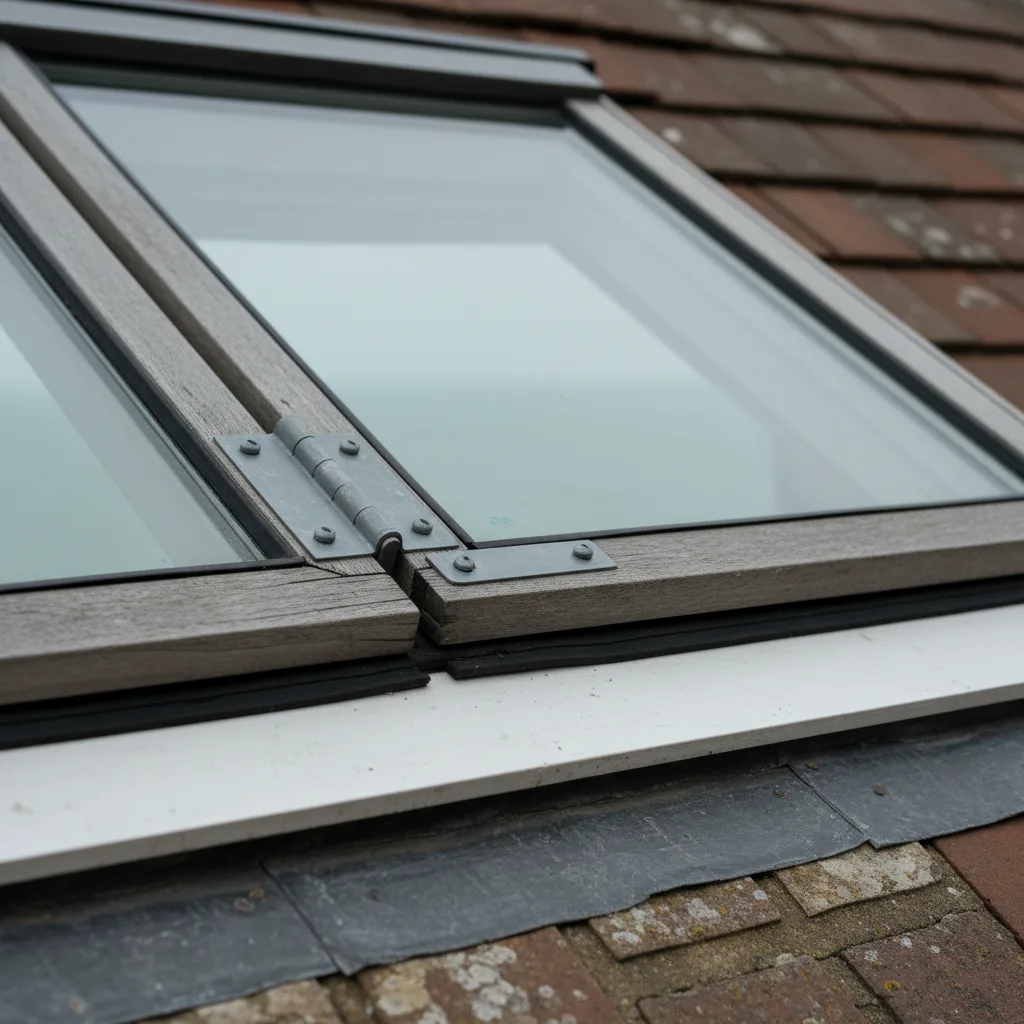
The upgrade you are actually getting
Reading the old glazing code alongside the new specification tells you what changes, and it is usually more than people expect.
A unit from the 1980s or early 1990s may be single glazed or an early double glazed build-up with no low emissivity coating, no gas fill, and an aluminium spacer at the edge. A current unit has a coated inner pane, argon fill, a warm edge spacer and a laminated inner pane as standard.
The difference in heat loss is substantial, the difference in rain noise is noticeable, and the safety improvement from the laminated inner pane is the one nobody thinks about until it matters.
Mixed ages on one roof
Where several windows are being replaced, they are frequently not all the same age.
A house that had two fitted in 1990 and one added in 2008 has two size systems on one roof, and each unit is read individually. Assuming they match because they look alike is how one of three arrives wrong.
We read every plate rather than one, and we measure every opening.
Non-VELUX units that look similar
Several manufacturers make centre pivot roof windows and at a glance they are alike.
The name on the plate matters because the size systems are not interchangeable and neither are the flashing kits. A window from another maker in a comparable size will not simply drop into the opening, and its kit will not suit the same covering the same way.
Where the plate is gone and the maker is uncertain, the ironmongery and the frame profile usually identify it, and where they do not, a made to size unit removes the question.
Photographing it usefully
Where you want to send a photograph before we visit, a few things make it far more useful.
- The plate itself, close and in focus, with the whole label in frame rather than cropped.
- The window fully open from inside, showing how it opens.
- The window from outside if it can be seen safely from a window opposite or from the garden.
- The covering around it, close enough to see the profile of the tiles or slates.
- Any staining or damage on the reveal, and where it sits.
Five photographs, none of which needs a ladder, and between them they get a conversation a long way forward.
What the plate tells you about spares
Not every roof window enquiry ends in a replacement, and the data plate is what decides whether it needs to.
Manufacturers support their products for a long time, and a great many of the complaints we are called about are a single component rather than the window. A handle that will not latch, a friction hinge that no longer holds the sash open, a hardened gasket letting draughts through, a broken cleaning catch: all of those are parts, and parts are ordered against the type and size code on the plate.
Where the glass is sound and the frame is sound, replacing a part is a fraction of the cost of replacing the unit, and it is the honest answer. We say so when it is the case rather than quoting for a window somebody does not need.

Where the plate says the unit is finished
Equally, some things the plate helps confirm are not economic to repair.
A failed sealed unit on a window old enough that the glazing was never laminated is a case where replacement is the better buy, because the safety specification changes as well as the performance. A frame that has rotted at the sill on a timber unit is another. And a unit so old that no parts remain available is the clearest of all.
The plate settles which of those you are in, which is why it is the first thing we look for rather than the last.
Timber and polyurethane frames
The plate also tells you what the frame is made of, and it changes the maintenance conversation.
Timber framed units, which is most of what was fitted before the 2000s, are finished internally with a lacquer or a paint and need that finish maintaining. Where a unit has been in a bathroom or a kitchen and the finish was never renewed, the timber at the bottom of the sash is frequently where the decay is.
Polyurethane coated units, which became common later, need nothing internally and are the obvious specification for a bathroom or a loft shower room. Knowing which you have explains a great deal about the condition it is in.
What we do with it
The plate goes into the survey record along with the measured opening, the covering, the pitch and the condition of the trimming.
From that we can say whether the size is current, whether the covering needs disturbing beyond the immediate opening, and whether the flashing kit will be a straightforward match. Those three answers are most of the quotation.
Keeping it for next time
When a new unit goes in, its data plate is the thing somebody will be looking for in twenty five years.
We leave the specification, the size code and the flashing kit reference with the completion paperwork, so that the next conversation about this window starts from a document rather than from a ladder. It costs nothing and it is the sort of thing that only ever gets missed.
What we read on a VELUX
We read the plate on every unit rather than assuming they match, measure the structural opening from inside the roof space, and reconcile the two before ordering. Where the plate is gone we date the unit from the opening and the ironmongery, and where that leaves any doubt we order to the measured opening rather than to a code we are not certain of.
The plate answers in thirty seconds a question that otherwise takes a morning.
Thinking about this job? We survey across Worthing, West Sussex and the South Downs and give you a fixed price before any work starts, with a 10-year workmanship guarantee.