Getting a made to size unit onto a kerb that is out of square
A made to size rooflight is a rectangle. A kerb built on site fifteen years ago frequently is not, and the two have to meet. This page is about what happens when they do not, how far out is too far, and which of the two things gets changed.
Square, and what it means here
An opening is square when its corners are right angles. The practical test is the diagonals: measure corner to corner both ways, and if the two figures match, the opening is square.
The reason diagonals work is that a rectangle with equal sides can still be a parallelogram, leaning over, with every side the correct length and every corner wrong. Only the diagonals catch that, and it takes thirty seconds.
Why an out of square kerb is not a small problem
A dimension that is a few millimetres out can usually be absorbed in the detailing. A shape that is wrong cannot, because the error is not the same at both ends.
Set a true rectangle onto a parallelogram and the gap between them tapers: tight at one corner, open at the diagonally opposite one. That gap has to be sealed, and a seal designed for a consistent joint width does not perform across a tapering one.
Worse, the fixings pull the frame down onto the kerb. Where the kerb is not flat and square under it, the frame is being twisted as it is fixed, and it stays twisted for its life.
What a twisted frame does
An aluminium rooflight frame is stiff, and a stiff thing forced out of shape stores that force rather than dissipating it.
The load lands on the glazing seals, unevenly. Some are compressed harder than they were designed for and some are barely compressed at all. Thermal cycling then works on that uneven set, day after day, and the seals that were under-compressed are the ones that let go first.
The failure arrives three or four winters later as water at one corner, and it is almost never connected back to the day of installation.
How out of square is too far
There is no single figure, because it depends on the size of the unit and on the tolerance the manufacturer has designed in.
| Diagonal difference | What it means | Normal action |
|---|---|---|
| A few millimetres | Within the working clearance on most units | Proceed, order to the largest dimensions |
| Around ten millimetres | Visible as a tapering gap, at the edge of tolerance | Correct the kerb. It is quick at this stage |
| More than that | The unit cannot be made to sit properly | Correct the kerb, or order to the measured shape |
| Different at top and bottom | The kerb is twisted as well as out of square | Rebuild the top of the kerb |
The honest answer at survey is that anything beyond a few millimetres gets corrected, because correcting it is cheap and the alternative is a compromise that shows up years later.
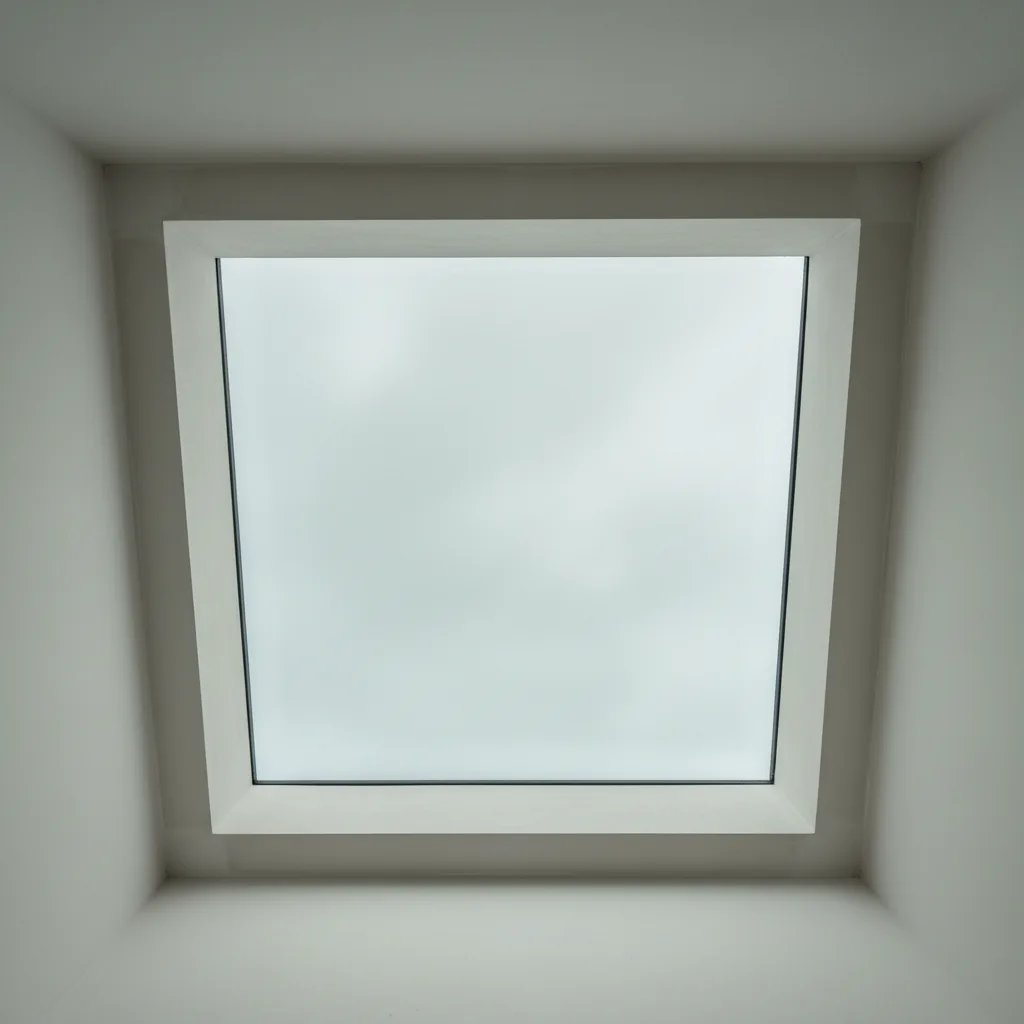
Correcting the kerb, which is the usual answer
Nine times out of ten the right move is to make the kerb square rather than to make the unit crooked.
Packing and re-facing
Where the error is small, the kerb can be packed out on the tight side and the face made true. The covering is relifted locally, the packing goes on, and the detail is remade.
Rebuilding the top
Where the error is larger, or where the kerb is twisted as well, the top course of the kerb comes off and is rebuilt square and level. This is more work and it is still an afternoon rather than a project.
Rebuilding entirely
Where the timber is also decayed, which on an older kerb it frequently is, the kerb comes off and a new one goes on. At that point everything else can be put right at the same time: height at the low corner, insulation on the outer face, the vapour control seal.
Ordering to the measured shape
Manufacturers will make a non-rectangular unit to a measured shape, and occasionally that is the right call.
It suits a situation where the kerb cannot be moved: where it is part of a structure that would be disproportionate to alter, where the roof is not coming off and cannot be opened, or where the shape is deliberate rather than an error.
It costs more, it takes longer, and it means any future replacement has to be made to the same shape rather than bought from a standard range. Those are real costs and they are worth accepting only where correcting the kerb genuinely is not practical.
Level and twist, the other two measurements
Square is one property and it is not the only one that has to be right.
The top of the kerb has to be level in both directions, even though the roof beneath it falls. And it has to be free of twist, meaning that all four corners lie in one plane rather than three lying in a plane and the fourth sitting proud or low.
Twist is the one people miss, because it is not caught by a level laid along either side. A long straight edge across the diagonals, or a laser, finds it. A frame set on a twisted kerb is loaded exactly as badly as one set on an out of square opening.
How kerbs end up out of square in the first place
It is rarely carelessness, and knowing the causes helps predict where to look.
The opening was trimmed square in the deck and the kerb was built on top of it slightly out. Or the kerb was built square and the deck has since deflected around it. Or the kerb was built to a drawing rather than to what got constructed. Or it was correct and the timber has moved, which happens where a kerb has been wet for years.
The last of those is the one to watch, because a kerb that has moved has moved for a reason and that reason is usually water.
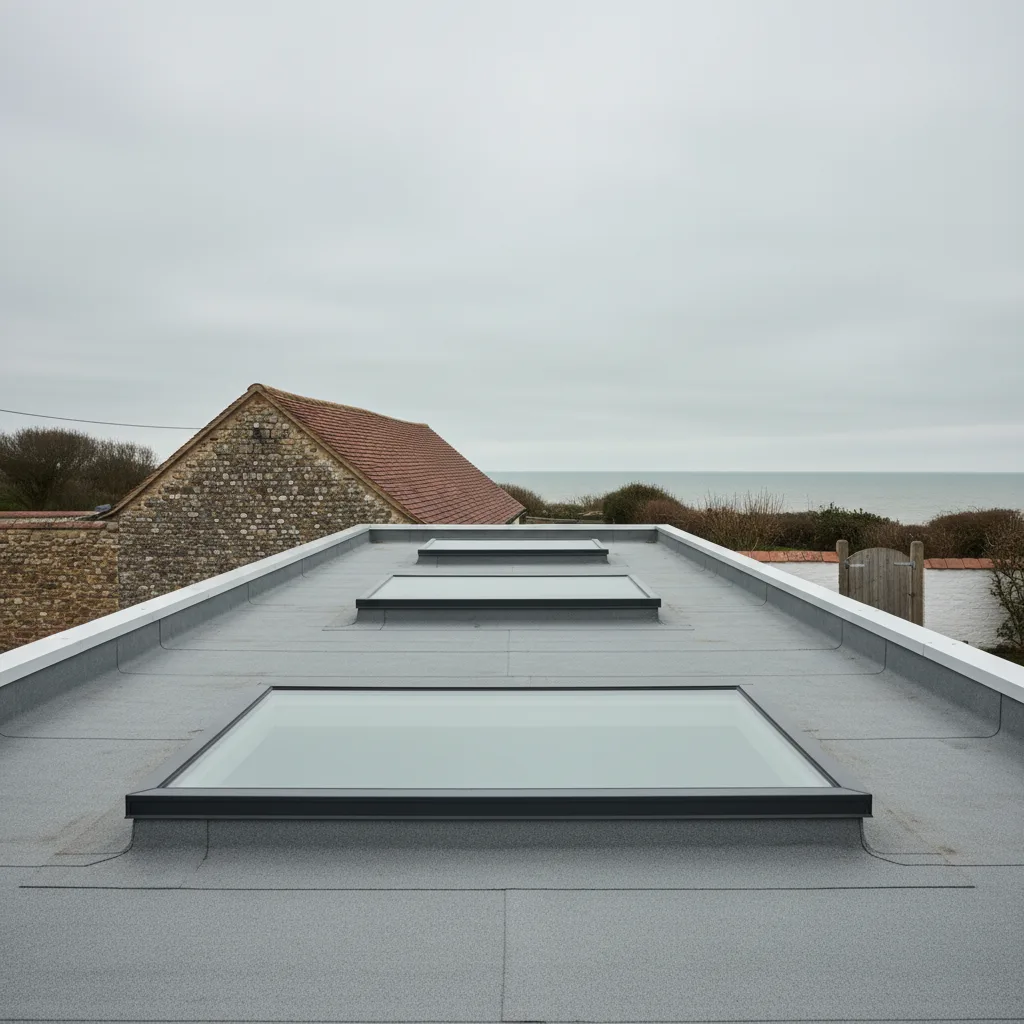
Measuring an existing kerb properly
- Both widths, at each end rather than the middle.
- Both lengths, at each side.
- Both diagonals, corner to corner.
- Level along all four sides.
- Twist, with a straight edge or a laser across the corners.
- Height above the finished surface at the lowest corner.
- Kerb wall thickness, so inside and outside dimensions are both known.
Seven checks. It takes ten minutes on the roof and it is the difference between ordering with confidence and ordering hopefully.
Which dimension to order to
Where a kerb is slightly out and is being corrected, the unit is ordered to the corrected dimensions, which means the correction happens before the order rather than after.
Where a kerb is within tolerance and is not being corrected, the unit is ordered to the largest of the measured dimensions, because it has to clear the widest point. Ordering to an average produces a unit that fits part of the opening.
The sequence that avoids all of this
On new work, none of this needs to arise.
The kerb is built, checked for square, level and twist, and corrected then and there while everything is accessible and nothing has been ordered. Only after it passes those checks does the unit get ordered, to the measured kerb.
The temptation is to order early to save time on the programme, and it is a false economy on any job where the kerb is not yet built.
What happens if it is ignored
A unit fitted to an out of square kerb usually looks acceptable on the day, and that is the difficulty. The gap is dressed, the trim covers it, the sealant fills the taper, and the customer sees a finished roof.
What follows is a seal that fails early at one corner, water appearing in rain from one direction only, and a diagnosis that keeps pointing at the covering because nobody knows the frame is under stress. The unit is frequently replaced, onto the same kerb, and fails again.
Sealant is not a remedy
The instinct when faced with a tapering gap is to fill it, and sealant is what gets reached for.
Sealant has a movement capability expressed as a percentage of the joint width, and it works within that. A joint that is three millimetres at one corner and twelve at the other is asking one bead to perform correctly across a fourfold range, on a roof that expands and contracts every day. The wide end has too much movement for the depth of material, and the narrow end has too little room to accommodate any.
Beyond that, sealant on a rooflight is a weather check rather than the waterproofing. The waterproofing is the covering dressed up the kerb and the frame seated properly on it. Where sealant is doing the primary job, the detail has already failed and somebody has papered over it.
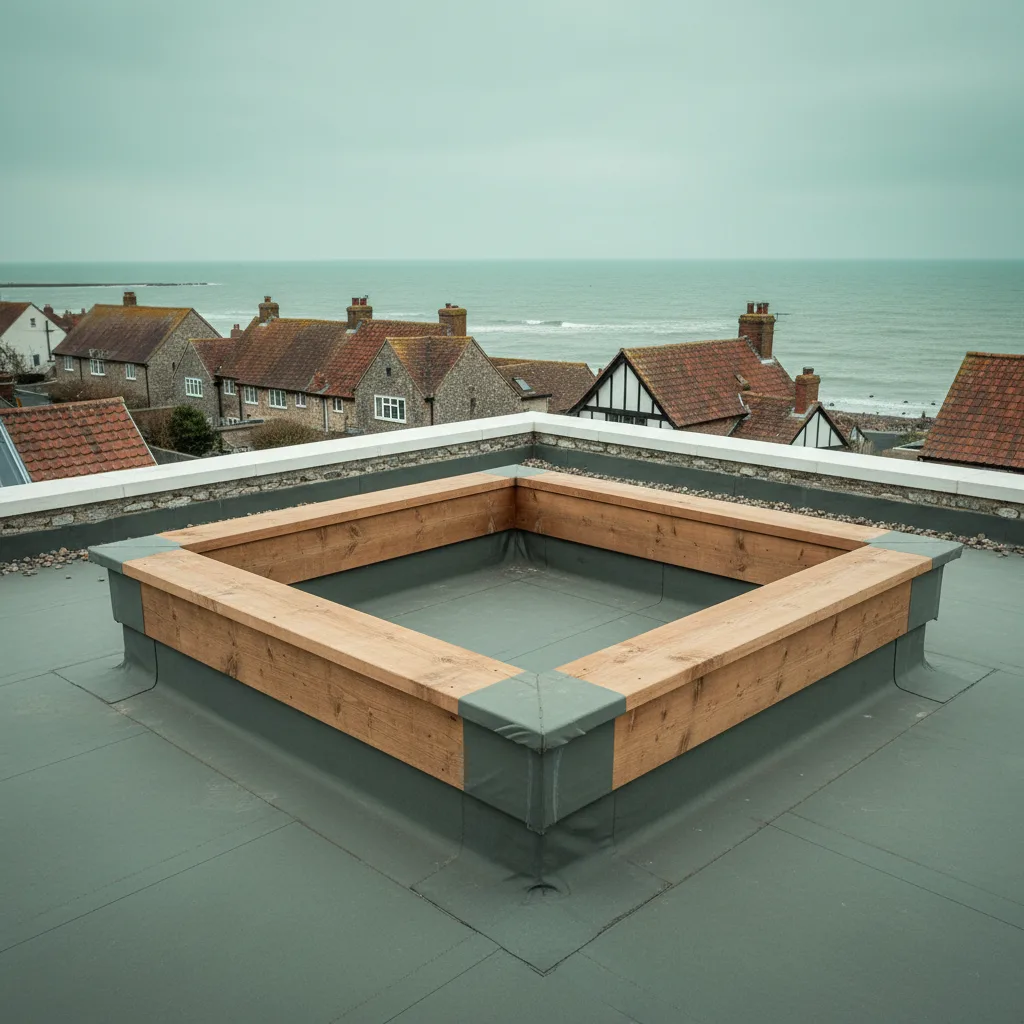
Checking it again after fixing down
Square before the unit goes on is necessary and not sufficient, because the act of fixing can introduce the problem it was meant to avoid.
Fixings pulled up unevenly, or worked round in one direction rather than alternating across the frame, can draw a frame out of square as it is tightened. The remedy is the same as on any assembly: fix loosely all round first, check the diagonals of the frame itself, then tighten progressively and evenly.
It costs a few minutes, and it is the last opportunity to catch a twist before it becomes permanent.
Recording it, for whoever comes next
Where a kerb has been corrected, or where a unit has been made to a non-rectangular shape, that fact should survive the job.
In fifteen years somebody will be replacing this unit, and if the kerb was made square then the standard measurement will find that. If the unit was made to a measured shape, the next person needs to know that before they order a rectangle.
We leave the measured dimensions and the specification with the completion paperwork for exactly this reason. It costs nothing now and it saves a wasted order later.
Domes, and why the old unit is no guide
Where the existing unit is a 1980s dome, the kerb underneath is measured as though nothing had ever been on it.
Domes tolerated a poor kerb far better than a rigid glazed unit does, because the flange was flexible and the fixing pattern forgiving. A kerb that carried a dome perfectly well for thirty years may be several millimetres out of square, and nobody would have known.
That is the single most common source of the problem this page describes.
What we take on a flat roof
We take all seven checks at survey, before quoting, and we say at that point whether the kerb needs correcting. Where it does, the correction is in the quotation rather than appearing as an extra on the day. We order only from a kerb that is square, level and untwisted, or from a measured shape where correcting genuinely is not practical.
A rectangle and a parallelogram do not meet. One of them has to change, and it is cheaper for it to be the kerb.
Thinking about this job? We survey across Worthing, West Sussex and the South Downs and give you a fixed price before any work starts, with a 10-year workmanship guarantee.