Can you fit a rooflight or skylight over a bathroom?
Yes, and a windowless bathroom is one of the rooms a rooflight transforms most completely. What changes is the humidity, which makes the insulation detail matter more than anywhere else in a house, the privacy question where a roof is overlooked, and the ventilation requirement, which a rooflight does not remove.
Why a bathroom is a good candidate
Because so many of them have no window at all.
Internal bathrooms, and bathrooms in rear extensions with a neighbour’s wall two metres away, are among the darkest rooms in a house and the hardest to light any other way.
Daylight from above reaches exactly where nothing else can.
The humidity problem
The thing that makes a bathroom different from any other room.
A shower puts a large quantity of water vapour into a small room in a few minutes, and the rooflight is the coldest surface at the highest point, which is exactly where that vapour goes.
Which means the details that prevent condensation matter more here than anywhere.
The kerb, insulated properly
The single most important detail on a bathroom rooflight.
An uninsulated upstand puts a cold bridge around the whole perimeter, and in a bathroom that produces water running down the frame after every shower.
The detail is on why is there condensation on my flat rooflight.
The vapour control layer
The second detail, and it protects the roof rather than the room.
Warm humid air finding a gap around a frame goes up into the roof build up, where it condenses on cold surfaces inside the construction and wets insulation and timber over years.
Sealing the vapour control layer to the frame is what prevents it, and it is done at installation or not at all.
The extract is still required
A rooflight does not replace it, and this is worth being clear about.
Mechanical extract in a bathroom is a requirement, sized and ducted to the outside, and an opening rooflight does not satisfy it on its own.
What it does is help, considerably, by giving the moist air somewhere to go.
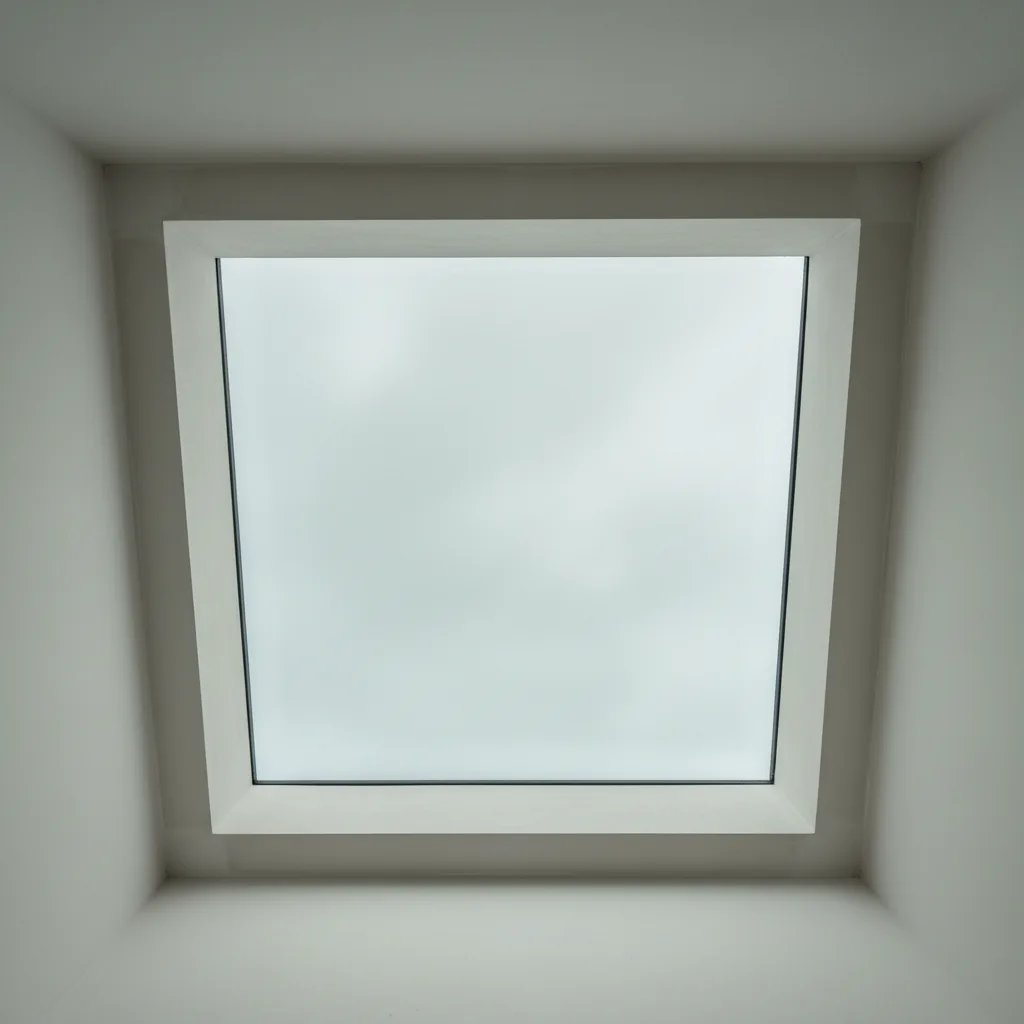
An opening unit
Worth having, and it works well in this room.
An opening unit at the highest point lets the steam out after a shower far more effectively than a window would, and it is the position warm wet air is heading for anyway.
Operating it is the question, and the options are on can a flat rooflight open.
Reaching it
The practical point in a room where nobody wants to stand on a bath.
A manual unit over a bath is genuinely awkward to operate, so an electric unit with a switch by the door is the sensible answer in most bathrooms.
Electrics in a bathroom
Where the specification matters and it is straightforward.
Bathrooms are divided into zones for electrical purposes, and any fitting or switch has to suit the zone it is in. A switch outside the room, or a pull cord, is the usual arrangement.
It is an electrician’s decision rather than ours, and it is settled at specification.
Privacy from above
The consideration people raise and it is easily solved.
Where a roof is overlooked from higher ground or a neighbouring upper window, an obscured inner pane removes the issue entirely and costs little.
It is specified at order, because the obscuring is in the glass rather than applied to it.
A blind instead
An alternative, and less good in this room.
A blind in a bathroom is exposed to steam constantly, which is hard on fabric and on any mechanism, and it restricts the air movement over the glass that helps it dry.
Obscured glass has none of those problems.
A sun tunnel as an alternative
Frequently the right answer where the bathroom has no roof of its own.
An internal bathroom with a bedroom above cannot take a rooflight, and a tunnel reaches it through the roof space with a small sealed tube.
It needs the sealed diffuser and an insulated tube, for exactly the humidity reasons above.
Ceiling finishes
A detail worth getting right in a wet room.
The reveal around a rooflight in a bathroom wants a finish that tolerates moisture, and the junction between the frame and the plaster wants sealing properly rather than filling.
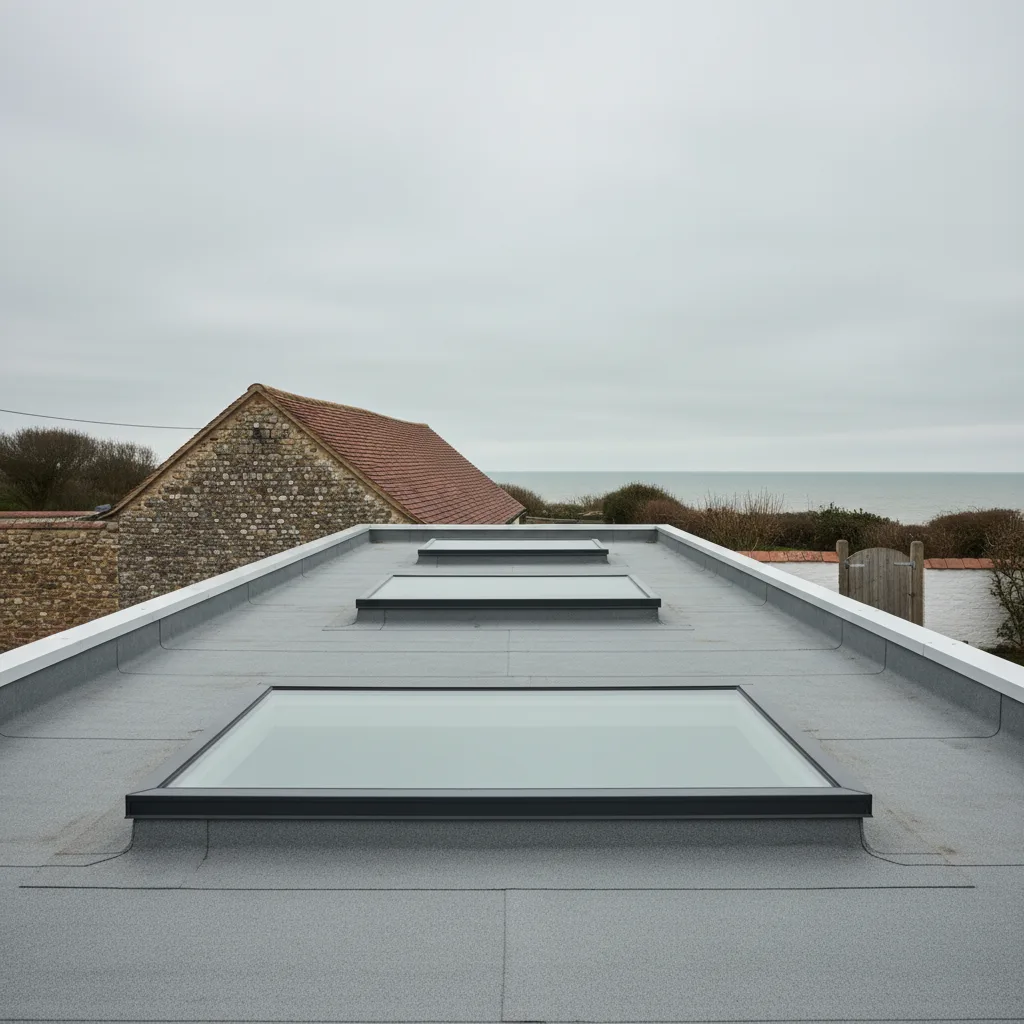
Glass specification
Two decisions, and only one is about heat.
A laminated inner pane, as on any overhead glazing. And obscured where privacy is a factor. Solar control only where the roof faces south or west and the room genuinely overheats.
What it does to the room
More than in almost any other space.
A windowless bathroom lit only artificially becomes a room somebody does not switch a light on to enter, and the difference is the one households mention most afterwards.
Where it will not work
Where there is another storey above, and the roof space does not run anywhere useful.
In that case neither a rooflight nor a tunnel reaches, and the honest answer is that the room stays artificially lit.
Rain noise over a bath
A small point that comes up in bathrooms specifically.
A bathroom is a hard surfaced room with little to absorb sound, so rain on a rooflight is more noticeable there than in a carpeted bedroom.
A glazed unit is considerably quieter than the plastic dome it usually replaces, and where it matters a heavier glass make up helps further.
Cleaning it
Easier than most rooflights, and worth thinking about at specification.
A bathroom unit collects a film from steam and toiletries rather than dirt, which wipes off readily from inside on a low ceiling and needs a ladder on a high one.
Self cleaning glass deals with the outside, and the detail is on what is self cleaning glass.
Where the insulation goes on a flat roof
We insulate the kerb and seal the vapour control layer as a matter of course on any bathroom unit, specify obscured glass where a roof is overlooked, and check that the extract is adequate rather than assuming the rooflight covers it.
The whole picture is on the flat roof rooflight installation page.
Thinking about this job? We survey across Worthing, West Sussex and the South Downs and give you a fixed price before any work starts, with a 10-year workmanship guarantee.