What is the difference between a roof window and a rooflight?
In ordinary use a roof window is a unit that sits within the plane of a pitched covering, generally opens, and is weathered by a flashing kit. A rooflight is a looser word, most often meaning a unit that sits on a kerb on a flat roof. The important distinction is not the vocabulary but which roof each is made for.
The distinction that matters
Whether it sits in the covering or on an upstand.
A roof window is set into a pitched roof with the covering lapped around it, relying on the slope to shed water. A flat roof unit stands on a kerb above the deck, relying on that height.
Those are different products with different weathering, and they are not substitutes.
Why the words are muddled
Because the industry uses them loosely and so does everybody else.
Some manufacturers call every product a rooflight. Some reserve roof window for the opening kind. Customers say skylight for all of them, and Velux for any roof window.
None of that is wrong; it just means the words do not settle what somebody needs.
The question that does settle it
What is directly above the ceiling of the room.
A pitched roof: a roof window. A flat deck: a flat roof rooflight or a lantern. A roof space with another room beyond: a sun tunnel. Another storey: none of them.
That answers most enquiries before anybody discusses a catalogue.
What each is good at
Different rooms, and both do their own job well.
A roof window suits a room under a slope: a loft, a landing, a stairwell. A flat roof unit suits a rear extension with a deck over it.
Neither is better; they answer different questions.
Opening
Most roof windows open. Flat roof units frequently do not.
A roof window’s sash is part of the standard product, and an opening flat roof unit is more often an upgrade.
Both give useful ventilation at the highest point of a room.
The view
A real difference, and it is under-considered.
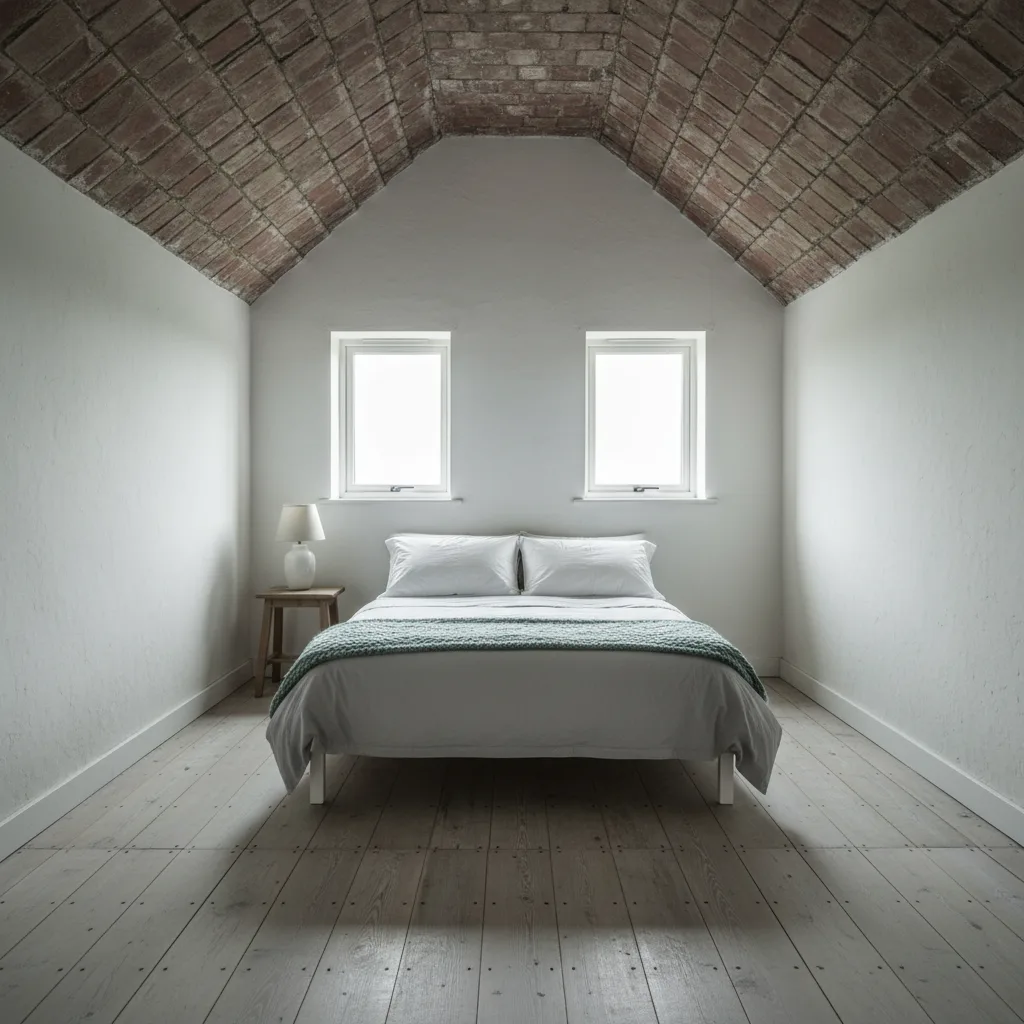
A roof window in a slope can be positioned so somebody seated sees out of it, giving a view as well as light. A horizontal unit shows sky and nothing else.
On a loft bedroom with an outlook, that decides the position.
Light delivered
Both considerably more than a wall window of the same area.
A horizontal unit sees the most sky of all, so per square metre a flat roof unit delivers slightly more than a pitched one, and both far exceed a window.
Solar gain
Where the horizontal position works against it.
A flat roof unit takes summer sun close to square on, which is the worst case, so solar control glass earns its place there more readily than on a slope.
Weathering, and how each fails
Predictably and differently, which is worth knowing.
A roof window fails at the flashing, generally because the kit did not suit the covering. A flat roof unit fails at the upstand, generally because the kerb was too low.
Both are installation faults rather than product ones.
Lanterns
A third category that sits with the flat roof family.
A pitched glazed structure on a kerb, giving light from several directions and height in the room. It is architecture rather than a hole in a ceiling.
Sun tunnels
A fourth, and it is not a window at all.
A reflective tube taking daylight from a dome on the roof to a diffuser in a ceiling, for rooms with no roof directly above them.
It gives less light than either and it reaches where neither can.
Conservation rooflights and skylights
A family within the pitched roof group rather than a separate category.
Slimmer, flush, dark and generally barred, designed for designated slopes. It is a roof window with a different profile.

What each costs, in shape
Broadly comparable for the unit, and different for the installation.
A roof window into a sound slope is generally a shorter job than a flat roof unit onto a kerb that needs work, because the kerb is the variable.
Which needs permission
The same rules apply to both. The projection limit, the principal elevation rule, and the designated land restriction on a slope fronting a highway.
The detail is on do roof windows need planning permission.
What to say in an enquiry
Describe the roof rather than the product.
Pitched or flat, what the covering is, what the room is used for, and which way it faces. That is enough to say which product this is a conversation about.
Where the words come from
A short history, because it explains the inconsistency.
Rooflight is the older term, used for the cast iron lights fitted to Victorian roofs and later for anything glazed in a roof. Roof window arrived with the modern opening product designed to be part of a habitable room.
So a rooflight lights a space and a roof window is a window that happens to be in a roof, which is roughly how the trade still uses them.
What a manufacturer means by each
Worth checking rather than assuming when reading a catalogue.
Some ranges use rooflight for their flat roof products and roof window for their pitched ones, which is the clearest convention. Others use rooflight throughout.
The product description and the fixing method tell you which family a unit belongs to whatever it is called.
The question we start with on a pitched roof
We ask what is above the ceiling before anybody names a product, because the vocabulary varies and the roof does not.
The whole picture is on the roof window installation page.
Thinking about this job? We survey across Worthing, West Sussex and the South Downs and give you a fixed price before any work starts, with a 10-year workmanship guarantee.