Article 2(3) land is the term the permitted development order uses for designated land where the ordinary rights are restricted. It covers conservation areas, National Parks, Areas of Outstanding Natural Beauty, the Broads and World Heritage Sites. If a property is on it, some work that needs no application elsewhere needs one here.
Why the term exists
Because the order needs one phrase for several designations that it treats the same way.
Rather than listing conservation areas, National Parks and the rest every time a restriction applies, the order defines them once as article 2(3) land and then refers to that.
Which is why the phrase appears in planning correspondence and nowhere else in ordinary life.
What it covers
Five categories, and most properties in our radius that are caught are caught by the first two.
Conservation areas. National Parks, which locally means the South Downs. Areas of Outstanding Natural Beauty. The Broads. And World Heritage Sites.
A property can be on more than one at once, and a village inside the National Park with its own conservation area is the common local case.
What it changes for a rooflight
The specific restriction, and it is narrower than people assume.
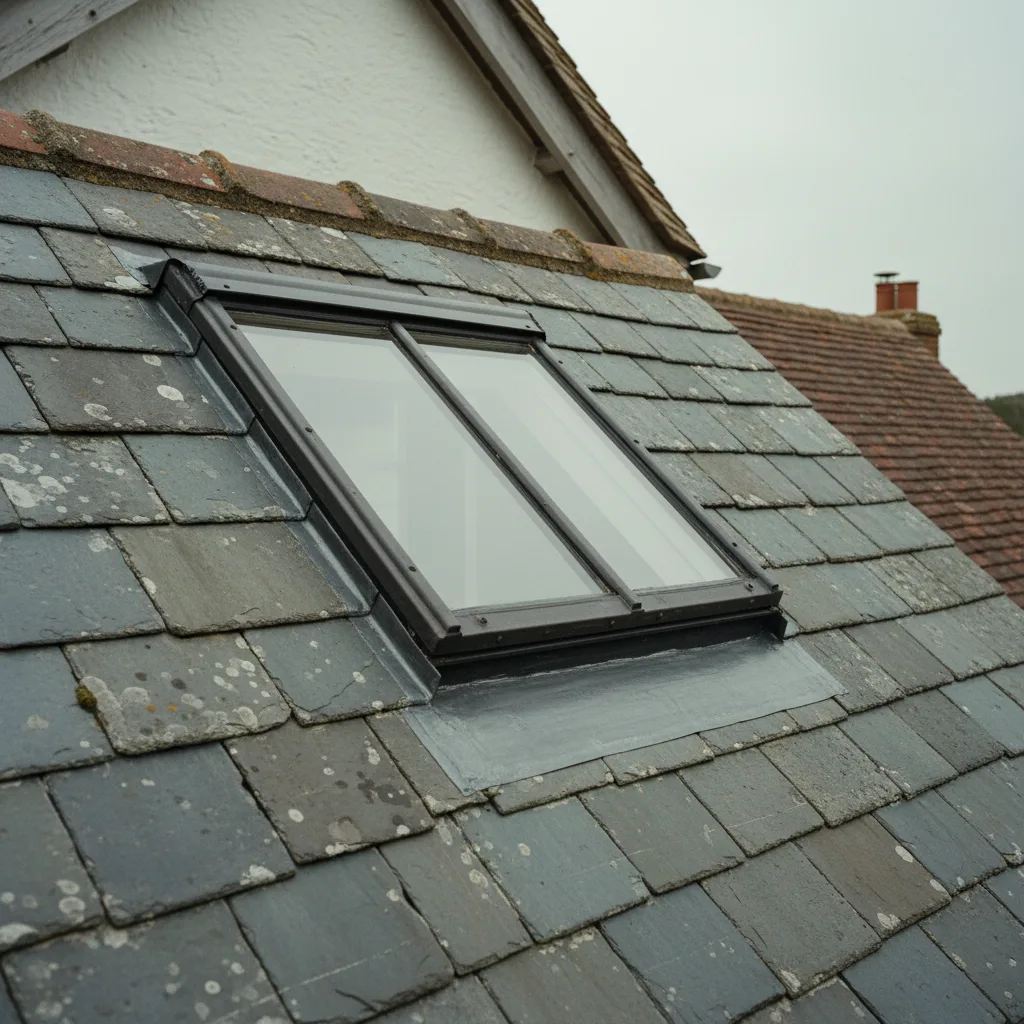
On article 2(3) land, a rooflight on a roof slope that fronts a highway is not permitted development. Elsewhere on the roof the ordinary rights generally still apply, subject to the usual limits.
So it is not a ban. It removes the automatic right on the elevation that faces the road.
Fronting a highway
The phrase that does the work, and it is broader than the front of the house.
A highway includes a public footpath, a bridleway and an unmade lane, not only a carriageway. A side elevation onto a public path is fronting a highway for these purposes.
Which is why villages threaded with footpaths, Henfield being the local example, have far less permitted roof than their layout suggests.
What still applies everywhere
The general limits, which are not about designation at all.
A rooflight must not project more than a set distance above the plane of the existing roof, must not be higher than the highest part of the roof, and the work must not be on a building where rights have been removed by condition.
Those apply on and off designated land alike.
Listed buildings are separate
A distinction worth keeping clear. Listing is not a form of article 2(3) land. It is a different regime with its own consent, and it applies regardless of visibility or of what any permitted development right would allow.
The detail is on do I need listed building consent for a rooflight.
Flats are separate too
And it catches leaseholders out. Permitted development rights attach to a dwellinghouse, which does not include a flat. So on a flat an application is frequently needed whether or not the building is on designated land.
Article 4 directions
A further restriction on top, and it is not the same thing.
An authority can make a direction removing specified permitted development rights over a defined area. Where one is in place, work that would be permitted even on article 2(3) land needs an application.
They are recorded and checkable and they do not appear on a casual map.
Conditions on an estate
The other way rights disappear, and it has nothing to do with designation.
When a large housing development is approved, permitted development rights are frequently removed by a condition on that consent. Owners are generally unaware of it.
It is in the original planning permission for the estate rather than anywhere obvious, and on newer estates it is worth checking.
What it does not restrict
Worth stating, because designation is frequently read as a general prohibition.
Article 2(3) land does not remove rights on rear or side slopes that do not front a highway, it does not require a particular kind of unit as a matter of law, and it does not make an application certain to fail.
It removes an automatic right on one part of a roof and makes appearance a consideration on the rest. Those are different things from a ban.
Where it bites hardest locally
In villages with public footpaths running behind buildings.
Because a footpath is a highway for these purposes, a rear slope alongside one is fronting a highway and the right is removed there too. In a village threaded with paths, very little of a roof is left.
Henfield is the clearest local example and the detail is on the Henfield page.
Outbuildings and detached buildings
A different part of the order and a different set of limits.
Rights attaching to a detached building in a garden are narrower on designated land, particularly on height and on position relative to a boundary.
A rooflight that takes an outbuilding above a height limit is the case to watch, and it is measured rather than assumed.
How to check an address
All of it is public record.
Conservation area boundaries are mapped by the authority. National Park boundaries are published. Listing is on a national register. Directions and conditions are on the planning record.
Four checks, minutes each, and they settle the question before a product is discussed.
What we run on a designated roof
We run those four checks on every designated address before quoting, because between them they decide whether a job is a straightforward installation or a three month process.
Which authority decides, inside the National Park, is on who is the planning authority in the South Downs National Park.
Thinking about this job? We survey across Worthing, West Sussex and the South Downs and give you a fixed price before any work starts, with a 10-year workmanship guarantee.