The frame of a rooflight is coated aluminium, and on this coast the coating is a decision rather than a colour choice. Why salt attacks metal is covered on the stainless fixings page. This one is about the coating: what it is, how it fails, and what marine grade actually changes.
What a powder coating is
A dry polymer powder applied electrostatically to a prepared aluminium surface and then cured in an oven, where it flows and crosslinks into a continuous film bonded to the metal.
It is tough, it is available in any colour, and it does two jobs: it protects the aluminium and it makes it look like something. Both matter and only one of them fails visibly.
What chalking is
The characteristic failure of an architectural coating in the open, and it is the word to know.
Ultraviolet breaks down the polymer at the surface of the film. The binder degrades and releases the pigment particles it was holding, which are left as a loose powder on the surface. That is what comes off on a finger.
What it looks like is a frame that has gone matt, faded, and slightly pale. It is a surface effect rather than a structural one: the metal underneath is generally sound long after the coating looks tired.
What salt adds to it
Ultraviolet does the chalking. Salt does two things alongside it.
It holds moisture against the surface continuously, so the film spends far more of its life wet than an inland one does, and a wet degraded film degrades faster. And where the coating has any breach at all, a scratch, a cut edge, a fixing hole, salt reaches the aluminium beneath and starts filiform corrosion: fine thread-like corrosion that creeps under the coating from the breach outward.
Filiform is the reason a small scratch on a coastal frame matters more than the same scratch inland. It does not stay small.
Standard against marine grade
| Standard architectural | Marine grade | |
|---|---|---|
| Pre-treatment | Single stage | Enhanced, frequently a chromate-free multi stage process |
| Coating | Single coat | Frequently a two coat system, primer plus topcoat |
| Film thickness | Standard | Greater |
| Resists | Weather, ultraviolet | The above plus chlorides at a breach |
| Where | Inland | Within reach of the Channel |

The pre-treatment is most of it
This is the part that is invisible and does the work.
Before any powder is applied the aluminium is cleaned, etched and given a conversion coating that the powder can bond to chemically rather than merely sitting on. How thoroughly that is done decides how well the film adheres, and adhesion is what stops filiform corrosion creeping from a breach.
A marine specification is largely a better pre-treatment plus more film on top of it. The colour is the same; the process underneath is not.
Anodising, the other route
Worth knowing because it appears as an alternative on some products.
Anodising is an electrochemical process that grows a hard oxide layer out of the aluminium surface rather than applying something to it. It cannot chip or peel, because it is part of the metal.
It is extremely durable in a coastal environment and it is limited in colour: metallic and natural tones rather than the full range a powder coat gives. On a frame where the colour matters for a conservation setting, powder coat wins on choice; on pure durability near the sea, anodising is excellent.
Colour matters more than people expect
Two effects, pulling in different directions.
Dark colours absorb more solar energy, so a dark frame runs hotter in the sun, and heat accelerates the ultraviolet degradation of the film. A dark frame therefore chalks sooner than a pale one in the same position.
Against that, chalking on a dark colour is far more visible than on a pale one, because the powdery residue is pale and the loss of depth is obvious. A white frame that has chalked looks tired; a black one that has chalked looks grey.
So dark frames, which are what we specify almost everywhere for appearance and for conservation reasons, are also the ones where the coating specification matters most.
Where the coating fails first
Consistently, and it is worth knowing where to look.
- Horizontal upward facing surfaces. They collect salt, hold water and take the most ultraviolet. Trims and cappings go first.
- Cut edges. A section cut on site has bare aluminium at the cut, and no coating over it.
- Fixing holes. Drilled after coating, so the hole is bare.
- Scratches from installation. A breach is a breach whatever caused it.
- Anywhere in contact with a dissimilar metal. Corrosion at the joint lifts the coating from beneath.
Four of those five are created on site rather than in the factory, which is why installation practice matters as much as specification.
Cut edges and site drilling
A factory coated section has coating on every surface it left the factory with. Anything done to it afterwards exposes metal.
Good practice is to minimise cutting and drilling of coated sections on site, to use the fixing positions provided rather than making new ones, and to treat any exposed edge or hole. On a coastal job that is not fussiness; it is where the failure starts.
It is also a reason to order components to size rather than cutting them down, which costs a little more and saves the frame.
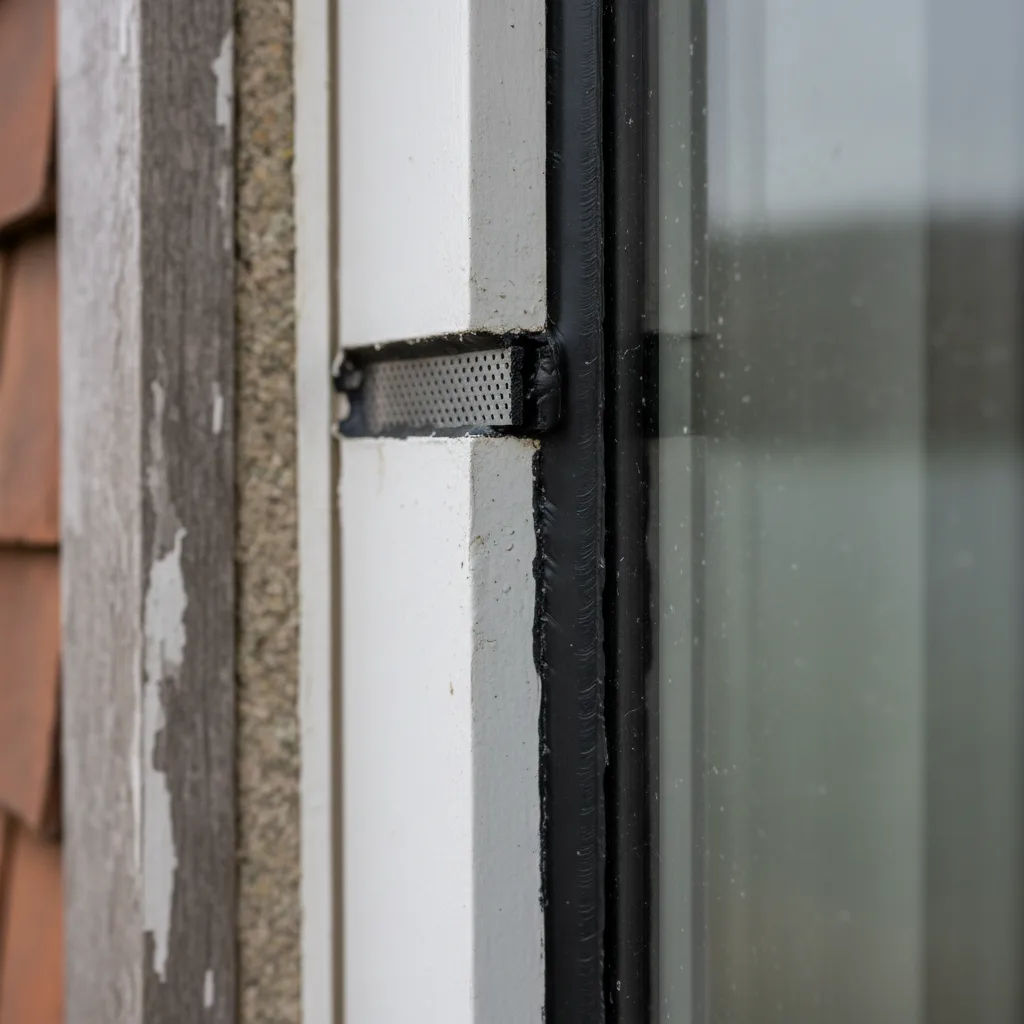
How long each lasts
Any figure is a range rather than a promise, because it depends on orientation, exposure, colour and maintenance. The shape is what is useful.
Inland, a standard architectural coating holds its appearance for a long time and the frame will outlast the sealed unit. On the seafront, a standard coating can look noticeably chalked within a handful of years, particularly on a dark colour on a horizontal surface.
A marine specification in the same position holds up considerably longer. It is not immune; it is the difference between a frame that looks tired at year eight and one that looks tired at year twenty.
How far inland it applies
The same gradient as every other coastal specification decision, and it is set out on the stainless fixings page.
The short version for coatings specifically: on the seafront it is not a discussion, a mile or two back it is what we fit as standard, and on the open scarp exposure puts a site back into the coastal category despite the distance.
Where it is marginal we specify up, because the cost difference across one frame is small and the coating cannot be changed afterwards.
It cannot be applied later
This is the point that decides the argument.
Powder coating is a factory process requiring the component to be stripped, prepared and oven cured. It cannot be done to an installed rooflight.
Which means the coating specification is fixed at ordering, exactly like the glass. A frame ordered in standard coating for a seafront property is a frame with standard coating on it for its life.
Wet paint, and whether it is worth it
A chalked frame can be repainted in situ, and it is worth knowing what that achieves.
Properly done, with the surface degreased, the chalk removed, and a system suited to aluminium, it restores the appearance and adds protection. Poorly done, over a chalked surface without preparation, the new paint has loose powder underneath it and will fail quickly.
It is a cosmetic remedy rather than a return to the original specification, and on an overhead frame it means working at height. Where a unit is otherwise near the end of its life it is rarely the better spend.

The maintenance that helps
The same fresh water rinse that benefits every metal component on a coastal roof, and it does more for the coating than people expect.
Removing the salt deposit removes the moisture it holds, so the film spends less of its life wet. It also removes the deposit before it can work into any breach. Twice a year, with a hose and a soft cloth, is the whole of it.
What it must not involve is abrasive cleaning, which removes coating, or aggressive chemicals, which attack it. Fresh water and a mild detergent, rinsed off.
What it looks like on a twenty five year old coastal unit
The pattern is consistent enough to describe.
The glass is frequently fine, or has failed at the edge seal for reasons of age. The frame is structurally sound. The coating has chalked, most obviously on the horizontal trims and cappings, and the colour has gone flat and pale. The fixings are the part that has genuinely gone.
So the coating is usually an appearance question rather than the reason to replace, and it is a useful indicator: a frame that has chalked has had the exposure that also worked on everything mechanical.
Timber frames, which are a different conversation
Everything above concerns coated aluminium, which is what most current rooflights are. A good number of older roof windows are timber framed, and on the coast they behave differently.
Timber does not corrode, so the failure mode is decay rather than chalking, and it is driven by moisture reaching unprotected wood. The finish is a paint or a lacquer rather than a factory coating, and it is renewable in place, which aluminium is not.
That is timber’s genuine advantage: a maintained timber frame lasts indefinitely. Its disadvantage is that it needs maintaining, and on an overhead frame in a room that is frequently humid, the finish at the bottom of the sash is what gets neglected and where decay starts. Polyurethane coated units, which need nothing internally, are the obvious specification for a coastal replacement.
What we specify
- Marine grade coating on frames, trims and cappings across the coastal strip and anywhere exposed to the Channel.
- A dark recessive colour, which suits both the roofscape and any conservation position.
- Minimum site cutting and drilling of coated sections, with any exposed edge treated.
- Dissimilar metals isolated at every joint.
- The specification written into the quote, because it is fixed at ordering.
What we always specify on the glazing
We specify marine grade coating as standard rather than as an option within reach of the Channel, and say so on the quotation. We order components to size where we can rather than cutting coated sections on site, and treat any edge we do expose. And when somebody asks about a chalked frame on an older unit, we tell them what it indicates about the rest of the installation rather than only about the paint.
Where a customer is comparing quotations, the coating specification is one of the places two prices genuinely differ for a reason rather than on margin. It is worth asking both suppliers what pre-treatment and what coating system they are quoting, because a standard coated frame on a seafront property is a cheaper quotation and a shorter life.
The coating is the part of a rooflight you look at for thirty years, and it is decided in the five minutes before the order goes in.
Thinking about this job? We survey across Worthing, West Sussex and the South Downs and give you a fixed price before any work starts, with a 10-year workmanship guarantee.