Do conservation areas ban rooflights and skylights completely?
No. A conservation area does not ban rooflights and no designation in England does. What it does is remove the automatic right on a roof slope fronting a highway, and make the appearance of a proposal a consideration in any application. Plenty of rooflights are fitted in conservation areas every year, most of them without an application at all.
Where the belief comes from
Three things, and all of them are misreadings of something real.
People hear that permitted development is restricted and read restricted as prohibited. They hear of a neighbour refused on a front slope and generalise it. And they meet a conservation officer’s preference for a particular unit and take it for a rule.
What is actually restricted
One slope, in one circumstance.
On designated land the permitted development right for a rooflight does not apply to a slope fronting a highway. Everywhere else on the roof it applies, subject to the ordinary limits.
The mechanism is on what is article 2(3) land.
What a highway includes
More than a road, and this is where people are caught out.
A public footpath, a bridleway and an unmade lane are all highways for this purpose, so a rear slope alongside a village path is fronting a highway too.
Which is why the answer varies so much between two houses in the same conservation area.
What is not restricted at all
The majority of most roofs, in most conservation areas.
A rear slope enclosed by the building and looking over a private garden, with no path alongside, generally retains the ordinary right in full.
That is where most of our work in designated areas goes, and it needs no application.
Where an application is needed
The front slope case, and it is an application rather than a refusal.
Needing permission and being refused permission are different things, and a well judged proposal on a visible slope is frequently approved.
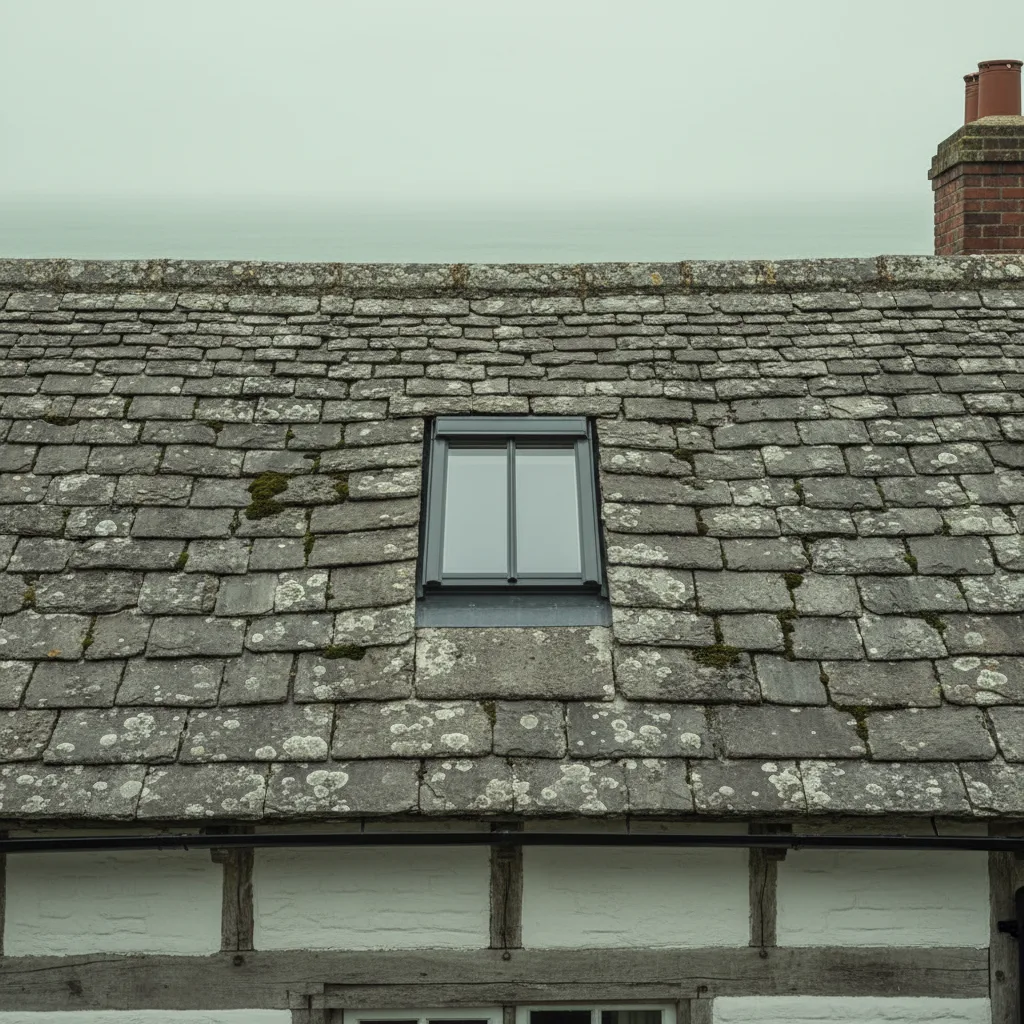
What makes one succeed is a flush profile, a dark finish and a position that respects the composition of the elevation below.
Listed buildings are different
And this is where the belief has more foundation.
On a listed building consent is needed for any alteration, visible or not, and on a principal elevation the answer is frequently no.
That is a genuinely restrictive regime, and it is not what conservation area designation does.
The position is on do I need listed building consent for a rooflight.
Article 4 directions
The one mechanism that comes closest to what people fear.
A direction can remove permitted development rights over a defined area for defined works, so that an application is required where it otherwise would not be.
Even then it requires an application rather than prohibiting the work.
What officers actually want
Worth saying, because the relationship is more constructive than people expect.
A conservation officer is generally trying to get to a workable outcome rather than to refuse. A proposal that shows the slope was chosen carefully and the unit chosen appropriately is received as such.
Replacements
The clearest evidence that designation is not a ban.
Replacing an existing rooflight like for like in a conservation area is generally not a planning matter at all, and it happens constantly.
The detail is on can I replace an old rooflight in a conservation area.
What a refusal is usually about
The unit or the slope rather than the principle.
A refusal names its reasons, and on a rooflight those are almost always that the unit is too prominent or the slope too visible. Both are fixable in a revised proposal.
The cumulative point
The one argument that does approach a general restriction.
Where several units on adjacent roofs would change the character of a run, an officer may weigh what a proposal sets up as well as what it does.
It is a reason to propose the restrained option, not evidence of a ban.
How to find out for a specific address
Quickly, and from the record. The conservation area boundary is mapped, listing is on a national register, and any article 4 direction is recorded by the authority.
Four checks, minutes each, and they replace speculation with an answer.
What a designation is actually for
Worth stating, because it explains why the answer is not a ban.
Designation exists to manage change in an area of special architectural or historic interest, not to prevent it. The legislation talks about preserving or enhancing character, and enhancement means change that improves.
Which is why replacing an unsympathetic unit with a better one is not merely tolerated but actively welcomed.
What a conservation area appraisal says
The document worth reading before assuming anything.
Each designated area has an appraisal setting out what gives it its character, and in many it names the roofscape specifically as a feature or specifically does not.
An area whose appraisal is about shopfronts and street enclosure is a different proposition from one about an unbroken run of roofs, and the document says which.
Precedent on the street
Useful evidence and it cuts both ways.
Where similar units have been approved nearby, that is a material consideration worth citing. Where several have been refused, it is worth knowing before spending a fee.
The planning register is public and searchable, and ten minutes on it is the cheapest research available.
What we establish first on a designated roof
We establish what actually applies to the address rather than working from what a designation is assumed to mean, and we tell people when no application is needed at all.
The wider picture is on do I need permission for a rooflight in a conservation area.
Thinking about this job? We survey across Worthing, West Sussex and the South Downs and give you a fixed price before any work starts, with a 10-year workmanship guarantee.