The spacer is the bar running around the perimeter of a sealed unit, holding the two panes apart and sealing the cavity. A warm edge spacer is made of a low conductivity material, stainless steel or a composite, rather than the aluminium traditionally used. It reduces heat loss at the edge of the glass and raises the temperature there.
What the spacer does
Three jobs at once, which is why it matters more than it looks.
It holds the panes at a set distance, it seals the cavity so the gas fill stays in and moisture stays out, and it carries a desiccant that absorbs any moisture that does get in.
A sealed unit fails when the spacer’s seal fails, so it is also the component that decides service life.
Why aluminium was a problem
Because it conducts heat extremely well, which is exactly wrong here.
An aluminium spacer is a continuous metal bridge from the inner pane to the outer one, running the whole perimeter of the unit, carrying heat straight across the cavity the glazing exists to create.
Whatever the centre of the glass achieves, the edge undoes some of it.
What warm edge means
A spacer made of something that conducts far less.
Stainless steel, which conducts much less than aluminium, or a composite or polymer with a thin barrier layer. Both do the same structural job with a fraction of the heat transfer.
What it improves
Two things, and the second is what people actually notice.
It improves the whole unit U-value modestly, by reducing the loss at the perimeter.
And it raises the surface temperature at the edge of the glass, which is where condensation forms first.
Why the edge matters most on a rooflight
Because these are small units with a lot of perimeter.
A rooflight is a modest opening, so the ratio of edge to glass area is high, and the edge effect is a larger share of the whole than it would be on a patio door.
Which is why warm edge is worth more on a rooflight than on a large window.
The condensation benefit
The practical reason to specify it. Condensation begins at the coldest point, which on a sealed unit is the edge of the glass just inside the frame. A warmer edge means it forms later, at a lower temperature or a higher humidity.
In a kitchen or a bathroom under a rooflight that is a real gain.
What it does not fix
The frame, which is generally colder than the glass edge anyway.
A warm edge spacer improves the glazing perimeter. It does nothing about a frame with a poor thermal break, and nothing at all about insulation stopping short at a reveal.
Those are larger effects on most installations.
How to tell what a unit has
By looking at the edge, and it is visible.
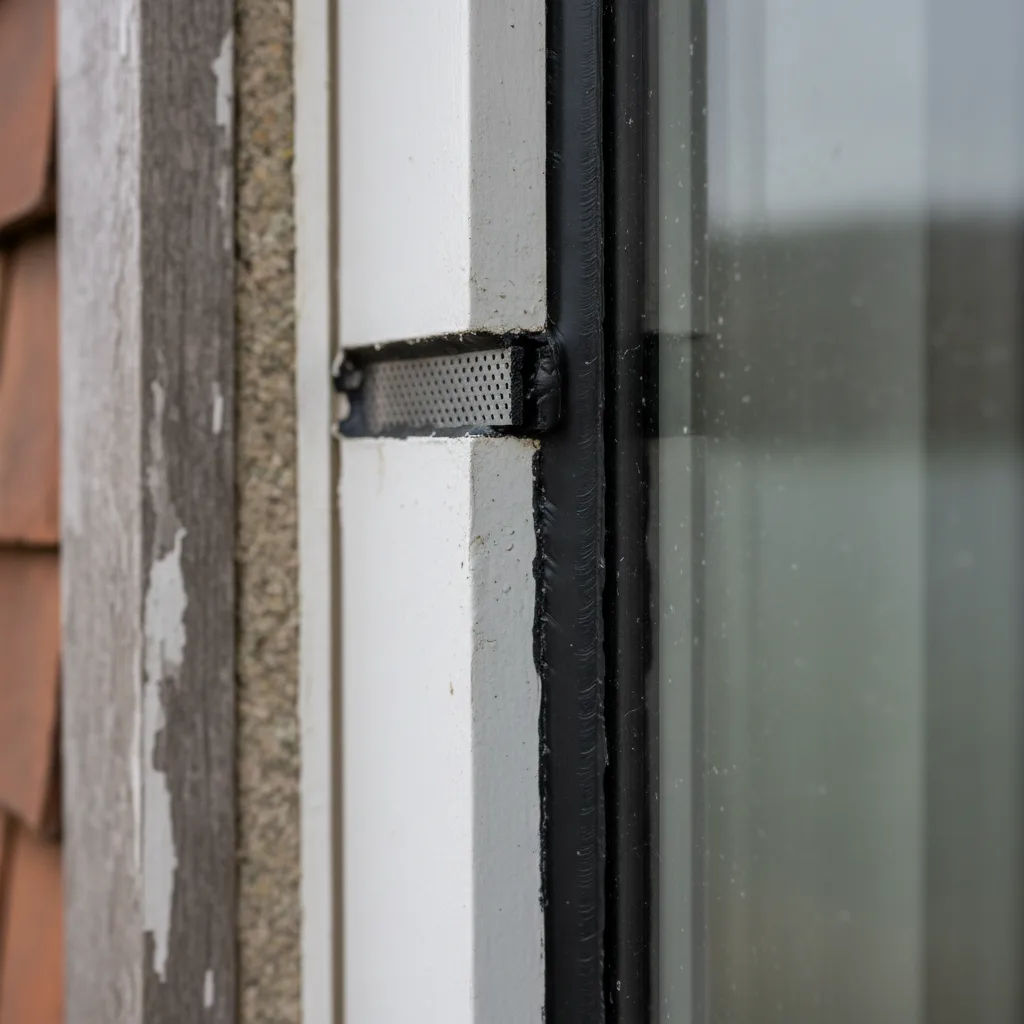
An aluminium spacer is bright silver metal. A warm edge one is generally black, grey or a dull metallic, and it is visible through the glass around the perimeter of the pane.
On a new unit it is on the specification; on an existing one it is a look.
Whether it is standard now
On good units yes, and it is worth confirming rather than assuming.
Most reputable manufacturers use warm edge as standard, because the whole unit figures they quote depend on it. Cheaper units and some older stock still use aluminium.
Whether it can be changed
Only by replacing the sealed unit, because it is inside it.
Where a frame is sound, replacing the glazing alone is frequently possible and gives a modern spacer along with modern coatings.

Appearance
A small consideration on a rooflight seen from below.
The spacer is visible as a line around the edge of the glass, and a black one reads as part of the frame while a bright aluminium one reads as a separate silver line.
On a dark framed conservation unit, a black spacer looks considerably better.
Service life
Where the spacer’s other job matters. Sealed units fail when the perimeter seal admits moisture, which the desiccant then absorbs until it is saturated and misting begins.
A well made spacer with good sealing is what makes that take decades rather than years.
On a rooflight specifically
A harder duty than on a window, and it is worth knowing.
A rooflight sits in a horizontal or near horizontal plane, is exposed to more direct sun and greater temperature swings, and water sits on it rather than running off quickly.
Which is why rooflight sealed units are built for that duty and why a unit made for a window is not a substitute.
What to ask a supplier
Two questions. Whether the spacer is a warm edge type, and what the whole unit U-value is with it. A quoted centre pane figure hides the spacer’s contribution entirely.
The distinction is on what U-value should a rooflight have.
What it costs
Little or nothing as a specification choice, because on most current products it is already there.
Where it is offered as an upgrade, it is a modest amount for a real improvement at the point where condensation actually starts.
What we specify on the glazing
We specify warm edge as standard and a black spacer on dark framed units, and we quote whole unit figures so the perimeter is included rather than hidden.
The whole picture is on the energy efficient rooflights page.
Thinking about this job? We survey across Worthing, West Sussex and the South Downs and give you a fixed price before any work starts, with a 10-year workmanship guarantee.