The South Downs National Park Authority is the planning authority, not your district council
The single most useful thing this brand can tell a customer is a procedural one: if your house is inside the South Downs National Park, your planning application does not go to your district council. It goes to the South Downs National Park Authority, and a great many people find that out late.
What the Park means for a roof window specifically, and what gets accepted on which slope, are covered on the roof windows in the National Park page. This one is about establishing which authority you are dealing with and what changes when it is the Park.
Why there are two bodies
National Park Authorities are the local planning authority for their area. That is a statutory arrangement rather than an administrative preference, and it applies to a householder application exactly as it does to anything larger.
The district council continues to exist and continues to do everything else: council tax, refuse, environmental health, and Building Control. It simply does not determine planning applications inside the Park boundary.
So a household inside the Park deals with two organisations rather than one, and which one depends on what is being asked.
Which does what
| Matter | Who | Note |
|---|---|---|
| Planning permission | The National Park Authority | Including householder applications |
| Listed building consent | The National Park Authority | Determined by the same body |
| Pre-application advice | The National Park Authority | Their service, their fee |
| Building Regulations | The district council, or an approved inspector | A different system entirely |
| Council tax and services | The district and county councils | Unchanged |
| Conservation area designation | Usually made by the district, applied by the Park | A material consideration in the Park’s decision |
The fourth row is the one that catches people out in the other direction. Building Control is not a Park function, so the same job involves both bodies for different purposes.
Finding out whether you are in it
A matter of public record and it takes a couple of minutes.
The National Park Authority publishes a boundary map searchable by address or by postcode, and it is definitive. The district council’s own planning pages generally say so as well, because they are asked constantly.
What is not reliable is assuming from the town name, from the postcode, or from what a neighbour did. Those are the three routes by which people get it wrong.
The boundary does not follow anything convenient
The reason a postcode is no guide.
The boundary was drawn around landscape character, so it follows contours, field edges, roads and the edges of settlements. It does not follow parish limits, district boundaries or postcode sectors, and it was not intended to.
Which means a street can have houses on one side inside the Park and houses opposite outside it. Two neighbours can be in different planning authorities. That is not an anomaly; it is what a landscape boundary does when it meets a village.
The towns on our list that are inside
Within the area we cover, twelve sit inside the boundary: Amberley, Bramber, Ditchling, Fulking, Poynings, Pyecombe, Slindon, Steyning, Sullington, Upper Beeding, Washington and the park side of Storrington. Arundel sits within it as well.
Several others straddle it, with part of the settlement inside and part outside. In those places the address decides and the town name tells you nothing.
We check the specific address on every enquiry in that band rather than working from the list, because the list is a guide to where to look rather than an answer.
What changes when it is the Park
Four things, and they are procedural as much as substantive.
- Where the application goes. A different portal, a different case officer, a different validation checklist.
- The policy framework. The Park’s own local plan rather than the district’s.
- What the decision weighs. The Park’s statutory purposes, which are about landscape, wildlife, cultural heritage and public enjoyment.
- Permitted development. Narrower, because the Park is Article 2(3) land, which has its own page.
The statutory purposes, and why they matter to a rooflight
Worth understanding, because they explain the emphasis in a way that a list of policies does not.
A National Park Authority has purposes: to conserve and enhance the natural beauty, wildlife and cultural heritage of the area, and to promote opportunities for public understanding and enjoyment of its special qualities.
The second is why visibility carries more weight here than it would in a town. The Park is criss-crossed with rights of way, open access land and elevated viewpoints, and the whole point of them is that people look at the landscape from them.
Which is why a roof that would be private in a suburb is frequently in view from a footpath on the slope above, and why that is a material consideration rather than a technicality.
Submitting an application
The mechanics, because the difference is practical rather than philosophical.
Applications can be submitted through the national planning portal, and the Park Authority has its own validation requirements: what drawings, at what scales, what photographs, what supporting statement. Those requirements are published and they differ in detail from a district council’s.
An application validated first time proceeds; one that is not sits waiting for the missing item. Reading the Park’s own checklist before submitting is the whole technique, and it is the commonest avoidable delay.
Timescales
Householder applications run to a statutory period, and the honest advice is to plan on longer.
Validation takes time. Consultation runs for a defined period, during which the parish council and any amenity body may comment. On a listed building the Authority frequently consults its own conservation officer and sometimes a national body.
Add pre-application advice beforehand, which is weeks in itself, and a rooflight on a sensitive building in the Park is a project measured in months from first conversation to work starting. Almost all of that is waiting rather than working, which is why starting early is the only remedy.
Parish councils
Worth knowing about in the Park villages specifically.
Parish councils are consulted on applications and their comments are a material consideration, though the decision is the Authority’s. In small villages the parish is engaged and its view carries weight in practice.
Which means talking to neighbours and, on anything visible, being visibly reasonable about the proposal is worth doing before the consultation rather than during it.
Fees and what you are paying for
Application fees for householder development are set nationally, so the fee is the same whichever authority determines it. Pre-application advice is charged separately and each authority sets its own scale for that.
What differs is what the fee buys in practice. A National Park Authority covers a large area with a specialist remit, and the officers dealing with a rooflight in Steyning are the officers dealing with landscape matters across the Park. That is an advantage: they know the settlement, the vantage points and what has been accepted nearby.
It is worth using that. An officer who knows the village is a better source of advice than any general guidance, and pre-application is how you reach them.
Looking at what has been decided nearby
The most useful free research available and almost nobody does it.
The Authority publishes its planning register, searchable by address and by area, with the application, the officer’s report and the decision. Which means you can read what was proposed on comparable buildings in your village, what the officer said about it, and whether it was approved.
For a rooflight that is genuinely informative: it tells you which slopes have been accepted, what products were specified, and what concerns were raised. An hour on the register before designing anything is worth more than any amount of general advice, including this page.
Enforcement
The same as anywhere and worth stating because people assume a rural authority is less active.
Work carried out without a required permission is liable to enforcement action. On a listed building, work without listed building consent is a criminal offence rather than a planning irregularity, and that applies inside the Park as anywhere.
The Park Authority has an enforcement function and uses it. A rooflight fitted without checking is not a small risk in a designated landscape where the neighbours can see the roof from a footpath.
Building Control is separate, and it is the district’s
The most common confusion, and it runs the other way.
Forming a new opening in a roof is notifiable under the Building Regulations, and that system is run by the district council’s building control service or by an approved inspector. It is not a Park function and it is not affected by the Park boundary.
So a job inside the Park may need planning permission from the Authority and Building Regulations approval from the district, and those are two applications to two bodies for two different purposes. Satisfying one says nothing about the other.
We notify Building Control where the work is notifiable and the completion certificate comes to you.
Where nothing is required at all
Worth being clear, because this page could read as though everything in the Park needs an application.
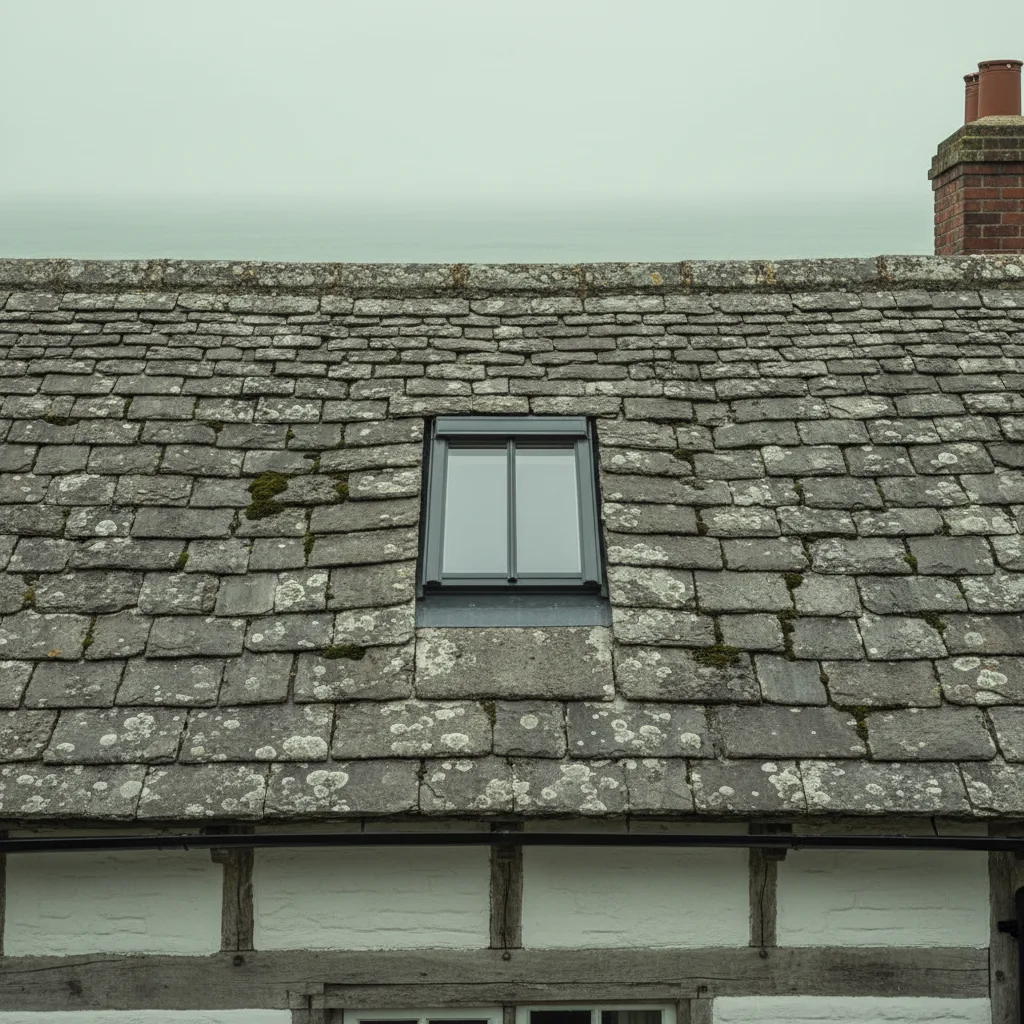
A great deal of rooflight work inside the Park is permitted development or does not require permission: a flush unit on a rear slope out of public view, on an unlisted building, frequently needs nothing beyond Building Regulations.
The point is not that everything needs consent. It is that the question is checked against the right authority rather than assumed, and that the assumption people make is usually about the district council.
Straddling addresses, and how to be sure
Where a property sits close to the boundary, the question is which side the relevant part of the building is on, and it is worth being careful.
The boundary is a line on a map with a defined position, and a large plot can have a house inside and a garden outside, or the reverse. What matters is where the works are, which for a rooflight is where the house is.
Where it is genuinely marginal, both authorities will confirm the position on request and it is worth asking rather than deciding. Submitting to the wrong body means the application is returned, which costs weeks, and it is entirely avoidable with one email.
What the Park does not change
Worth saying, because the designation acquires a reputation that is bigger than the reality.
It does not make ordinary maintenance harder. Replacing a rooflight like for like, repairing a roof, or reglazing an existing unit are not planning matters. It does not add a layer to Building Regulations. And it does not mean every proposal is refused; the great majority of householder applications in the Park are approved.
What it changes is which body decides, what policy they decide against, and how much weight visibility carries. Those are real and they are narrower than the anxiety they generate.
What to establish first, in order
- Is the specific address inside the Park boundary?
- Is the building listed?
- Is it in a conservation area?
- Does an Article 4 direction apply to the street?
- Is the proposal permitted development, given all of the above?
- If not, does it warrant pre-application advice first?
Six checks, all of them from public records, and between them they establish the whole procedural position before anybody spends anything.
What gets checked on a designated roof
We check the specific address against the published boundary on every enquiry near it, and say plainly which authority applies before discussing anything else. We work to the Park Authority’s own validation requirements where an application is needed, and we notify Building Control to the district separately because they are different systems.
Twelve of the towns we serve are inside the Park. Knowing that before you apply, rather than after, is the most useful thing on this page.
Thinking about this job? We survey across Worthing, West Sussex and the South Downs and give you a fixed price before any work starts, with a 10-year workmanship guarantee.