The statutory determination period is eight weeks from validation, and that is the smallest part of the timeline. From first enquiry to work starting, three to four months is realistic on a straightforward proposal, and longer on a significant building or where pre-application advice is worth taking.
What the eight weeks covers
Only the determination, running from the point the application is validated rather than the day it is submitted.
Validation itself can take one to two weeks, and an incomplete submission is not validated at all until what is missing arrives.
So the clock starts later than people expect and the eight weeks is genuinely eight weeks once it does.
What comes before it
The part that varies most and is entirely within your control.
Establishing the listing, surveying the roof, agreeing a position, producing drawings, and writing a heritage statement. Two to four weeks if everybody moves, considerably longer if a drawing has to be commissioned.
Pre-application advice
Adds four to six weeks and frequently saves more than that.
An officer’s view before submission on a proposal that might not succeed is worth having on any building of significance, and it occasionally produces the suggestion that makes the scheme work.
On a straightforward rear slope it is generally unnecessary.
Consultation
A fixed part of the eight weeks rather than an addition to it.
The application is publicised, neighbours may comment, and on a listed building the national amenity societies are notified and may respond. That runs concurrently with the officer’s assessment.
What extends it
Four things, and the first is the commonest.
A request for further information. A proposal an officer wants amended rather than refused. A building of high grade where national consultation applies. And a committee decision rather than a delegated one.
Any of them adds weeks rather than days.

Delegated or committee
Most rooflight applications are decided by an officer under delegated powers, which is the quick route.
A proposal that attracts objections, or that an officer is minded to refuse against a recommendation, can go to committee, and committees sit on a cycle rather than continuously.
Two applications at once
Where planning permission is also needed, which is common in a conservation area.
They are separate applications with separate fees, submitted together and generally determined together. Doing them in sequence rather than in parallel adds two months for no reason.
After the decision
Not the end, and it catches people out.
A consent generally carries conditions, and some are pre-commencement: details to be approved before work starts. Discharging those takes time of its own.
Reading the conditions on the day the consent arrives, rather than the week before starting, is the way to avoid that.
How long a consent lasts
Three years from the date of the decision, in the ordinary case, within which the work must begin.
Which is ample for a rooflight and worth knowing where a household is phasing a larger project.
Then the lead time
The item people forget when planning around a consent date.
A conservation unit is a made to order product with a lead time of its own, and it is not ordered until the consent is in hand and the survey dimensions are confirmed.
Several weeks, and it runs after the consent rather than alongside it.
Then the access
And on some buildings this is the longest item of all.
A scaffold on a highway needs a licence with a date. On a narrow village street that is a negotiation rather than a formality.
It is arranged in parallel with the application rather than afterwards, which is the single most useful piece of sequencing on a job like this.
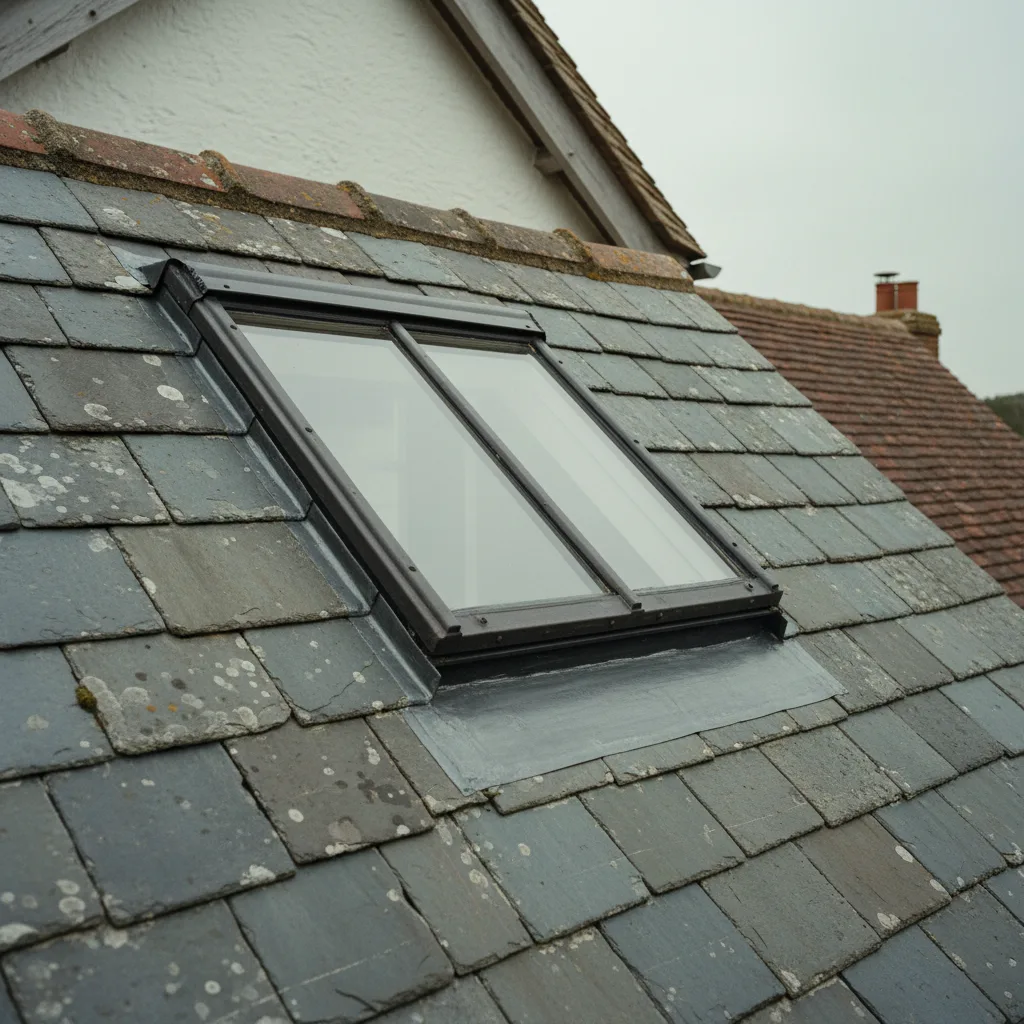
A realistic overall plan
Two to four weeks preparing. Eight weeks determining, plus validation. Four to six weeks for the unit. A date for the scaffold.
Four months from first conversation to work starting is a fair expectation, and six is not unusual on a significant building.
Where the time actually goes
Worth setting out, because it is not where people assume.
The eight weeks of determination is the visible part and it is rarely the largest. Preparing a complete submission, waiting for a made to order unit, and arranging access between them generally add up to more.
Which is why the useful thing is to start the access and the survey early rather than treating the application as the whole of the wait.
Running things in parallel
The single largest saving available, and it costs nothing.
The survey, the drawings, the scaffold enquiry and the product selection can all happen while an application is being determined, rather than sequentially afterwards.
Done that way, a consent arriving on a Friday can be a job starting a fortnight later rather than two months later.
If it is refused
Worth planning for even on a proposal that should succeed.
A refusal names its reasons, and on a rooflight those are almost always about the unit or the slope rather than the principle. A revised proposal is a fresh application rather than an appeal, and it starts the eight weeks again.
Which is the strongest argument for proposing the modest option first.
What makes it quicker
Three things, all of them free. A complete submission first time. A proposal on a concealed slope that an officer can approve without argument. And starting the access conversation early rather than after the consent.
How we set it out on a designated roof
We set out the whole timeline at the quote rather than the eight weeks alone, because a household planning a room around a date needs the real number.
What an application has to argue is on do I need listed building consent for a rooflight.
Thinking about this job? We survey across Worthing, West Sussex and the South Downs and give you a fixed price before any work starts, with a 10-year workmanship guarantee.