How flush does a conservation rooflight or skylight sit?
Flush means the frame is bedded down into the thickness of the covering rather than standing on top of it, so the glass sits close to the plane of the surrounding tiles or slates. In practice a good conservation unit projects a small amount rather than nothing at all, and the aim is that it casts no shadow line along its upper edge.
Why the shadow line is the test
Because that is what makes a rooflight read as an object rather than an opening.
A unit standing proud of a covering catches light on its upstand and throws a shadow across the tiles below it. The eye reads that line from a considerable distance, long after the unit itself has become too small to see clearly.
Take the line away and the same unit reads as a dark panel within the roof surface, which is what an officer is looking for.
How it is achieved
By setting the frame into the covering rather than by the product alone.
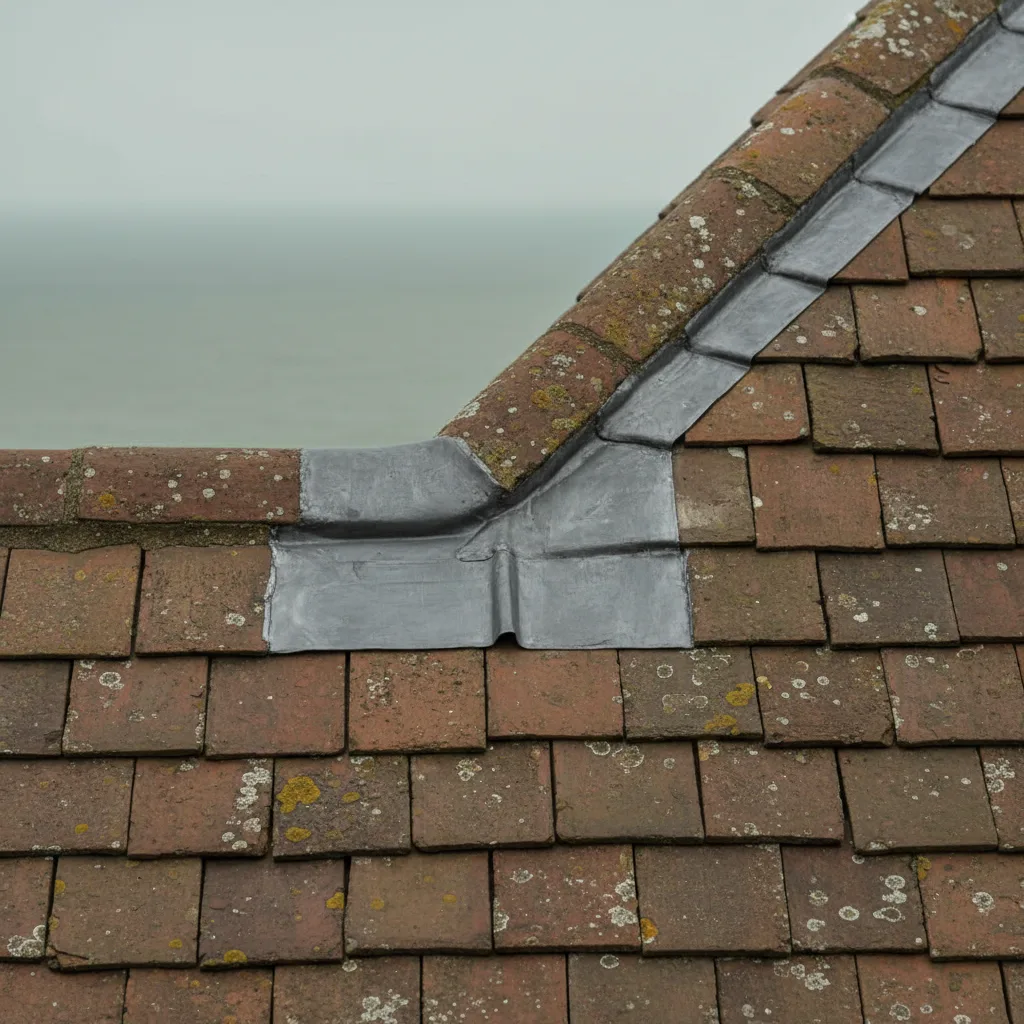
The unit is bedded so its outer frame sits within the depth of the tile or slate, and the covering is dressed up to it with soakers rather than lapped over a flange standing above it.
Which means a flush result is as much installation as specification. The same unit fitted onto a covering rather than into it is not flush.
What the covering depth allows
The practical limit, and it varies more than people expect.
A plain tile is shallow, so there is little depth to set a frame into. A thick hand made tile gives more. Horsham stone gives a great deal and brings its own problems.
On a shallow covering the achievable result is a very low projection rather than a true flush, and it is worth saying so rather than promising something the roof cannot give.
Against a standard rooflight
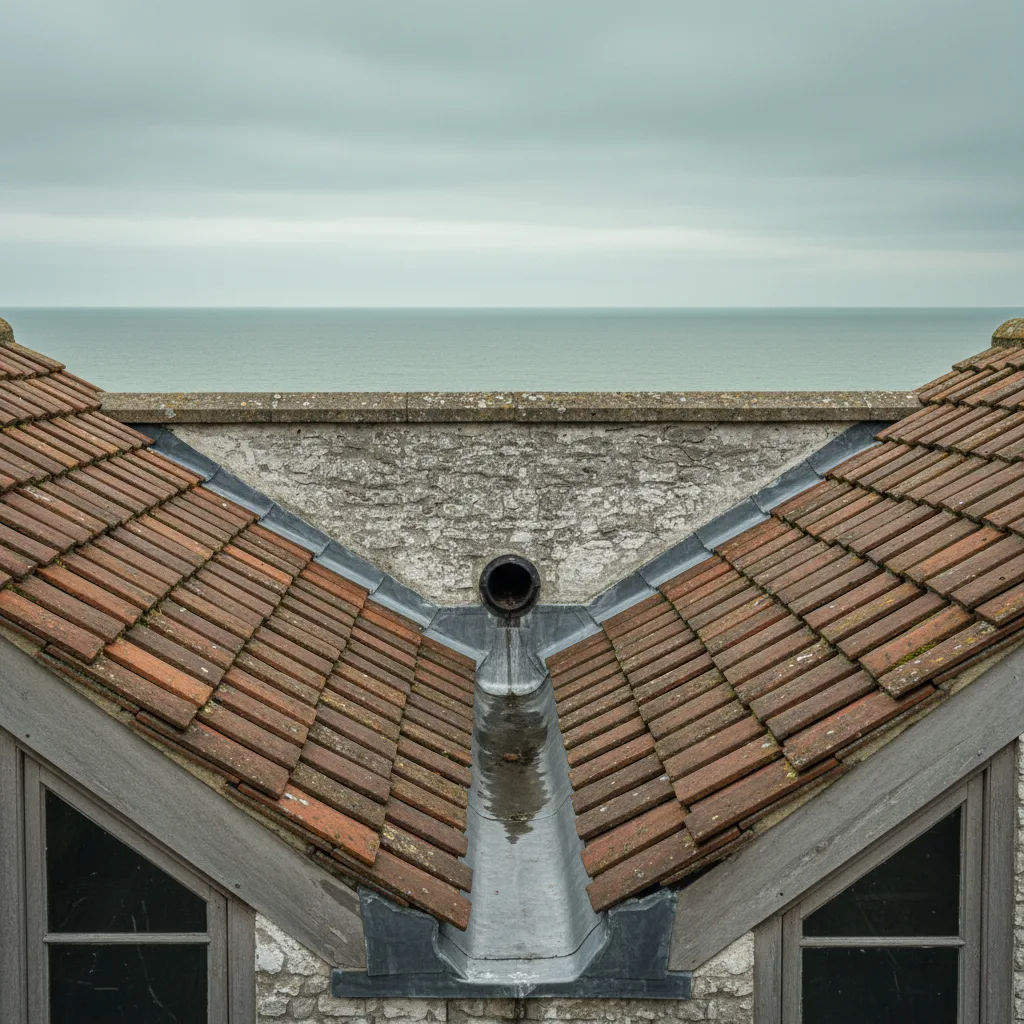
The comparison in a sentence: a standard unit projects noticeably and a conservation unit projects very little.
The difference is small in millimetres and large in appearance, because the eye is reading a shadow rather than measuring a height.
What the projection limit says
The planning dimension, and it is a maximum rather than a target.
Permitted development for a rooflight limits how far a unit may project above the plane of the existing roof. A flush unit is comfortably inside it; a standard unit on a raised kerb can approach it.
It is worth measuring rather than assuming, and it is one reason a flush unit occasionally avoids an application a bulkier one would need.
Seen from directly below
Where flushness stops mattering and something else takes over.
From inside the room the frame is what is seen, not the projection, and a slim frame gives more glass and a cleaner reveal. That is a separate benefit of the same slim section.
Seen from above
The condition that catches proposals out in hillside and downland villages.
Where a roof is overlooked from higher ground, it is read in plan rather than in elevation, and a proud unit’s shadow is at its most obvious.
Which is why in a village like Poynings or Bramber a flush unit is worth proposing even on a slope that is technically permitted.
Does flush mean it will leak
A reasonable worry with a clear answer: no, provided the weathering is right.
A flush unit relies on soakers interleaved with the covering and an apron and head flashing formed to suit, rather than on standing above the water. That is a traditional detail and it works.
What fails is a flush unit fitted with a kit made for a proud installation, which is a different fault from the profile itself.
The pitch limit again
Related, because both are about water clearing the unit.
A flush unit on too shallow a pitch has less help from gravity, which is why manufacturers set a minimum pitch and will not warrant below it.
It is taken with a level rather than judged, and on a shallow rear addition it frequently rules the product out.
Recessed installations
A step beyond flush, and it exists.
Some ranges offer a recessed detail setting the unit deeper still into the roof build up, which flattens the appearance further. It costs more and it asks more of the surrounding detail.
On a slope of real sensitivity it is occasionally what makes a proposal acceptable.
Bedding, and what the frame sits on
The part of a flush installation that nobody sees and that decides whether it stays flush.
The frame is bedded onto a prepared surface at a set level, and where that surface is uneven, or where battens beneath it have been packed to make up a difference, the unit settles unevenly over time.
On an old roof with irregular rafters that preparation is most of the skill in the job, and it is why a flush unit takes longer to fit than a proud one.
What happens on an uneven old roof
The realistic version, because these roofs are not flat.
Rafters that have moved over centuries mean the plane of a covering undulates, and a rigid rectangular frame set into it sits true to itself rather than to the roof around it.
Which means a small variation in the reveal of covering around the unit is normal on an old building and is not a fault. Forcing the frame to eliminate it is how a unit ends up stressed.
Cleaning a flush unit
A minor practical consequence worth knowing about.
Because the glass sits close to the plane of the covering, debris that would wash past a proud unit collects against the upper edge of a flush one, particularly under trees.
It is a rinse rather than a problem, and it is worth doing at the same time as clearing a gutter each autumn.
What to ask a supplier
Two questions rather than a specification sheet.
How far the frame projects above the covering when correctly installed, and whether the flashing supplied is made for a flush installation in the covering the roof actually has.
The second is the one that separates a genuine conservation installation from a slim unit fitted like a standard one.
How we set it out on a designated roof
We set the frame into the covering rather than onto it, and we say at survey what projection is actually achievable on that roof rather than quoting a catalogue figure.
The product itself is described on what is a conservation rooflight, and how a designation assesses it is on article 2(3) land and permitted development.
Thinking about this job? We survey across Worthing, West Sussex and the South Downs and give you a fixed price before any work starts, with a 10-year workmanship guarantee.