Listed building consent, assessed on merit rather than granted
Listed building consent is a separate regime from planning permission, with its own legislation, its own tests and its own consequences for getting it wrong. What an officer looks for on a listed roof is covered on the Arundel and Ditchling page. This one is the process itself.
The legislation
The Planning (Listed Buildings and Conservation Areas) Act 1990 is the governing statute. It creates the list, defines what needs consent, and sets out what happens when work is done without it.
It sits alongside the planning system rather than inside it. The same authority usually determines both, and they are different applications answering different questions.
What needs consent
Works for the demolition of a listed building, or for its alteration or extension in any manner which would affect its character as a building of special architectural or historic interest.
Three phrases carry the weight. Any manner, which is deliberately broad. Affect its character, which is a lower threshold than harm. And as a building of special architectural or historic interest, which ties the test to why it was listed.
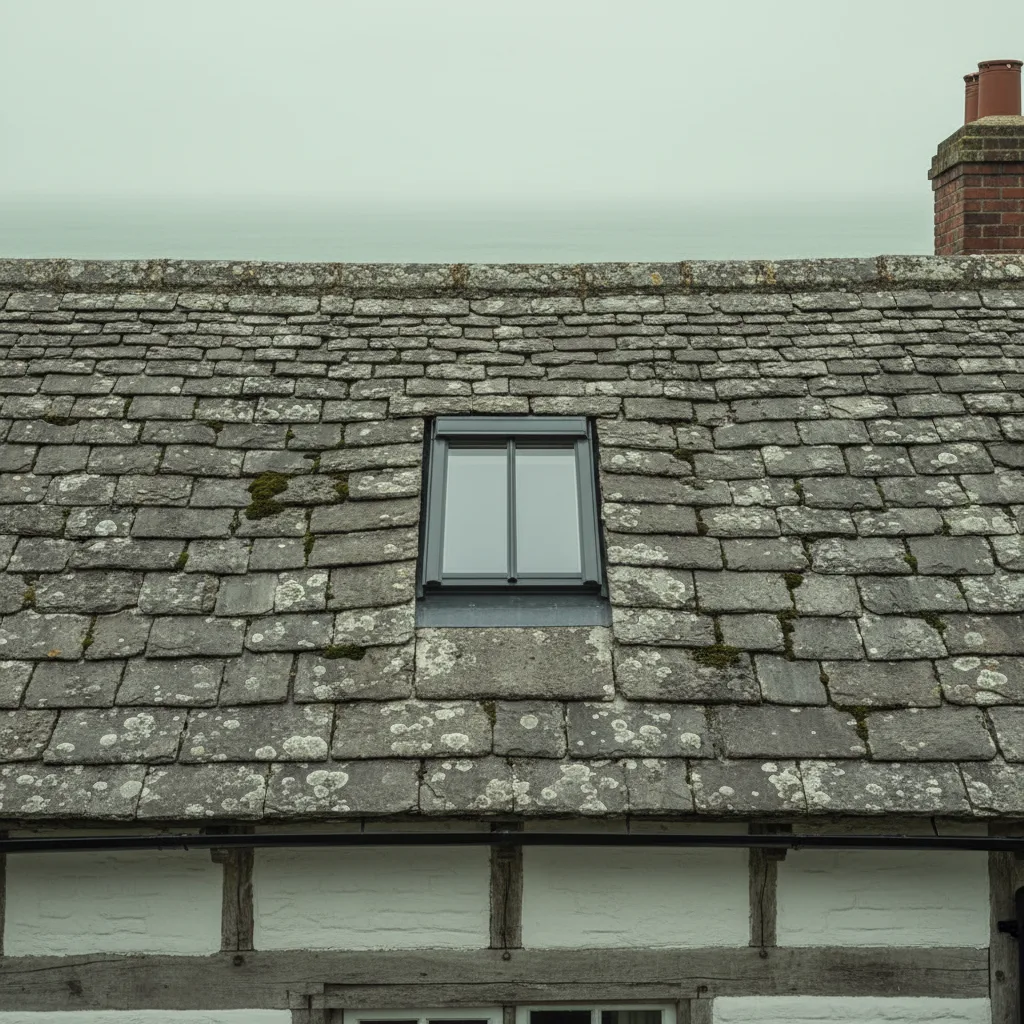
Forming an opening in a roof affects the character of a building. So a rooflight in a listed building needs consent, in almost every case, and the question is what kind of unit rather than whether an application is required.
What is protected
More than people expect, and it is worth being explicit.
- The whole building, inside and out, not the front elevation or the visible parts.
- Later additions, generally, including a modern extension attached to a listed building.
- Curtilage structures, meaning certain other buildings within the curtilage that existed before a defined date.
- Fixtures forming part of the building.
Which means a rooflight in a 1970s rear addition on a listed cottage is work to a listed building, and the fact that the addition is modern is an argument within the application rather than an exemption from it.
Assessed, not granted
The phrase in the title and it describes a real difference.
There is no equivalent of permitted development for listed building consent. No threshold below which a small alteration is fine, no class of work that is automatically acceptable, and no assumption that a modest proposal will pass.
Every application is considered on its merits: what is proposed, what fabric is affected, what harm results, and whether that harm is justified. A small proposal is assessed on the same basis as a large one and generally reaches a different answer, but through the same process.

What the decision weighs
The authority has a statutory duty to have special regard to the desirability of preserving the building, its setting, and any features of special architectural or historic interest it possesses.
National policy then frames it as a balance: identify the significance of the asset, assess the harm a proposal causes to it, and weigh that harm against the public benefits of the proposal. Harm has to be justified rather than merely acknowledged.
What that means for a rooflight is that an application saying what the building’s significance is, what the proposal does to it, and why it is nonetheless justified, is answering the question the officer has to answer. Most refused applications never engaged with it.
The grades
Three, and they indicate relative significance rather than different rules.
Grade II covers the great majority of listed buildings, including most listed houses in the villages here. Grade II* and Grade I indicate more than special interest and are considerably rarer.
The grade does not change whether consent is required; it is required at every grade. What it changes is how much justification a proposal has to carry, and at the higher grades the authority frequently consults nationally.
The offence
The part that makes this different from planning, and it is worth stating plainly rather than softening.
Carrying out works to a listed building that require consent, without that consent, is a criminal offence. It is committed by the person who does the work as well as by whoever caused it to be done, which means a contractor as well as an owner.
Unlike planning enforcement, there is no equivalent period after which unauthorised works to a listed building become immune. Work done twenty years ago without consent remains unauthorised.
That is the reason this trade takes it seriously, and the reason we will not proceed on a listed building without establishing the position.
Retrospective consent
It exists, and it is not a comfortable route.
An application can be made for consent for works already carried out. The authority considers it on the same basis as any other, and may grant or refuse it.
Making the application does not undo the offence, and it is generally the sensible course where unauthorised works have come to light: it puts the position right for the future and it demonstrates good faith.
Where consent is refused, the authority may require the works to be undone.
Enforcement
The authority can serve a listed building enforcement notice requiring works to be undone, or requiring the building to be brought back to its former state, or such other works as it specifies to alleviate the effect.
Which on a rooflight means removing it and reinstating the covering. That is a real outcome rather than a theoretical one, and it lands on whoever owns the building at the time rather than on whoever did the work.
There is a right of appeal against an enforcement notice.
Appeals
Where consent is refused, or granted with conditions the applicant objects to, there is a right of appeal to the Planning Inspectorate.
It is determined by an inspector on the papers, by hearing or by inquiry depending on the case, and for a householder listed building matter it is usually written representations. It takes months.
In practice, on a rooflight, an appeal is rarely the right route. Where an officer has refused, they have usually said what the concern is, and a revised proposal addressing it is faster and more likely to succeed than arguing the original.
Certificate of lawfulness of proposed works
The mechanism for establishing that a proposal does not need consent, and it is not widely known.
An application can be made for a certificate confirming that specified proposed works to a listed building would not affect its character and therefore do not require consent.
It is useful where the proposal is genuinely marginal, and where certainty matters, which on a listed building it generally does. It gives a document rather than an opinion, and it is worth having at a sale.
Who applies, and what it costs
There is no fee for a listed building consent application itself, which surprises people.
Where planning permission is also required, that application carries the usual fee. Pre-application advice carries a charge set by the authority. And the real cost is generally in the drawings, the photographs and any heritage statement.
The application can be made by the owner or by an agent, and on anything other than a simple case an agent who does this regularly earns their fee in avoided delay.
The heritage statement
The document that carries the argument, and it is frequently the difference between approval and refusal.
It should describe the building and its significance, identify which parts of it the proposal affects, assess the impact, and explain why the proposal is justified. On a small domestic rooflight it need not be long, and it does need to exist.
An application with drawings and no statement leaves the officer to construct the argument themselves, and they are not obliged to.
Conditions
Consent is frequently granted subject to conditions, and they are worth reading before the work starts.
Common ones on a rooflight: the specific product and finish approved, samples to be submitted, the covering to be reinstated with the original material, and work to be carried out in accordance with the approved drawings.
A condition requiring a sample or a detail to be approved before work starts is a condition that stops the job if it is discovered on the morning. Reading them at the point of consent rather than at the point of installation is the whole of the discipline.
Discharging conditions
Where conditions require something to be submitted and approved, that is a further application and it takes its own time.
Which is worth building into a programme. A consent granted in March with a pre-commencement condition is not a consent to start in March.
We check the conditions on any consent we are working to before booking a date, because it is the commonest reason a listed building job cannot start when everybody expected.
Where both consents are needed
A listed building in a conservation area, or one where the work also needs planning permission, needs both applications.
They are usually submitted together and determined together by the same authority, and they are separate decisions. It is entirely possible to have one and not the other, and both are needed before work starts.
Inside the South Downs National Park, both are determined by the Park Authority rather than the district council.
The two consents compared
| Planning permission | Listed building consent | |
|---|---|---|
| Threshold below which it is not needed | Permitted development | None |
| Working without it | A planning breach | A criminal offence |
| Immunity after a period | Time limits apply | None |
| Fee | Yes | No fee for the consent itself |
| Covers the interior | Generally not | Yes |
| Appeal | To the Planning Inspectorate | To the Planning Inspectorate |
The first three rows are the substance. A regime with no threshold, a criminal offence and no immunity is a regime to establish the position under rather than to form a view about.
Timescales, realistically
- Establishing the position and looking at the planning register: days.
- Pre-application advice: several weeks.
- Preparing drawings, photographs and a heritage statement: weeks.
- Validation and consultation: weeks.
- Determination: the statutory period, frequently extended by agreement.
- Discharging any pre-commencement conditions: weeks again.
Which is months rather than weeks, and almost all of it is waiting. Starting early is the only remedy and it costs nothing.
What we will and will not do
We are rooflight installers rather than heritage consultants, and the line is worth stating.
We will check whether a building is listed, tell you which authority determines the application, say what we would specify and why, and recommend pre-application advice. We will work to a consent and to its conditions, and we will check an order against what was approved.
We will not carry out works to a listed building without establishing that consent exists or is not required. On anything involving historic fabric or a complex significance, a heritage consultant or a conservation accredited architect is worth the fee and we will say so.
What we check on a designated roof
We check the National Heritage List against the specific address before quoting on any older building, establish which authority determines it, and read the conditions on any consent before booking a date. We say plainly when a proposal needs an application, and we do not treat permitted development as an answer on a listed building, because it answers a different question.
Consent is assessed rather than granted, and there is no threshold below which it does not apply. That is the whole of what makes this different.
Thinking about this job? We survey across Worthing, West Sussex and the South Downs and give you a fixed price before any work starts, with a 10-year workmanship guarantee.